Read on
A royal house you can walk through
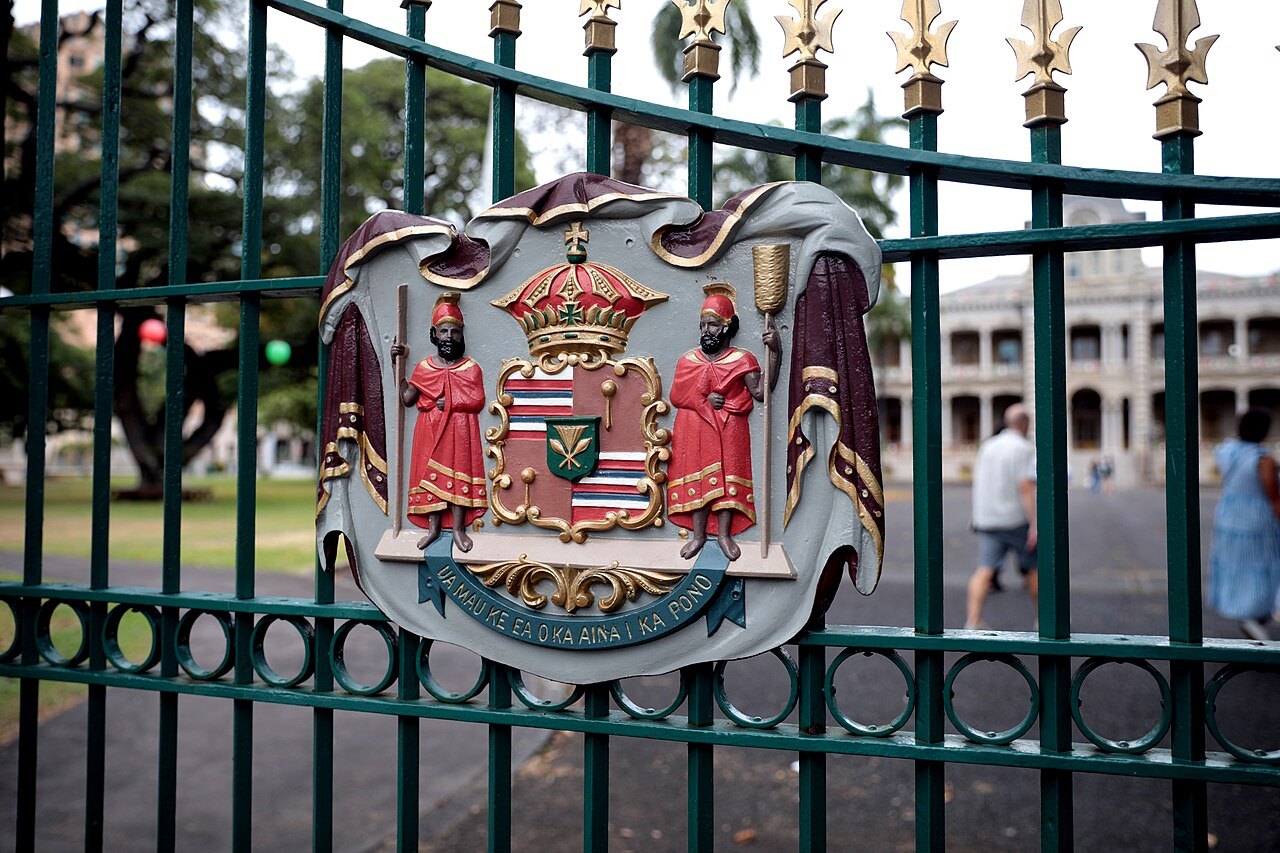
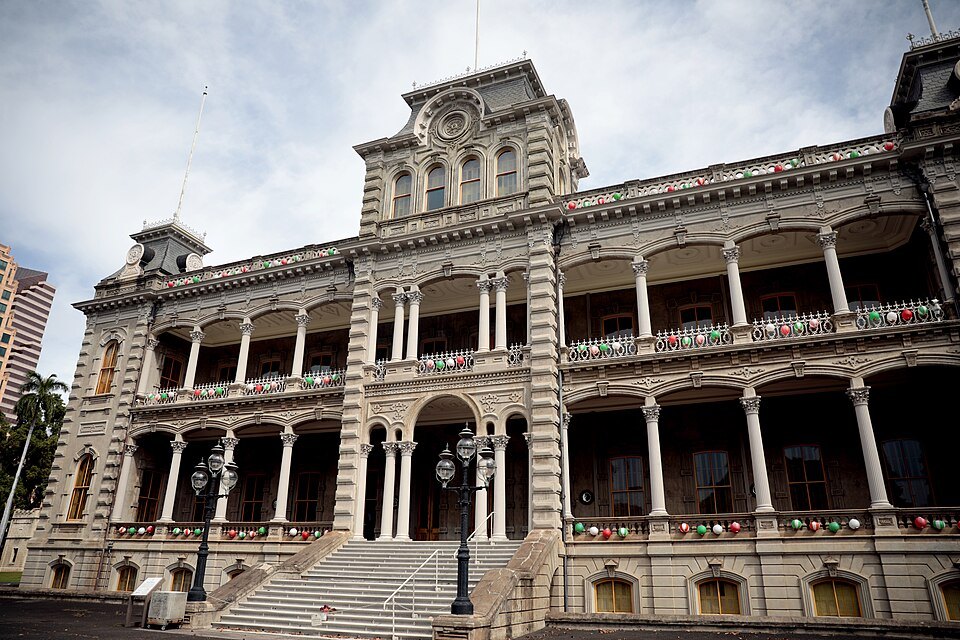
ʻIolani Palace was the residence of the rulers of the Kingdom of Hawaiʻi, from Kamehameha III, who moved the capital to Honolulu in 1845, to Queen Liliʻuokalani, deposed in 1893. It is often called the only royal palace on United States soil, and it is where the history told on the kingdom page becomes a set of rooms you can enter rather than a story read elsewhere.
The grounds are a state park managed by the Department of Land and Natural Resources; the building itself is run as a historic house museum by the Friends of ʻIolani Palace, a non-profit organization. It is also one of very few places in Hawaiʻi where the Hawaiian flag may officially fly alone, without the flag of the United States beside it.
For a visitor already following the story on the kingdom page, the palace supplies the physical setting: the same staircase, throne room and upstairs bedrooms where those events took place. Standing in them is a different experience from reading about them, and the tour is built around that fact rather than around a general history lesson.
The palace Kalākaua built
The first palace on the site, a house called Hale Aliʻi built in the 1840s, had grown termite-ridden and shabby by the time King Kalākaua came to the throne. Kalākaua, the first monarch to travel around the world, wanted a palace to stand beside those he had seen in Europe, so he had the old building razed and a new one begun.
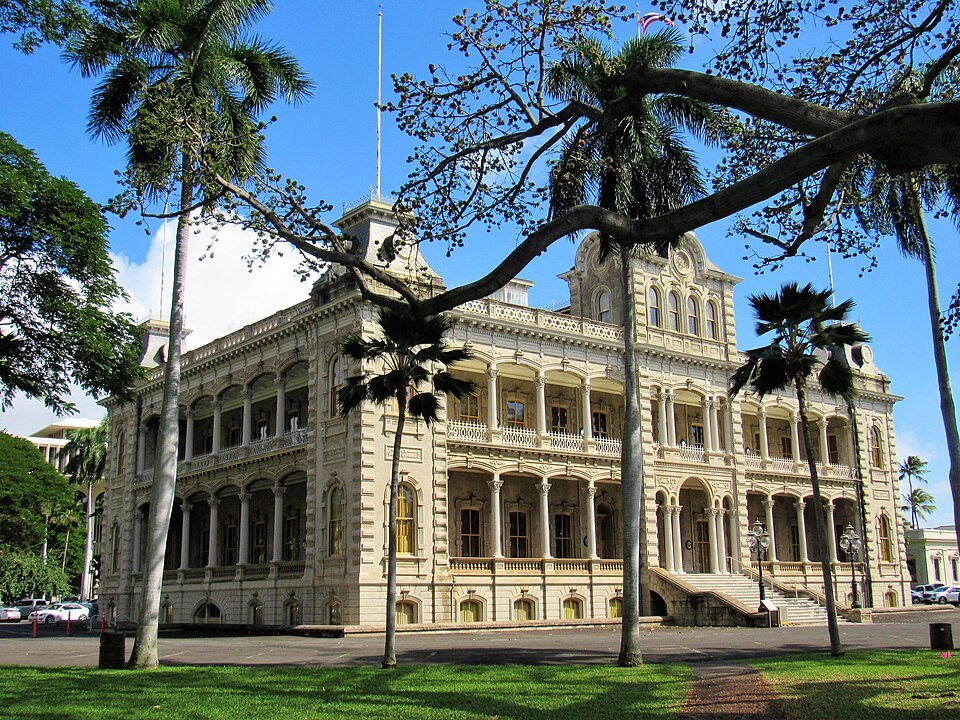
The cornerstone was laid on the last day of 1879, and the palace was finished in November 1882. Three architects contributed, with Thomas J. Baker drawing the structure that resulted: brick faced with concrete, about one hundred forty feet by one hundred, two stories over a raised basement, with four corner towers and two central ones, in a style usually called American Florentine.
On February twelfth, 1883, though he had already reigned nine years, Kalākaua staged a formal coronation on the grounds. The pavilion built for the ceremony was later moved to the corner of the property, where it still stands as the bandstand of the Royal Hawaiian Band.
That bandstand is easy to miss from the street but worth finding once inside the grounds, since it is the one structure still standing that was built for the coronation itself rather than for the palace as a residence or, later, as a government office.
1893, and what came after
On January seventeenth, 1893, the Committee of Safety deposed Queen Liliʻuokalani, with sailors and Marines from the USS Boston landed in the city at the request of the American minister. Troops of the new Provisional Government took control of the palace, renamed it the Executive Building, inventoried its contents, and sold at public auction the furniture it had no use for.
In 1895, after an armed rising to restore the monarchy failed, the queen was imprisoned in a small upstairs room for nine months, and her trial was held in the former throne room. United States troops raised the American flag at the palace in August 1898 to mark annexation; the queen and many Hawaiian nobles stayed away.
When Liliʻuokalani died in 1917, the territorial governor gave her a state funeral in the throne room, the same room where her trial had been held two decades earlier. For most of the next century the palace served as government offices, first for the Republic, then the Territory, then the state.
The legislature met on the ground floor, representatives in the former throne room and the senate in the former dining room, until it moved to the new State Capitol built behind the palace in 1969, freeing the building for restoration.
What you see inside
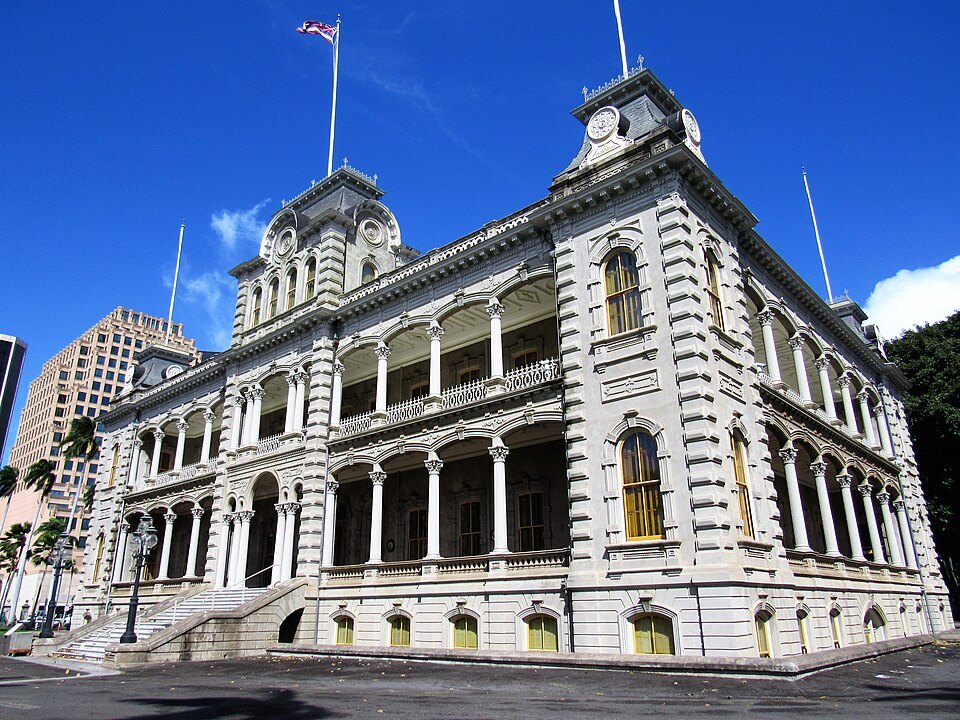
Restoration began in the 1960s under Governor John A. Burns and took years of research into newspapers, photographs and inventories to reconstruct how the rooms had looked. Many objects sold off after 1893 have since been traced and returned, and fabrics and finishes have been reproduced; the palace opened to the public again in 1978.
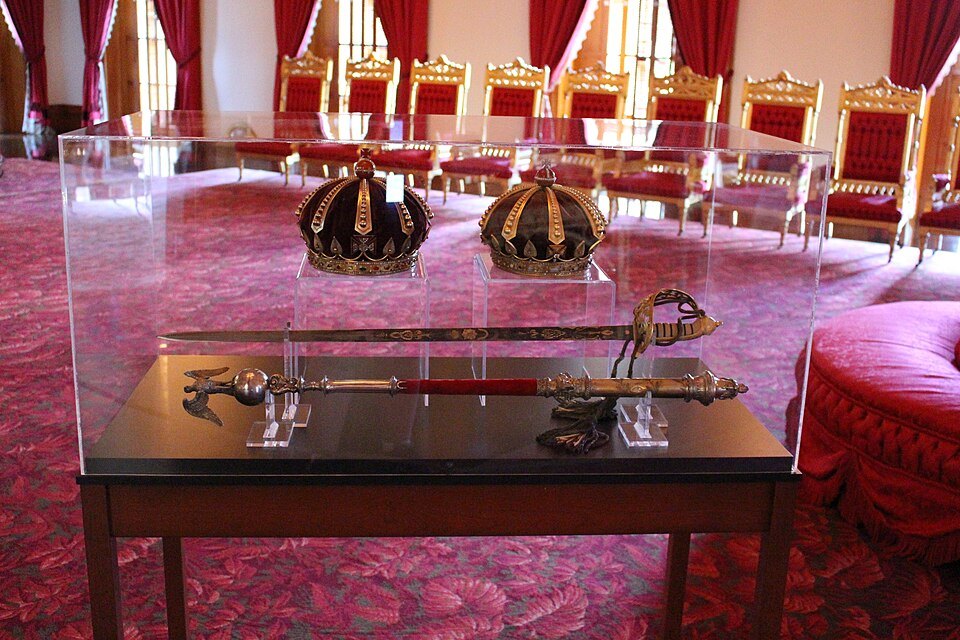
On the first floor, the Grand Hall faces the koa staircase, its walls and ceilings finished in ornamental plaster. The Throne Room fills the southeast corner, the room of both coronation and trial. The Blue Room held an 1848 portrait of King Louis Philippe of France and the koa piano the queen played; the State Dining Room completes the ceremonial floor.
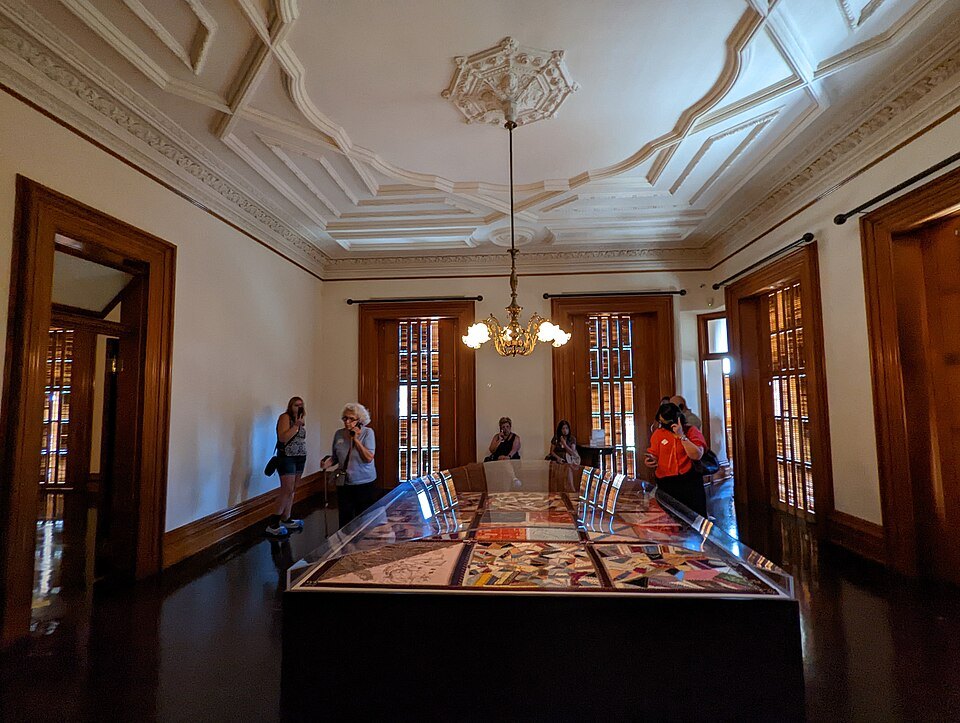
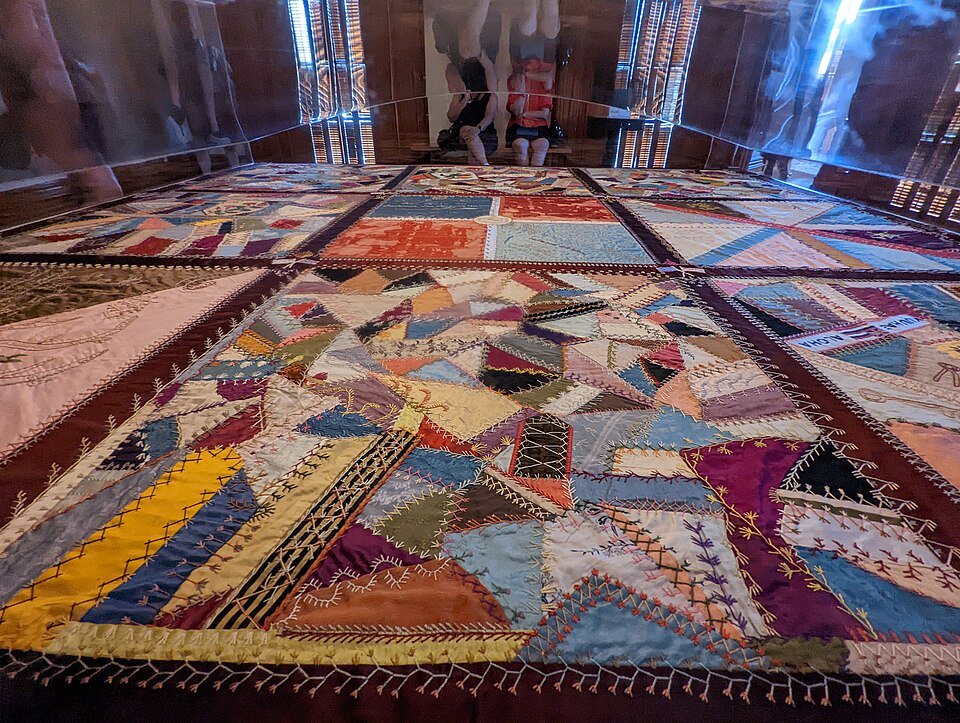
Upstairs are the private library, the monarchs' bedrooms, and the small room where Liliʻuokalani was confined, where the quilt she made during her imprisonment is kept. Seeing that room after the ceremonial floor downstairs is part of how the tour is built: grandeur first, then confinement.
In the basement, a photographic display traces the palace's history alongside orders and decorations of the monarchy and an exhibit on the restoration itself. It is a quieter, more documentary space than the rooms above, and one that repays the extra few minutes it takes to see properly.
The grounds
The grounds can be walked even without a ticket to go inside. The former ʻIolani Barracks, once the guard house of the kingdom, was moved from its original position in the 1960s and now serves as the visitor center. The coronation pavilion still stands as a bandstand in the southwest corner.
Across King Street is Aliʻiōlani Hale, fronted by the statue of Kamehameha I, and a short walk east is Kawaiahaʻo Church. Together the three sites make a compact cluster of kingdom-era buildings that can be seen on foot in one visit downtown.
Within the palace grounds themselves is Pohukaina, a royal burial site older than the palace and enclosed by a fence since the 1930s; several chiefs are still buried there. It sits close to the paths most visitors walk, easy to pass without noticing its significance.
It is a grave, not a garden feature. Look from the path and do not climb on it, picnic near it, or pose for photographs there; the same restraint applies here as at any burial ground on the islands.
How to visit
Rooms are seen on guided tours led by a docent or on self-led audio tours, both covering the first and second floors. The palace asks visitors to reserve ahead, and walk-ins are taken only when space allows, so book before arriving, especially in the busier seasons discussed on booking ahead. Leave time afterward for the basement galleries, which are easy to rush past.
Shirts and footwear are required, and bathing suits or beachwear are not allowed inside; visitors are given coverings for their shoes to protect the original floors. Photography for personal use is permitted, but without flash, and video cameras and tripods are not allowed.
These rules exist because the floors, fabrics and finishes seen today are the product of decades of restoration work, much of it based on fragile original documents and traced objects; the coverings and the flash restriction are both aimed at protecting that work rather than at inconveniencing visitors.
Check the palace's own site for current tour times and any changes to these rules before setting out, since both the format of tours and what is required of visitors can be adjusted by the Friends of ʻIolani Palace as circumstances change.
Honest notes
The building familiar from television as a police headquarters is not the palace but Aliʻiōlani Hale across the street, which is often mistaken for it in photographs and is worth knowing apart before visiting either. The palace itself makes no attempt to soften the history it holds.
It is a museum of a kingdom that ended by force, and the tour does not avoid 1893; a visitor should not expect it to. The throne room where a king was crowned is the same room where a queen was later tried, and the tour says so plainly.
That directness is part of what makes the visit worth the time it asks for, and it is worth pairing with a stop at the kingdom page beforehand or afterward, so the rooms and the events attached to them line up in the right order.
More from the journal
- The KingdomWhat happened to the Hawaiian Kingdom, and where can you see it in Honolulu?How the kingdom was founded, how it ended in 1893, and a walk through the downtown blocks where its palace, government house, royal church and the queen's house still stand.Read the piece
- Day TripsHow do you plan a visit to Pearl Harbor from Honolulu?What the Pearl Harbor National Memorial includes, how the USS Arizona Memorial reservation works, the no-bags rule, how to get there without a car, and how to visit a war grave.Read the piece
- Getting AroundDo you need a car in Honolulu?Why most visitors can see Honolulu without a car, what TheBus, Skyline, bikes and taxis cover, where a car makes sense, and how to rent one for just the days you need it.Read the piece