When to Come to Honolulu, Season by Season
Warm all year
Honolulu has a warm, dry climate for the tropics, drier than you might expect: the mountains shelter the south shore, and the city sits in their rain shadow. Temperatures change little through the year. Average highs run from the low eighties to about ninety degrees Fahrenheit, and average lows from the mid-sixties to the mid-seventies; only a few dozen days a year reach ninety or more, and the record high is only ninety-five. The city averages about 278 sunny days a year.
The ocean is warm all year too, from about 76 degrees in March, its coolest, to about 80 in September, its warmest. So there is no bad month to swim or to sit on the beach. The choice of when to come is about rain, wind, surf and storms and about the calendar of the city.
Summer: dry and breezy
From about May to September, the trade winds blow most of the time, eighty to ninety-five percent of days in these months. They cool the city, keep the air clear and push clouds against the mountains, where they drop their rain on the windward side and the ridge, leaving the south shore dry. This is the sunniest, most reliable weather of the year.
Summer is also when swells from storms far to the south can reach the south shore, bringing larger surf to Waikīkī and Ala Moana; lifeguards post high surf warnings when they arrive. In the valleys, Mānoa Falls often carries less water in the summer months.
Winter: greener and wetter
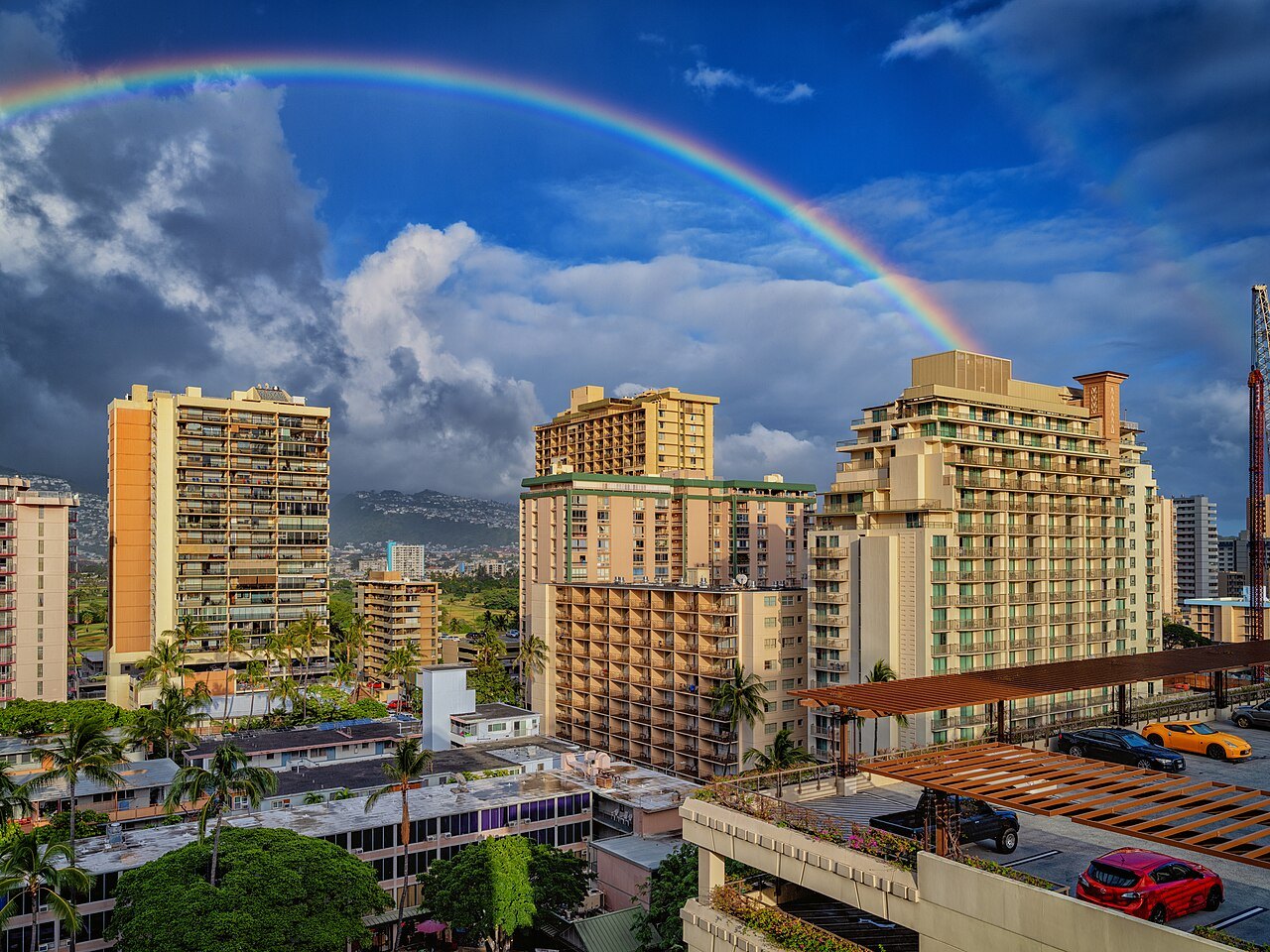
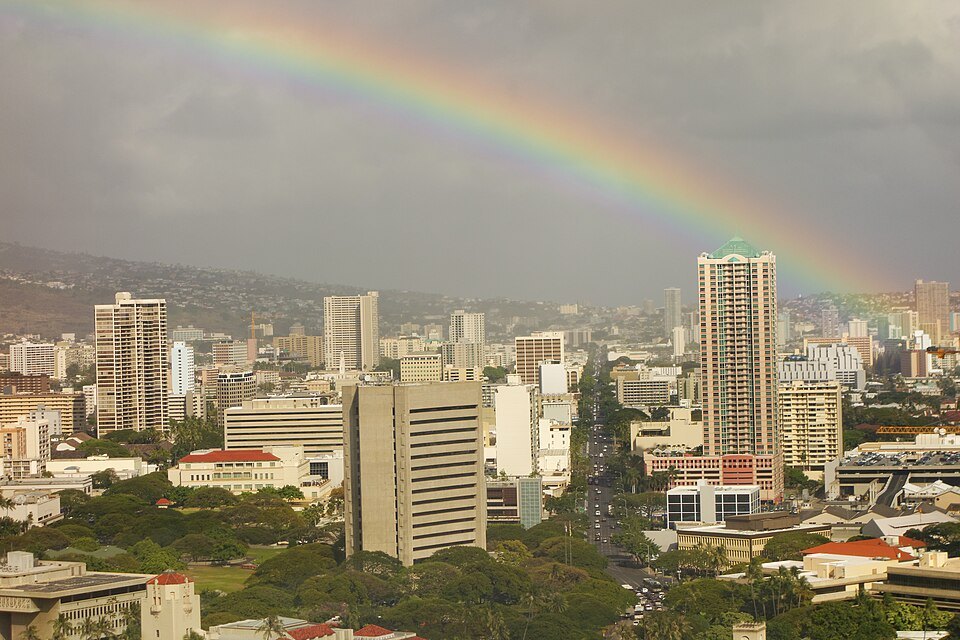
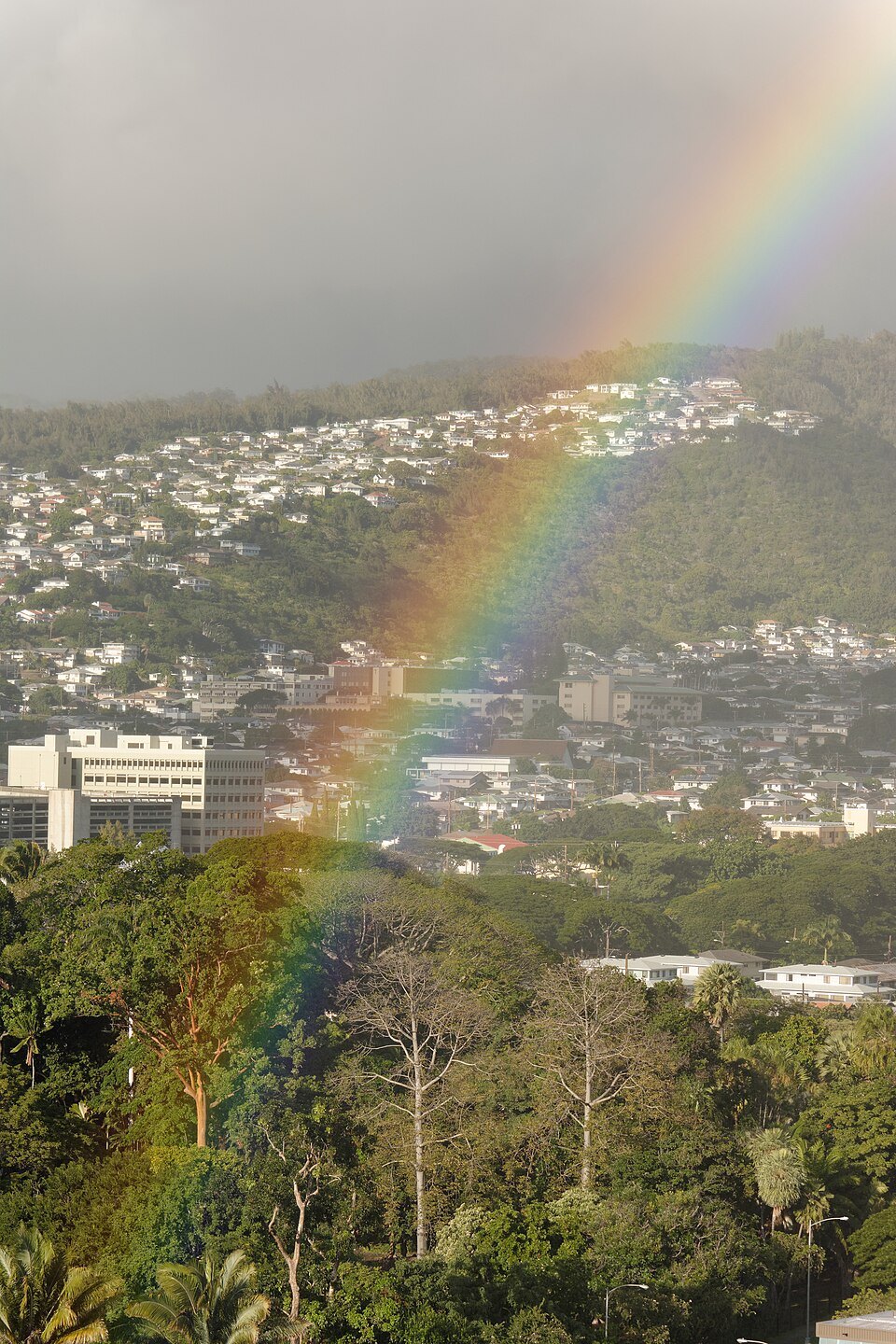
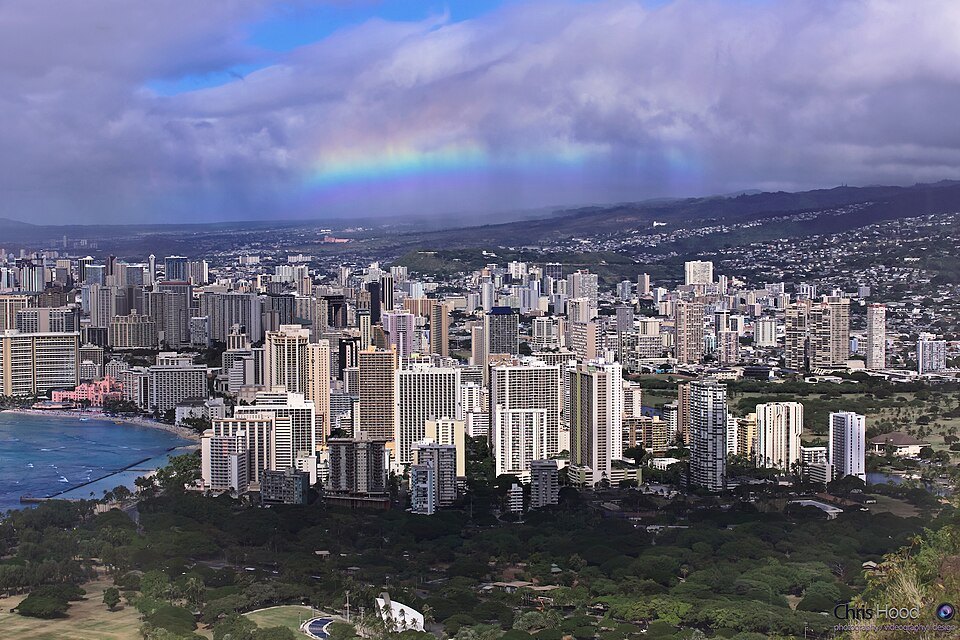
From October to early April the trade winds weaken and most of the city's rain falls; its annual total is modest, about sixteen inches, and summer and winter have a similar number of rainy days, but winter showers are heavier. The hills turn green, rainbows are common over Mānoa, and from mid-September to late March the sun sets into the sea in view of Waikīkī Beach.
Winter is also the season of Kona storms, cyclones that come from the west, against the usual wind. The islands see two or three a year, and they can bring heavy rain, flash floods and strong winds for several days. On the island's North Shore, winter storms in the North Pacific send the huge surf the North Shore is famous for, while its summer waters are often calm; see day trips.
Two sides of the mountains
Hawaiʻi's weather depends as much on where you stand as on the month. The islands get most of their rain from the trade winds on their north and east flanks, the windward side, where moist air is pushed up over the mountains; the south and west coasts, the leeward side where Honolulu lies, are much drier. Windward areas tend to be cloudier in summer, when the trades are strongest, and leeward areas cloudier in winter, when storm fronts pass more often.
That is why a gray morning in the city can be a bright one a short drive away, and the reverse, and why a drive over the mountains to the windward coast so often means driving into rain. Within the city, the valleys behind it are wetter than the shore: Mānoa gets rain almost every day, even in the dry season, while its walls stay dry, and its stream has flooded more than once, badly in 2004.
The extremes
Honolulu's records show how narrow its range is. The highest temperature ever recorded, ninety-five degrees, was reached only twice, in 1994 and 2019; the lowest, fifty-two degrees, in 1902 and 1969. Lows in the upper fifties happen once or twice a year. Tornadoes are rare, about one every fifteen years, and waterspouts off the coast about one every five. Pack for warm days and mild evenings in every season, with a light layer for the wind and the mountains.
Hurricane season
The central Pacific hurricane season runs from 1 June to 30 November, with a peak in August and September. Tropical storms form in or move into the region on average three or four times a year, but most are weak and fade as they arrive, and direct hits on the islands are rare. The last hurricane to strike near Honolulu was Iniki, in 1992.
If a storm threatens during your stay, follow the instructions of local officials and your hotel, keep a little water and food on hand, and expect flights and beach access to be affected for a day or two. Travel insurance that covers storm disruption is worth considering for late-summer trips.
The calendar
The city's year has its own days. Lei Day, on 1 May, has been a holiday since 1929; each island has its own lei, and the celebration, first held in courts and town halls, now takes place in Kapiʻolani Park. King Kamehameha Day, on 11 June, first proclaimed by Kamehameha V in 1871, sees the statue in front of Aliʻiōlani Hale draped in long lei and a floral parade that runs from ʻIolani Palace past the harbor, through Kakaʻako, Ala Moana and Waikīkī, to Kapiʻolani Park.
The Aloha Festivals, a statewide series of free cultural celebrations based on the Makahiki, the start of the Hawaiian year, include a royal court, a street party in Waikīkī and another floral parade; check their dates for the year you travel. At ʻIolani Palace, the birthdays of King Kalākaua, on 16 November, and Queen Kapiʻolani, on 28 December, are marked with ceremonies.
Every month: the jellyfish
One rhythm has nothing to do with seasons. Box jellyfish tend to come onto the south and leeward shores, including Waikīkī, about nine to ten days after each full moon, and lifeguards post warnings when they do. If your beach days fall then, check the signs and ask; the ocean page explains the warnings.
So when?
For the most reliable weather, come between May and September, and accept the summer heat. For green hills, quieter beaches and sunsets into the sea, come between October and April, and accept some rain. For the royal days, time a visit to 11 June. Whenever you come, book the few things that need it early; see booking ahead.