Home · Sights · ʻIolani Palace
ʻIolani Palace
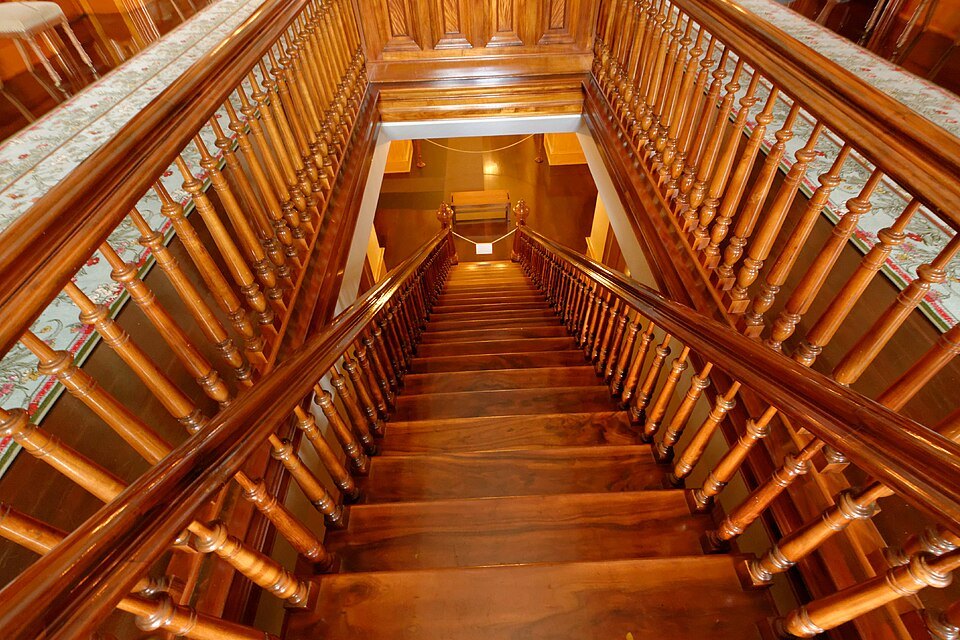
- iThe Grand HallA central hall running through the palace, facing a broad staircase built of koa wood.
- iiThe Throne RoomThe southeast corner room, used for receptions, and later for the trial of the deposed queen.
- iiiThe Blue RoomA reception room where Queen Liliʻuokalani played her own compositions on a koa piano for guests.
- ivThe State Dining RoomThe formal dining room next to the hall, used after the overthrow as the territorial senate chamber.
- vThe Imprisonment RoomThe small upstairs room where the queen was held for nine months in 1895.
- viʻIolani BarracksThe kingdom's former guard barracks, moved on the grounds in the 1960s and now the visitor center.
Reading the place
Why it matters
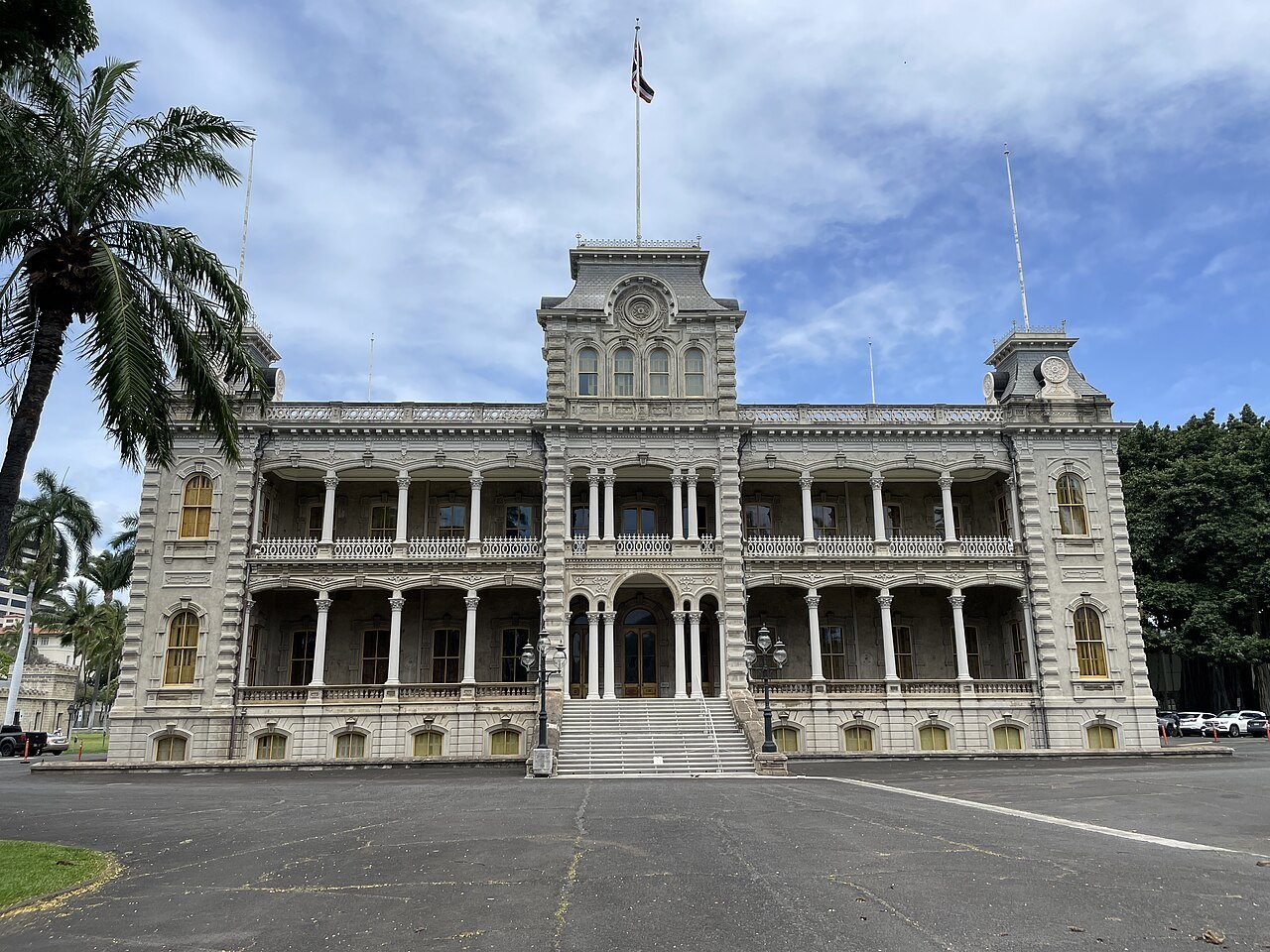
ʻIolani Palace was the royal residence of the rulers of the Kingdom of Hawaiʻi, from Kamehameha III, who moved the capital to Honolulu in 1845, to Queen Liliʻuokalani, who was deposed in 1893. The building standing now is the second palace on the site, completed in November 1882 for King Kalākaua. It is often described as the only royal palace on United States soil, and it is the place where the story told on the kingdom page becomes something you can walk through.
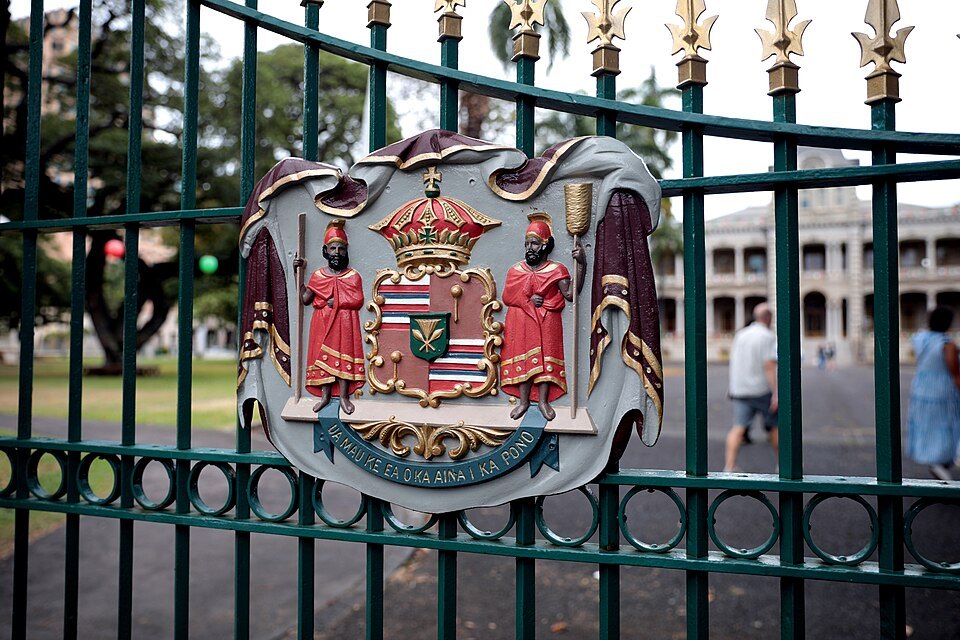
It is also one of very few places in Hawaiʻi where the flag of Hawaiʻi may officially fly alone, without the flag of the United States beside it. The grounds are a state park managed by the Department of Land and Natural Resources; the building itself is run as a historic house museum by the Friends of ʻIolani Palace, a non-profit organization.
The palace Kalākaua built
By the time Kalākaua came to the throne, the first palace, a house called Hale Aliʻi built in the 1840s, was in poor condition and eaten by termites. Kalākaua, the first monarch to travel around the world, wanted a palace to stand beside those he had seen in Europe, and he had the old building razed. The cornerstone of the new one was laid on 31 December 1879, and the palace was finished in November 1882.
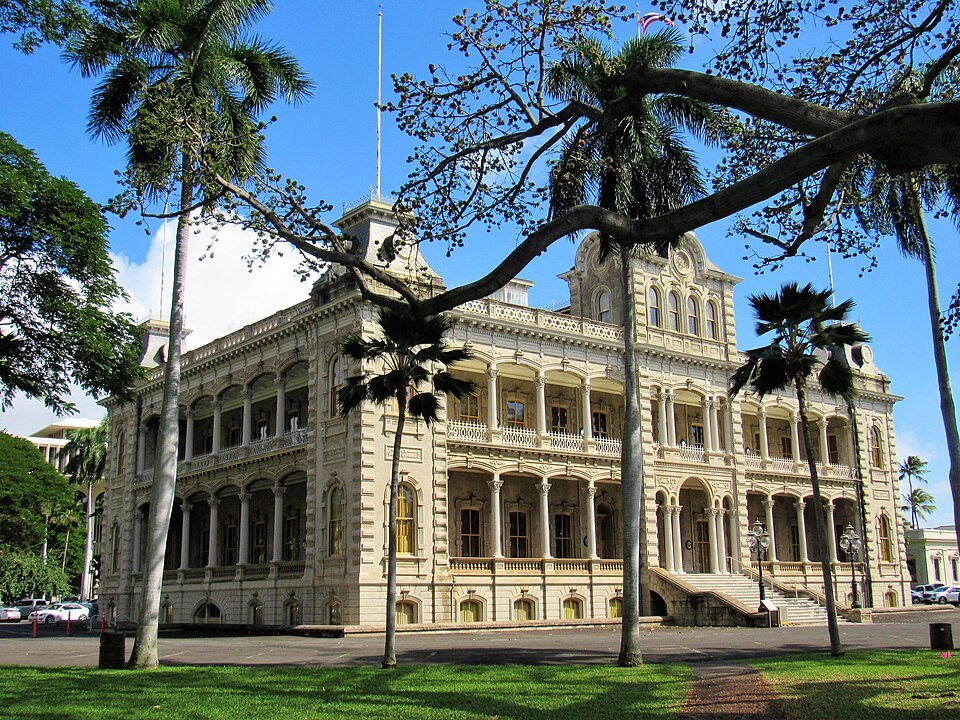
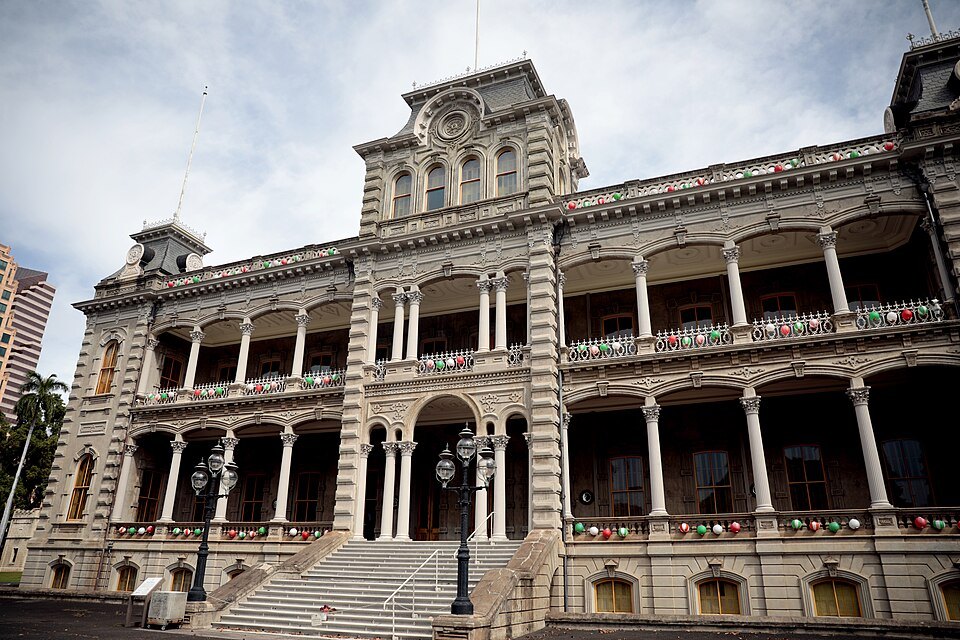
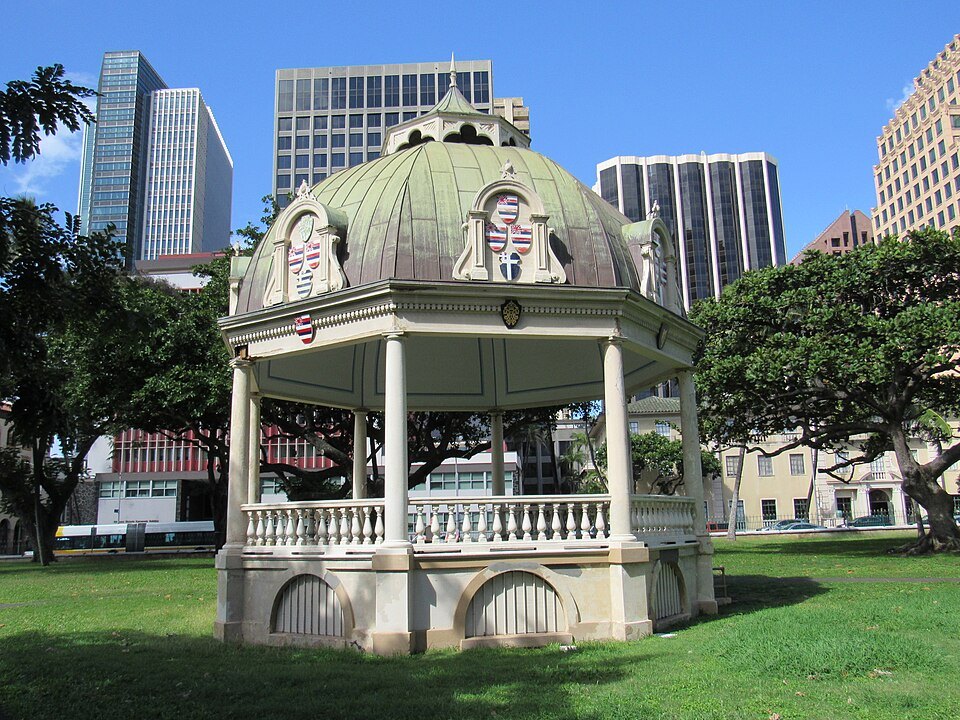
Three architects contributed to the design, with Thomas J. Baker drawing the structure. It is built of brick faced with concrete, about 140 feet by 100 feet, rising two stories over a raised basement, with four corner towers and two central ones. The style is usually called American Florentine. On 12 February 1883, although he had already reigned for nine years, Kalākaua held a formal coronation; the pavilion built for it was later moved to the corner of the grounds and became the bandstand of the Royal Hawaiian Band.
1893, and what came after
On 17 January 1893 the Committee of Safety deposed Queen Liliʻuokalani, with sailors and Marines from the USS Boston landed in the city at the request of the American minister. Troops of the new Provisional Government took control of the palace. The government moved in, renamed it the Executive Building, inventoried its contents, and sold at public auction the furniture it had no use for.
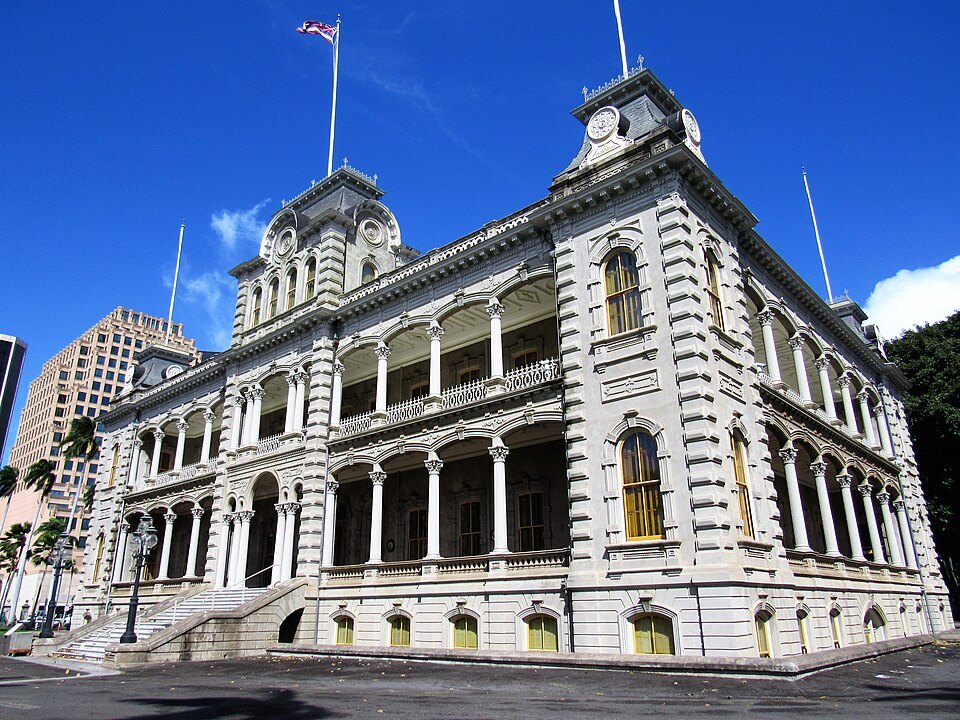
In 1895, after an armed rising to restore the monarchy failed, the queen was imprisoned in a small upstairs room for nine months, and her trial was held in the former throne room. On 12 August 1898 United States troops raised the American flag at the palace to mark annexation; the queen and many Hawaiian nobles stayed away. When Liliʻuokalani died in 1917, the territorial governor gave her a state funeral in the throne room.
For most of the next century the palace was an office building: the capitol of the Republic, then of the Territory of Hawaiʻi, a military headquarters under martial law in the Second World War, and finally the capitol of the state. The legislature met on the ground floor, with the representatives in the throne room and the senate in the dining room. Government offices left in 1969 for the new State Capitol built behind it.
What you see inside
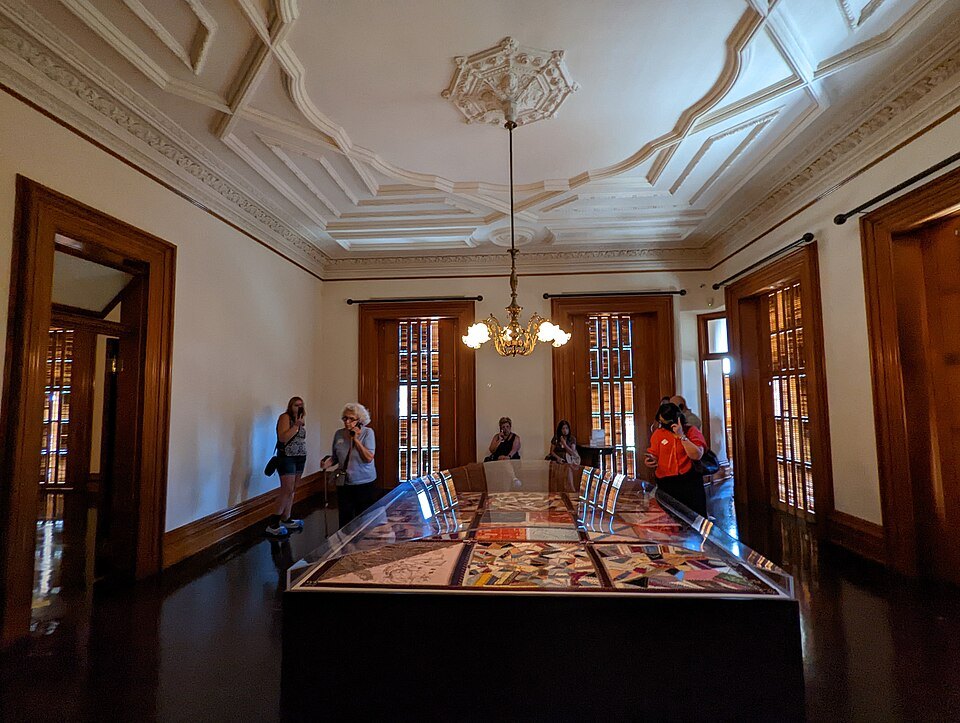
The restoration began in the 1960s under Governor John A. Burns and took years of research into newspapers, photographs and inventories to show what the rooms had looked like. Many original objects sold off after 1893 have been traced and returned, and fabrics and finishes have been reproduced. The palace opened to the public in 1978.
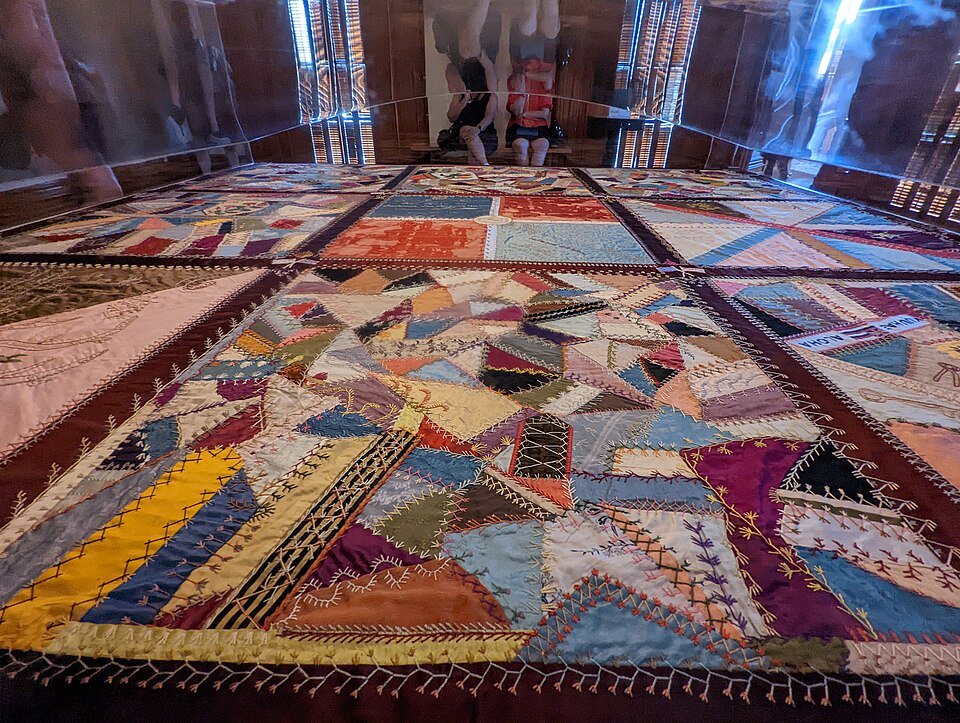
On the first floor, the Grand Hall faces the koa staircase, with ornamental plaster on the walls and ceilings. The Throne Room fills the southeast corner. The Blue Room held an 1848 portrait of King Louis Philippe of France and the koa piano the queen played. The State Dining Room completes the ceremonial floor. Upstairs are the private library and the bedrooms of the monarchs, and the room where Liliʻuokalani was confined; the quilt she made during her imprisonment is kept there.
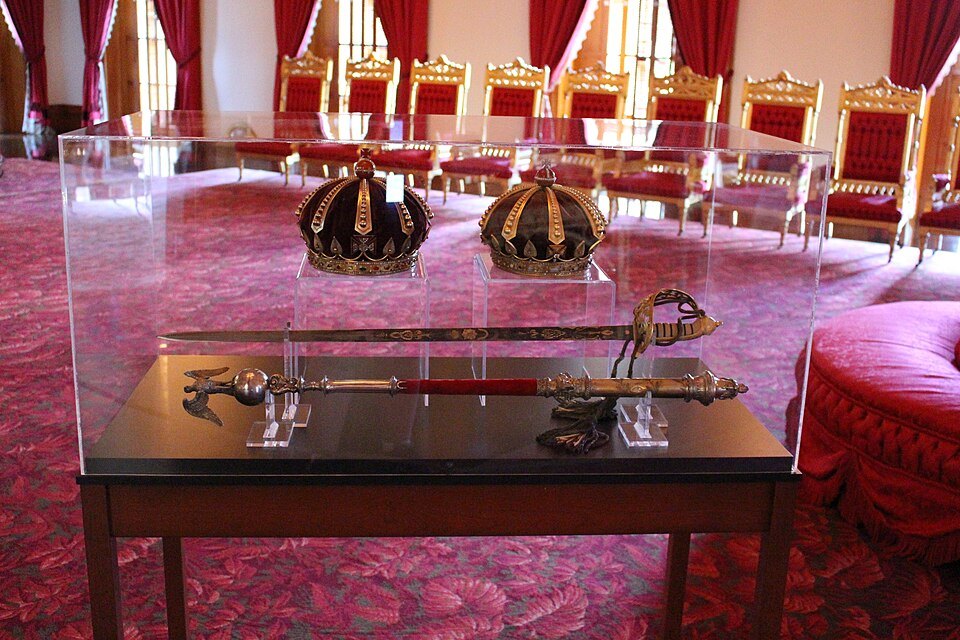
In the basement, a photographic display traces the palace's history, with orders and decorations of the monarchy and an exhibit on the restoration.
The grounds
You can walk the grounds even if you do not go inside. The former ʻIolani Barracks, the guard house of the kingdom, was moved from its original position in the 1960s and now serves as the visitor center. The coronation pavilion stands as a bandstand in the southwest corner. Across King Street is Aliʻiōlani Hale with the statue of Kamehameha I, and a short walk east is Kawaiahaʻo Church.
Within the grounds is Pohukaina, a royal burial site older than the palace, enclosed by a fence since the 1930s. Several chiefs are still buried there. It is a grave, not a garden feature: look from the path and do not climb, picnic or photograph people posing there.
How to visit
The rooms are seen on guided tours with a docent or on self-led audio tours, both covering the first and second floors. The palace asks visitors to reserve ahead, and walk-ins are taken only when there is space, so book before you go, especially in the busy seasons described on booking ahead. Leave time after the tour for the basement galleries.
Shirts and footwear are required, and bathing suits and beachwear are not allowed; you are given coverings for your shoes to protect the floors. Photography for personal use is permitted, but not with flash, and video and tripods are not allowed. Check the palace's own site for the current tour times and anything that has changed.
Honest notes
The building that appears as the Five-0 task force headquarters on television is not the palace but Aliʻiōlani Hale across the street, which is often mistaken for it in photographs. And the palace is a museum of a kingdom that ended by force: the tour does not avoid 1893, and a visitor should not expect it to.
Nearby
- NearbyAliʻiōlani Hale and the Kamehameha StatueA government building begun by Kamehameha V in 1872, the home of Hawaiʻi's Supreme Court today, and in front of it the gilded statue of Kamehameha I that arrived in Honolulu in 1883 after the first casting was lost at sea.Read the page
- NearbyThe State Capitol and Washington PlaceA capitol opened in 1969 whose columns are palms and whose chambers are volcanoes, open to the sky; beside it Washington Place, where Queen Liliʻuokalani was arrested in 1895 and lived until her death.Read the page
- NearbyKawaiahaʻo Church and the Mission HousesThe church the Hawaiian kings took their oaths in, built between 1836 and 1842 of some 14,000 blocks of coral that divers cut from the reef, and beside it the houses of the missionaries who arrived in 1820.Read the page