Getting to Honolulu, and From the Airport Into the City
An island city
Honolulu is the westernmost and southernmost major city of the United States and one of the most isolated in the world: the nearest point on the American mainland is more than two thousand nautical miles away, and the nearest big city, San Francisco, a little farther. That distance decides how you arrive. Almost everyone flies, and almost every flight lands at the same airport, on the south shore of Oʻahu between the city and Pearl Harbor.
From the airport, downtown is three miles to the east and Waikīkī, where most visitors stay, is ten. There is no single fast link into the city yet: the new rail line reaches the airport but not the center, so the last miles are by bus, taxi, shuttle or car. This page takes each way in turn. For moving around once you are here, see getting around.
The airport
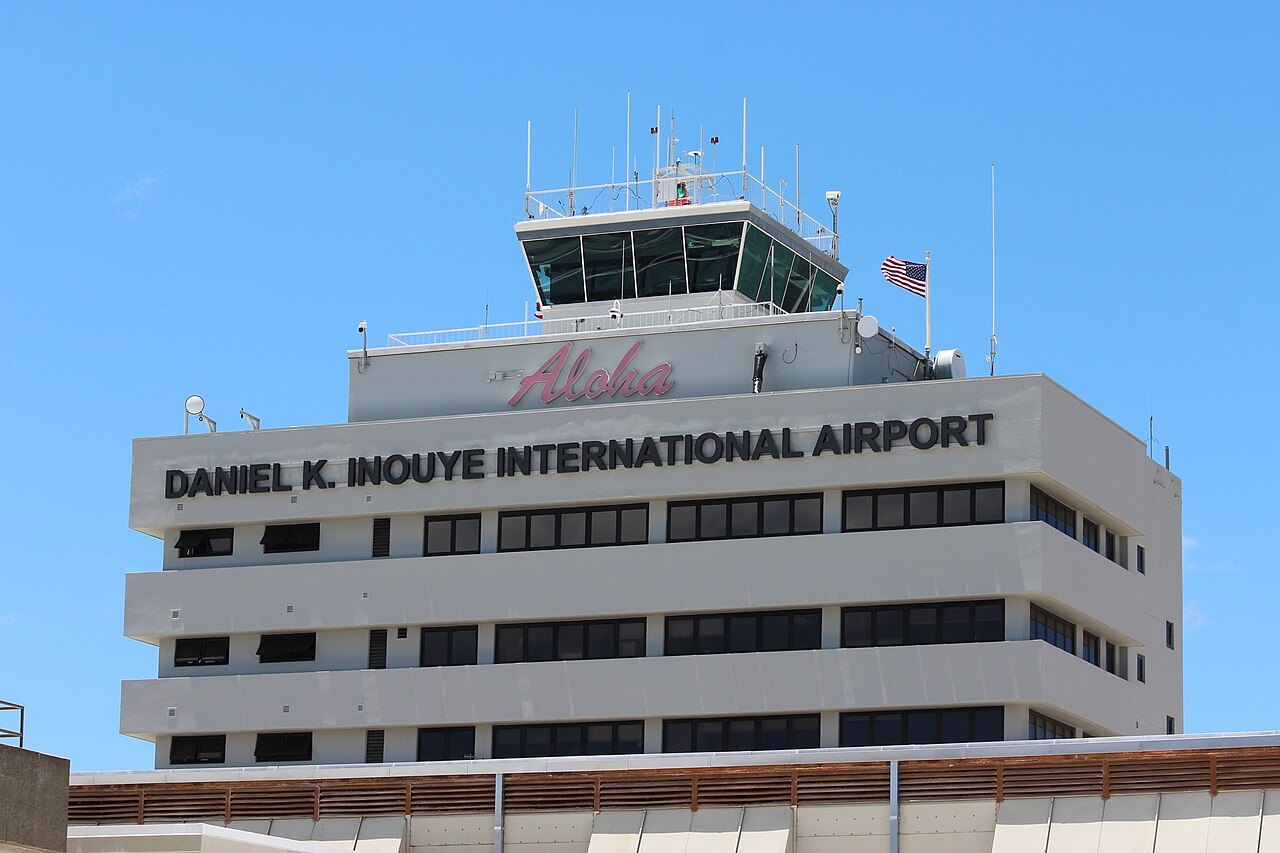
Daniel K. Inouye International Airport, named for the Honolulu-born senator and Medal of Honor recipient, is the main airport of the Hawaiian Islands. It was John Rodgers Airport, then Honolulu Airport, and many people still call it Honolulu International. It shares its runways with the neighboring air force base, and its Reef Runway, completed in 1977, was the first major runway in the world built entirely offshore.
The field opened in 1927 as John Rodgers Airport, named for a naval officer, and was taken over by the military after the attack on Pearl Harbor and returned to the territory after the war; it became Honolulu Airport in 1947 and Honolulu International in 1951. Sitting near the middle of the Pacific, it was a stop on many transpacific routes, and by 1950 it was the third-busiest airport in the United States by aircraft movements.
It has three terminals. Terminal 2, the old Overseas Terminal of 1962 remodeled by the architect Vladimir Ossipoff, is the largest and the only one that can take international arrivals, so flights from the mainland and from abroad come in here. Terminal 1, the former Interisland Terminal, handles flights to and from the other islands and some mainland services. Terminal 3 is a small building on the Diamond Head side of the airport.
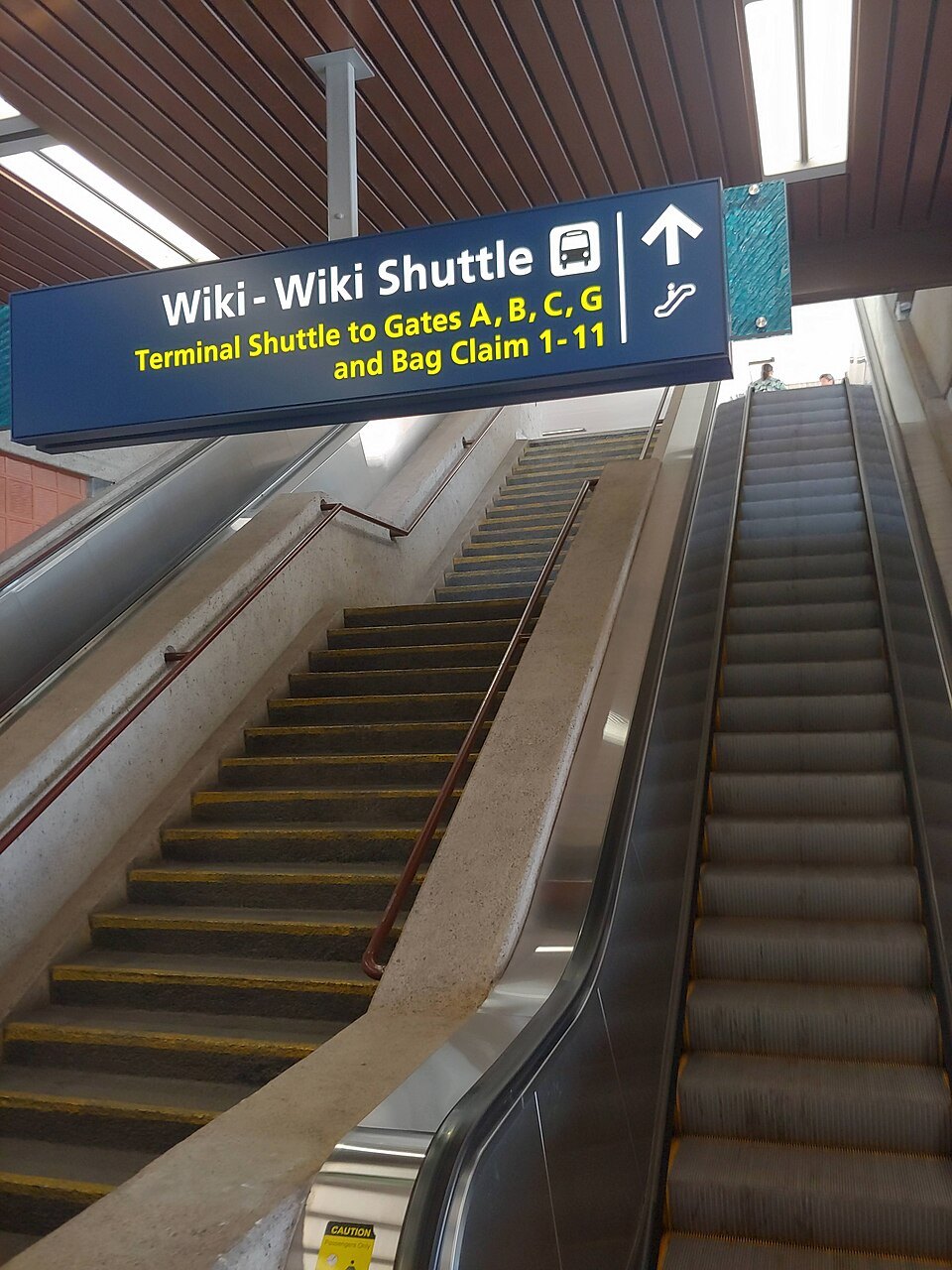
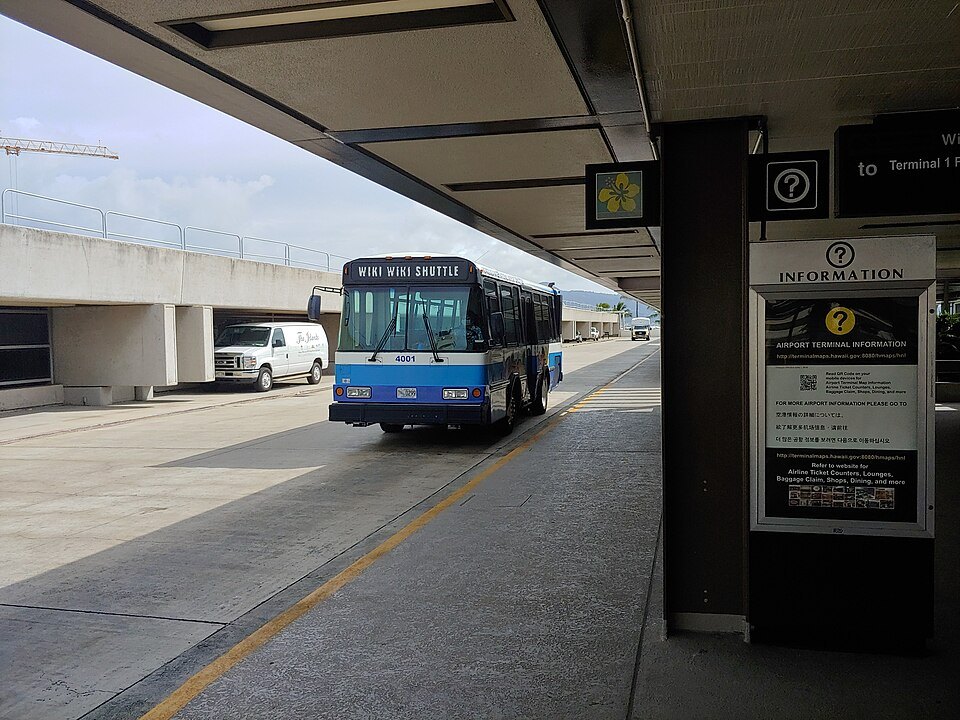
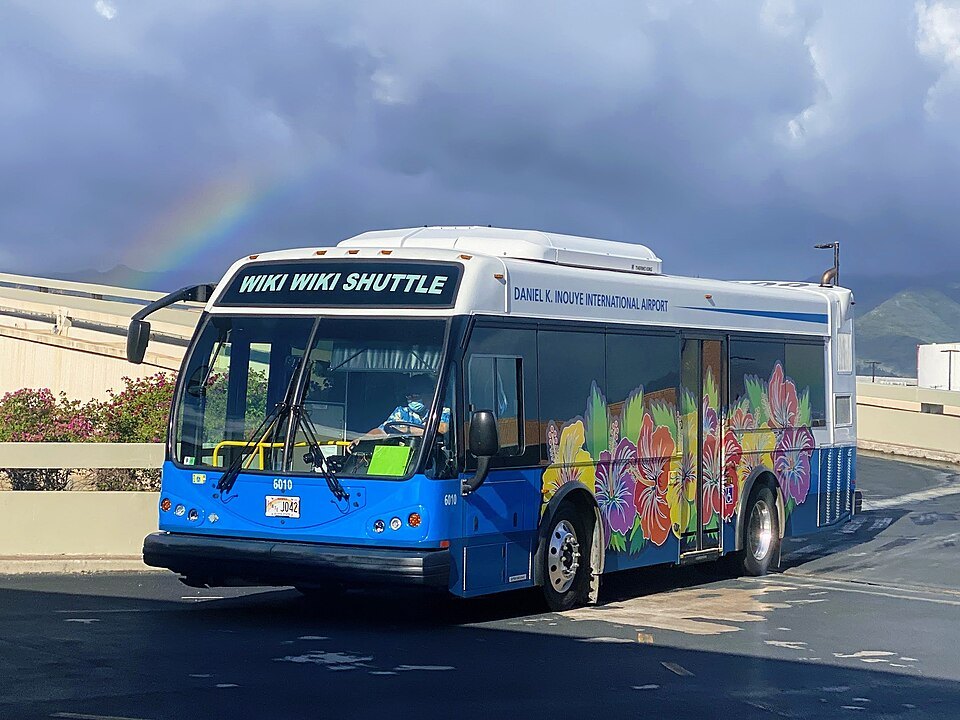
Terminals 1 and 2 are linked behind security, but anyone walking from Terminal 1 into Terminal 2 must pass a Department of Agriculture inspection of their carry-on bags, because plants and produce from the islands are controlled. The free Wiki Wiki Shuttle runs between the ticket lobbies of all three terminals and between the concourses.
Into the city by Skyline
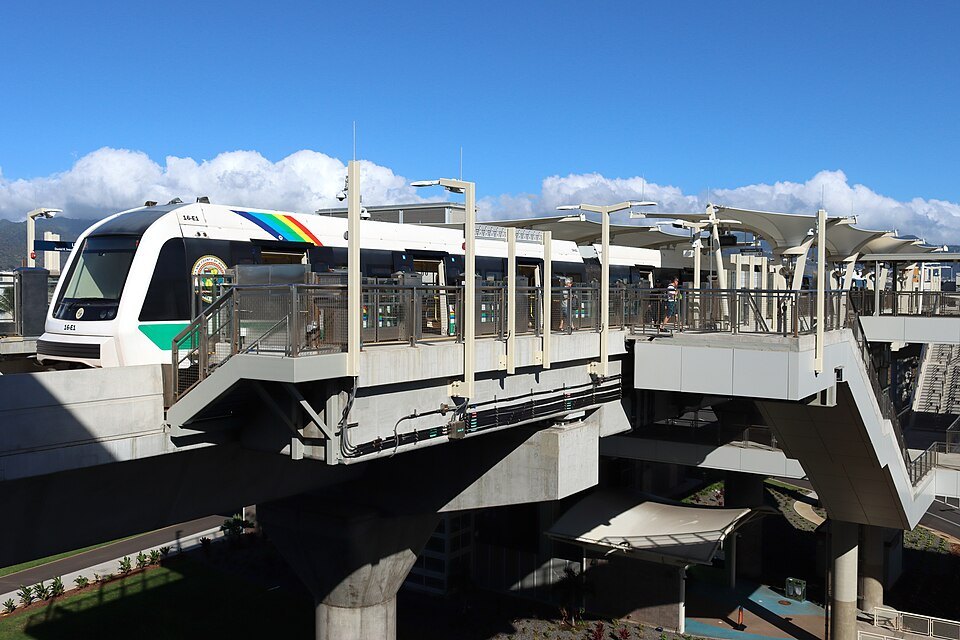
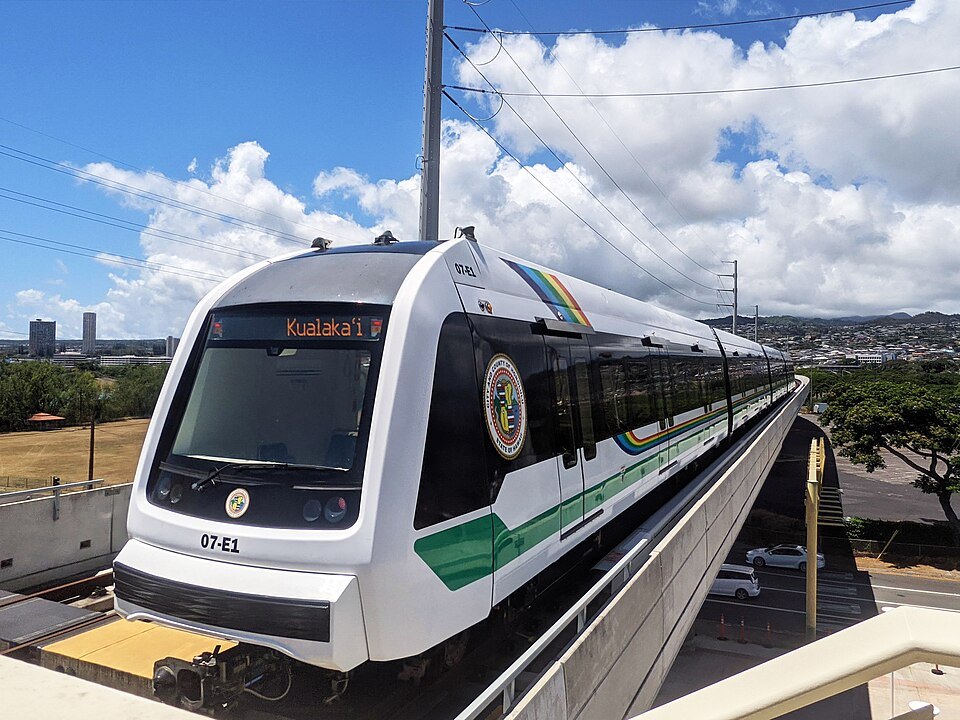
Skyline, Honolulu's elevated, driverless rail line, opened its first section in 2023 and extended to the airport on 16 October 2025. Its airport station, Lelepaua, stands between Terminals 1 and 2 near the international parking garage, and the trains have luggage racks.
Skyline is the largest public works project in the history of Hawaiʻi, and it is unusual among American metros: the trains run without drivers, and the platforms have screen doors between the waiting area and the tracks. Its first section, opened on 30 June 2023, runs between East Kapolei and Hālawa, near the old Aloha Stadium, entirely outside the urban core.
Before you plan around it, look at where it goes. From the airport the line runs west, through Pearl Harbor and ʻAiea to the new towns of the ʻEwa plain, and east only as far as Middle Street in Kalihi, where there is a major bus transfer point. The section through downtown to Kakaʻako is under construction and due in 2031. For most visitors that makes Skyline useful mainly as a connection: to Pearl Harbor from the airport, or to a bus at Middle Street. Check the line's own map before relying on it.
Into the city by bus
TheBus, the island's public bus system, runs a line from the airport through downtown, Kakaʻako and the Ala Moana shopping center to Waikīkī; when this page was written it was a rapid line called the W Line, and a late-night route also served the airport. Route names change, so check TheBus before you travel.
Luggage is the catch. TheBus limits baggage, and since 16 October 2025 a temporary rule has allowed each rider one standard suitcase and one smaller carry-on bag or backpack, which must fit in front of or beside your seat without blocking the aisle or taking another seat. A family with large suitcases should plan on a taxi or shuttle instead. The getting-around page explains how fares and passes work.
Taxis, shuttles and cars
Taxis, shared shuttles and app-based ride services all serve the airport; follow the signs from baggage claim. Traffic on the freeway and on Nimitz Highway can be slow at busy times, so give yourself margin when you head back for a flight.
If you are renting a car, all the rental companies work from one consolidated facility, opened in December 2021, a short walk from Terminal 2 baggage claim and served by a shared shuttle bus. Many visitors staying in Waikīkī do not need a car for the city itself; consider renting only for the days you leave it, as described on day trips.
By sea, and from the other islands
Cruise ships dock at the piers of Honolulu Harbor near Aloha Tower, and their passengers come ashore within walking distance of downtown and Chinatown. If you are coming from Maui, Kauaʻi or the island of Hawaiʻi, you will most likely fly in, landing at Terminal 1.
Leaving Hawaiʻi
When you fly back to the mainland, your bags go through an agricultural inspection, because many plants, fruits and soils from Hawaiʻi are not allowed onto the mainland. Leave time for it, and do not pack fresh fruit or plants unless they are sold as pre-inspected. Give yourself extra time in the busy seasons described on when to come.
Once you are here
Waikīkī and downtown are each easy to get around on foot, and TheBus covers the rest of the city; the where to stay page explains which part of the city suits which trip. The first thing many visitors do is walk down to the beach; the second should be reading the ocean page before swimming.
Some links on this page are affiliate links. If you book through one we may earn a commission, at no extra cost to you. It does not affect what is recommended here, and no sight page on this site carries one.
Arranged before you land:
More photographs
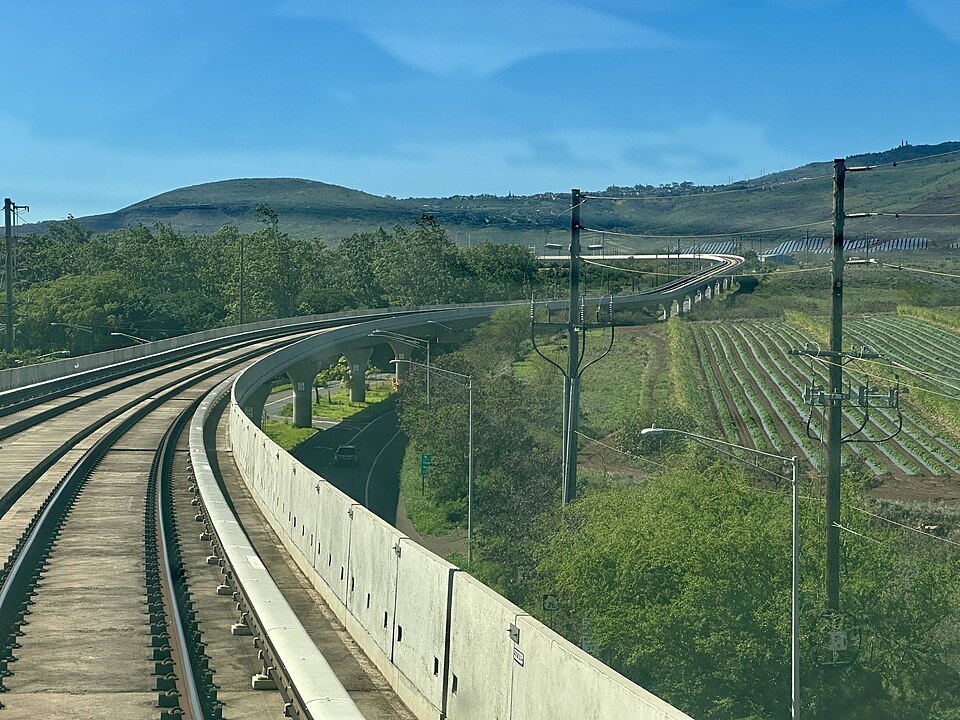
The Skyline guideway curving across the ʻEwa plainRickyCourtney, Wikimedia Commons, CC BY-SA 4.0