Read on
The short answer
For almost a century the Hawaiian Islands were an independent kingdom, recognized by the powers of Europe and by the United States, and from 1845 Honolulu was its capital. On 17 January 1893 a group of residents calling themselves the Committee of Safety deposed Queen Liliʻuokalani, with sailors and Marines from the USS Boston landed in the city at the request of the American minister. The United States annexed the islands in 1898, and a hundred years after the overthrow, Congress formally apologized for the part that American agents and citizens played in it.
The kingdom's capital is still standing. Within a few blocks of downtown Honolulu you can see its palace, its government house, the church where its kings took their oaths, and the house where its last queen lived and died. The kingdom page tells the history in full; this article is a walk through the places.
Start at the statue
Begin on King Street in front of Aliʻiōlani Hale, the government house of the kingdom, where the gilded bronze statue of Kamehameha I stands on its pedestal. Kamehameha, a chief from the island of Hawaiʻi, conquered Oʻahu, Maui, Molokaʻi and Lānaʻi in 1795, and by 1810, when Kauaʻi and Niʻihau joined by agreement, all the inhabited islands were one kingdom. The statue arrived in 1883, a second casting made after the first was lost in a shipwreck off the Falkland Islands.
The building behind it was begun by Kamehameha V in 1872 and dedicated by King Kalākaua in 1874. Until 1893 it held the kingdom's executive departments, legislature and courts. In January 1893 the armed supporters of the Committee of Safety occupied it while they waited for the queen's answer to their ultimatum. It houses the state Supreme Court today, and a small museum of the islands' legal history.
Cross to the palace
Across the street stands ʻIolani Palace, completed in 1882 for Kalākaua and often called the only royal palace on United States soil. Kalākaua, the first monarch to travel around the world, wanted a palace that could stand beside the ones he had seen in Europe.
It was here that power passed. In 1887 a volunteer militia of American settlers forced Kalākaua to accept what became known as the Bayonet Constitution, which weakened the crown and took the vote from Asians and poorer citizens. His sister, Liliʻuokalani, who succeeded him in 1891, tried to replace it, and the Committee of Safety moved against her. The American troops did not enter the palace grounds or fire a shot, but their presence settled the matter. The queen yielded, in her own words, “to the superior force of the United States of America,” under protest.
Two years later, after a royalist rising failed, she was arrested and held for nine months in a small room upstairs, and her trial took place in the former throne room. The palace then served as the capitol of the republic, the territory and the state until 1969, and it has been a museum since 1978. Book a tour of the rooms, and walk the grounds even if you do not go inside.
The queen's house
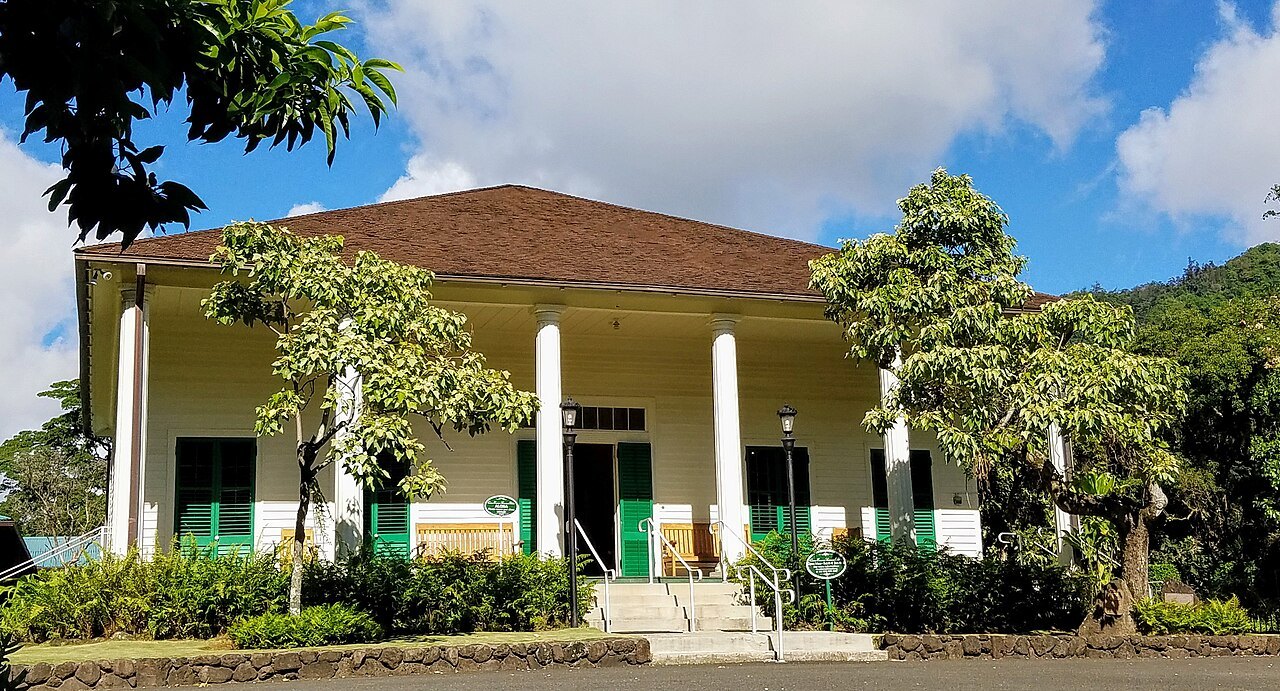
Behind the palace, beside the State Capitol, is Washington Place, a white house of the 1840s with two tiers of verandas. It became Liliʻuokalani's home when she married John Owen Dominis in 1862, and she was arrested there in 1895. She lived there for the rest of her life and died there on 11 November 1917. Between the Capitol and the palace stands her statue, dedicated in 1982, facing the palace she lost.
The Capitol itself, opened in 1969, is the building that let the palace become a museum again; its palm-shaped columns and volcano-shaped chambers stand for the islands.
The royal church
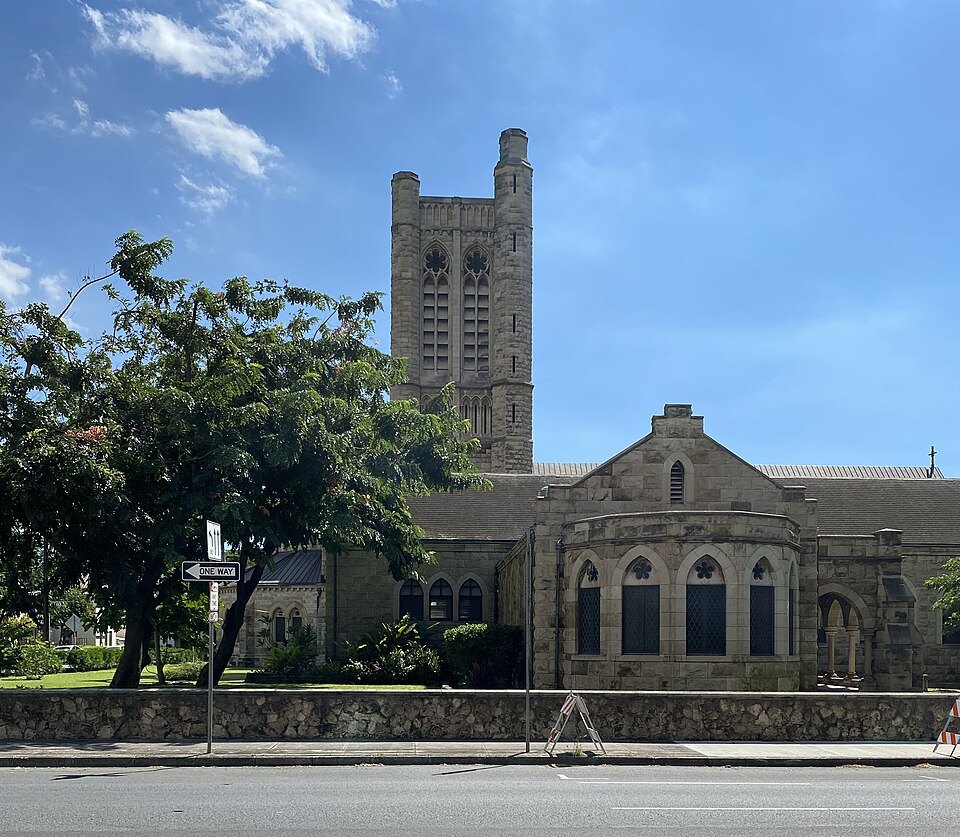
Finish at Kawaiahaʻo Church, a short walk east on King Street. Built between 1836 and 1842 from some 14,000 blocks of coral cut by Hawaiian divers from the reef, it was the chapel of the royal family: Kamehameha III, Kamehameha IV, Kamehameha V and Kalākaua took their oaths to their constitutions here. Parts of its services are still held in Hawaiian, and the tomb of King Lunalilo stands in its churchyard.
Two more stops
Across the street from the church are the Hawaiian Mission Houses, whose oldest building, a wood-frame house, was shipped in pieces around Cape Horn from Boston in 1821, with small windows and short eaves designed for a New England winter. The missionaries who lived there created a written form of Hawaiian and printed the first books in it, and their descendants were among the men who later moved against the queen.
If you are in the city on or near 11 June, King Kamehameha Day, a holiday first proclaimed by Kamehameha V in 1871, come back to the statue in the afternoon, when it is draped in long strands of fresh lei.
What the record says
The end of the kingdom was investigated at the time. President Grover Cleveland's envoy, James Blount, reported in 1893 that American diplomatic and military representatives had abused their authority and were responsible for the change of government; a Senate committee led by John Tyler Morgan then contradicted him. The United States recognized the new government, and in 1898, after an annexation treaty failed in the Senate, annexed the islands by a joint resolution of Congress. More than twenty-one thousand people had signed a petition against annexation in 1897.
In 1993 the Apology Resolution, signed by President Bill Clinton, acknowledged the active participation of agents and citizens of the United States in the overthrow, and that the Native Hawaiian people never directly gave up their claims to sovereignty. The question still matters in Hawaiʻi. Visit these places as the capital of a nation, and listen to what is said about them.
Before or after
Bishop Museum, founded in 1889 in memory of Princess Bernice Pauahi Bishop, the last heir of the Kamehameha line, holds much of the kingdom's material culture and explains it well. For the war that came to the islands half a century later, see how to plan a visit to Pearl Harbor, and for lunch after the walk, Chinatown is a few blocks away; see what to eat first in Honolulu.
More from the journal
- Day TripsHow do you plan a visit to Pearl Harbor from Honolulu?What the Pearl Harbor National Memorial includes, how the USS Arizona Memorial reservation works, the no-bags rule, how to get there without a car, and how to visit a war grave.Read the piece
- Eating & DrinkingWhat should you eat first in Honolulu?A plate lunch, poke, saimin, a malasada, shave ice and a plate of Hawaiian food: what each is, where it came from, and how to find it in the city without a reservation.Read the piece
- Getting AroundDo you need a car in Honolulu?Why most visitors can see Honolulu without a car, what TheBus, Skyline, bikes and taxis cover, where a car makes sense, and how to rent one for just the days you need it.Read the piece