Read on
A harbor district with a long memory
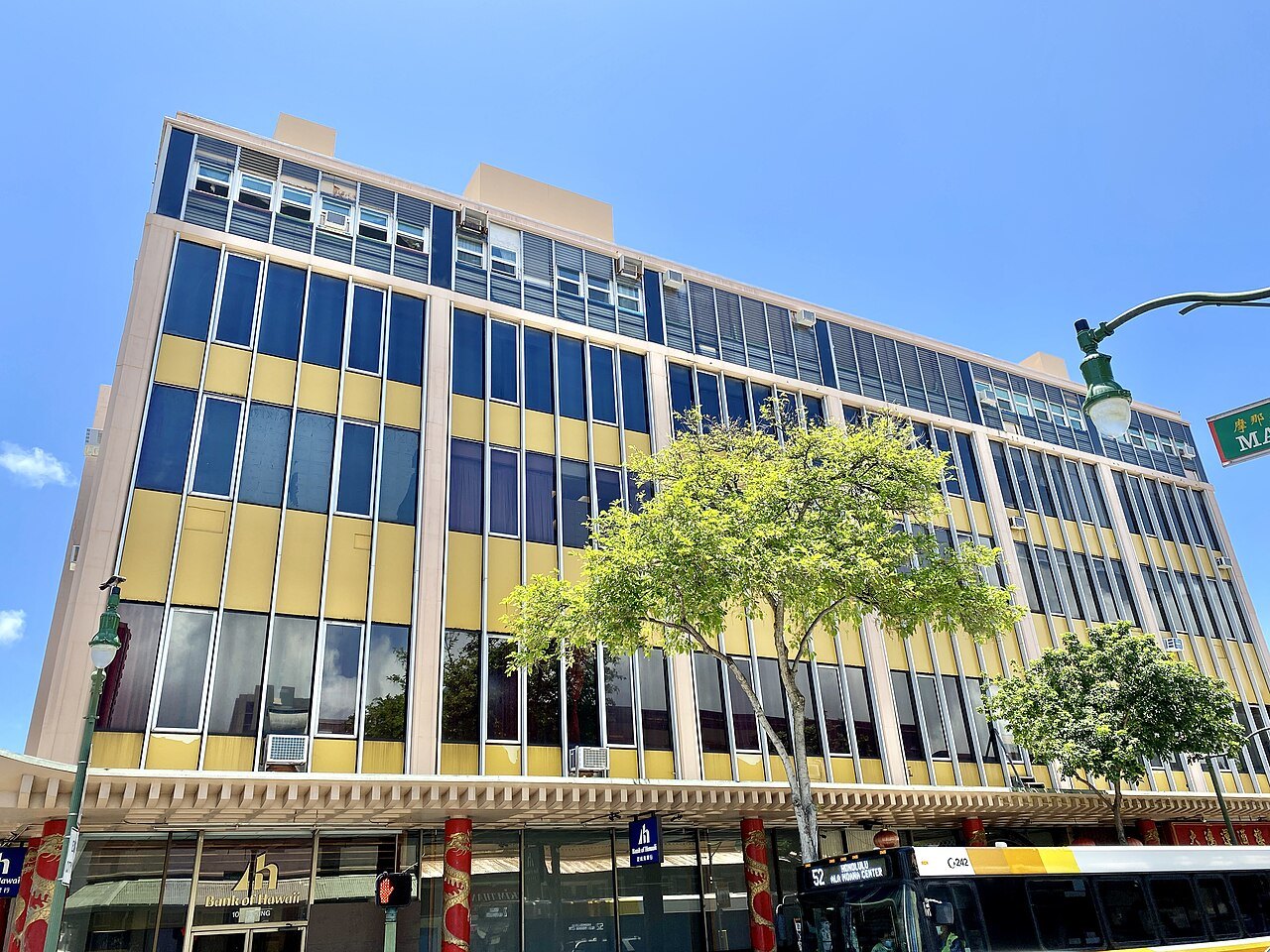
Chinatown fills the blocks between the harbor, Nuʻuanu Stream and Beretania Street, and it is one of the oldest Chinatowns in the United States. In the nineteenth century, laborers were brought from China to work the sugar plantations, and many who finished their contracts stayed on and became merchants. By the 1900 census, about fifty-six percent of the people living here were Chinese, though the neighborhood has always been mixed.
Before it became Chinatown, the ground near the harbor was probably worked by Hawaiian fishermen, and at the end of the eighteenth century Kealiʻimaikaʻi, a brother of Kamehameha I, lived here. The Spaniard Francisco de Paula Marín, one of the first foreigners to settle on Oʻahu, planted a vineyard at the district's northern edge, and Vineyard Boulevard still carries its name.
In Chinese, Honolulu is traditionally called Tánxiāngshān, Sandalwood Mountain, after the trade that first brought ships to the harbor. Chinatown is where many visitors' walks through the city begin, and it is the part of Honolulu where the old harbor town is easiest to picture, before the high-rises of downtown and Waikīkī rose around it.
Two fires
Fire shaped Chinatown twice. The first struck on 18 April 1886, when flames consumed about sixty acres and destroyed almost all of the district, leaving some eight thousand people without homes. Chinatown rebuilt, largely in wood, and life went on much as before until the century turned and a new danger arrived from the harbor itself.
Bubonic plague reached Honolulu in late 1899, and the Board of Health quarantined Chinatown, burning buildings where the disease had been found. On 20 January 1900, wind picked up one of these controlled burns and carried it across the district. The fire burned for days and destroyed some thirty-eight acres, reducing to ashes blocks that had only recently been rebuilt.
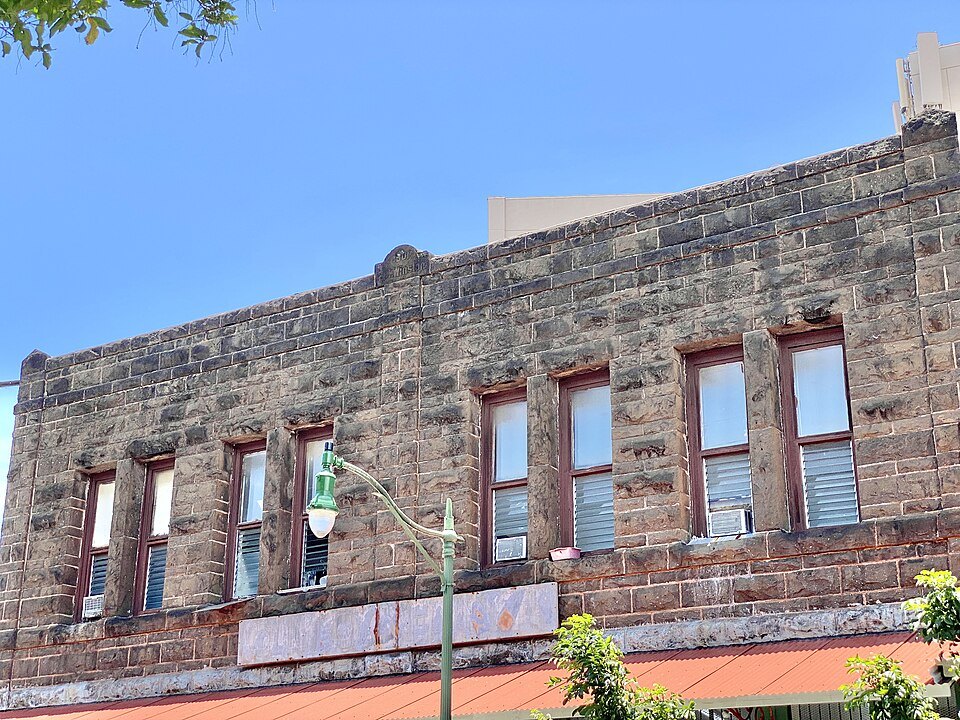
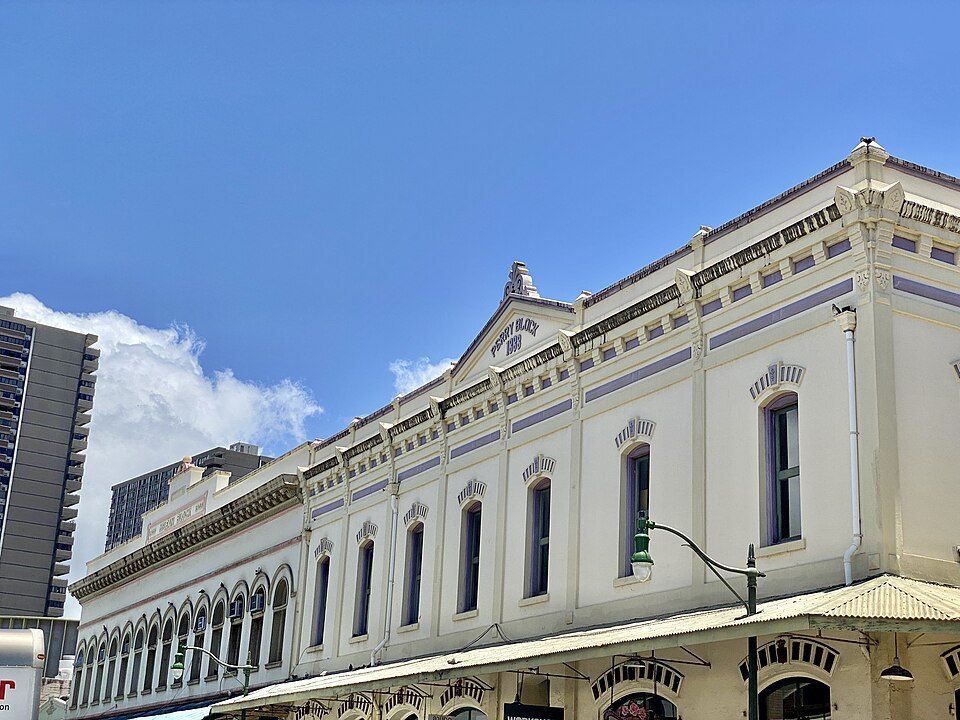
No one died in the fire itself, but thousands of people of many backgrounds lost their homes and were marched into quarantine camps; accounts describe white onlookers forcing them along with bats and pick handles. Many Chinese residents believed the fires had been set deliberately to destroy their community, and some left for other parts of the city. The rest rebuilt in brick and stone, which is why so many facades date from 1901.
From fire to Arts District
After the fire, Chinese businesses reopened and learned to sell the district's exoticism to visitors; the Wo Fat restaurant building of 1938 on Hotel Street, remodeled in a self-consciously "oriental" style, is the best-known example. During the Second World War, with servicemen crowding into the city, Hotel Street became a red-light district, and the neighborhood's reputation for being unsafe grew afterward.
Urban renewal projects from the 1950s onward cleared large areas on Chinatown's edges and displaced thousands of residents. Opposition from residents' groups helped get about thirty-six acres listed on the National Register of Historic Places in 1973, which protected the old blocks from further demolition and opened grants for restoring them.
The Hawaiʻi Theater closed in 1984 and reopened after restoration in 1996, and the blocks around it became known as the Arts District. Chinatown is at its liveliest here in the evening, when there are performances at the theater and activity in the surrounding galleries.
The claim that the 1900 fire was set on purpose to destroy Chinatown is a belief many residents held rather than an established fact. The record shows a controlled burn that escaped control during a plague quarantine, and a response to the people left homeless that was harsh and racially charged; both parts of the story shaped the district you walk through today.
What to look for on the walk
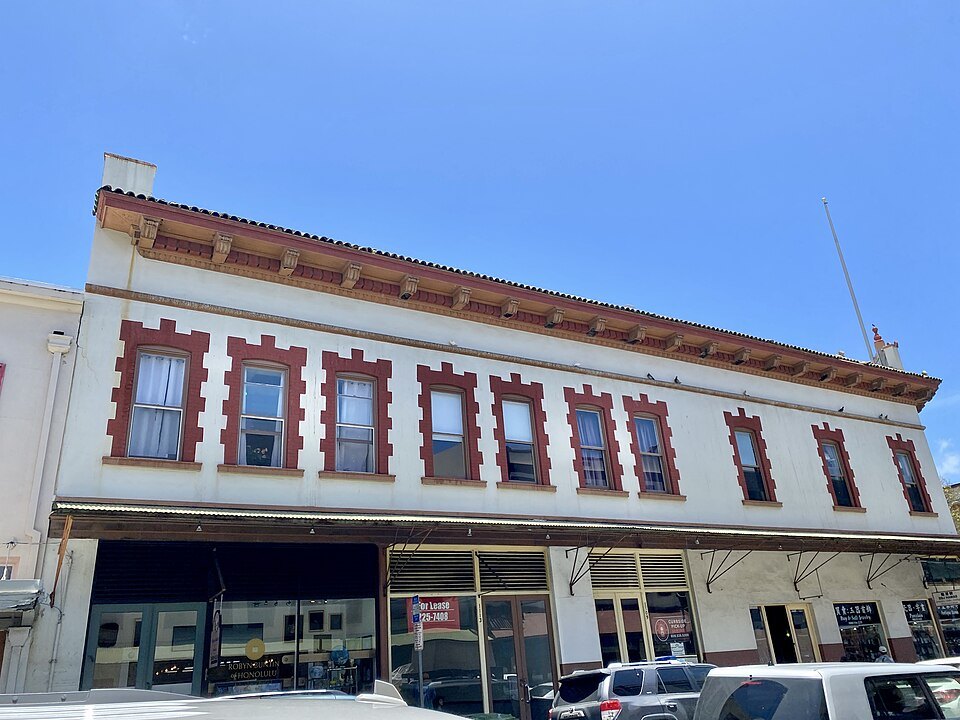
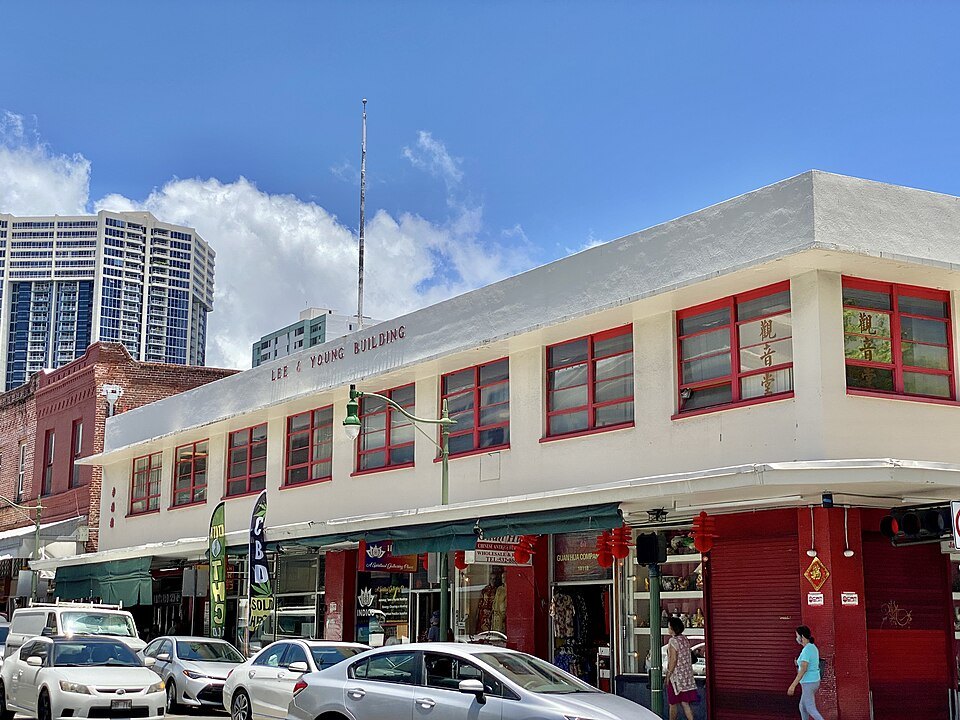
Walk Hotel Street and King Street between Nuʻuanu Avenue and River Street and look up. Above the shopfronts are the rebuilt facades of 1901 and the years after: the red-and-white Mendonca Building at Hotel and Smith streets, the stone front of the E. C. Winston Block on King Street, and the Lee and Young Building at Maunakea and King.
On King Street at Kekaulike, the Oʻahu Market, opened in 1904, is still a covered, open-sided hall of stalls selling fish and produce. Maunakea Street has a small brick arch leading into the Maunakea Marketplace, another working market rather than a display staged for visitors, where the business of feeding the district continues much as it always has.
Toward Bethel Street, the Hawaiʻi Theater opened in 1922 and was known as "The Pride of the Pacific"; its exterior mixes neoclassical, Byzantine and Moorish ornament, and its 1938 marquee once carried the largest neon display in the islands. The building rewards a slow look from the sidewalk even outside performance hours.
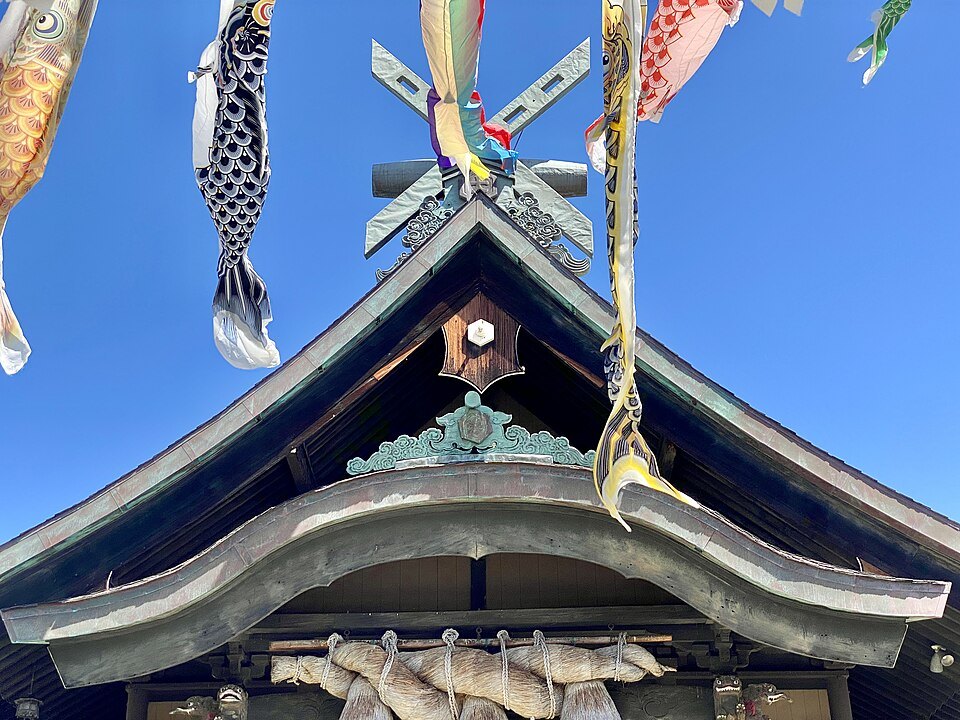
Nearby, Dr. Sun Yat-sen Memorial Park honors the founder of the Chinese republic, who came to Honolulu in 1879, was educated here, and planned the 1911 revolution during his years in the islands. At Kukui Street and College Walk, on the district's northern edge, stands the Izumo Taishakyo Mission, a Shinto shrine open to passersby.
Eating and shopping along the way
Chinatown is where much of Honolulu still shops for food, and its market stalls, noodle shops and bakeries are part of any tour of the city's cooking; see eating and drinking for more on what to try and where.
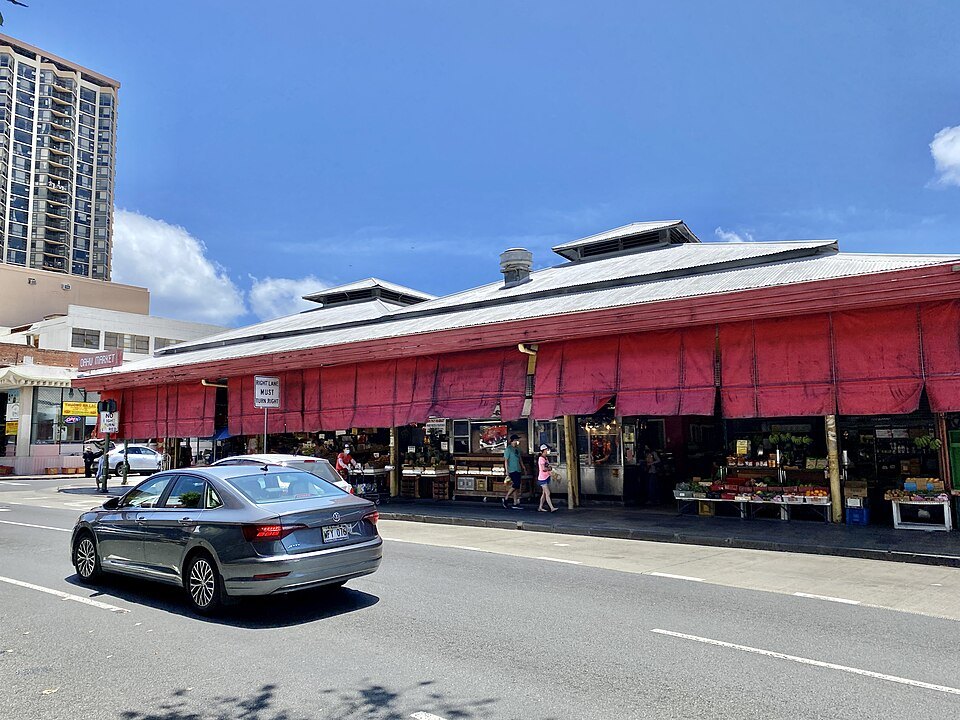
The produce and fish on sale at the Oʻahu Market and the Maunakea Marketplace are meant for cooks, not photographs, so ask before pointing a camera at a vendor's stall, and expect the pace and prices here to be set for shoppers rather than for sightseers passing through.
The Arts District around the Hawaiʻi Theater fills with restaurants, bars and galleries in the evening, and it is the part of Chinatown most visitors find comfortable to linger in after dark, once the daytime market stalls themselves have closed up for the day.
How to visit
Chinatown is flat and compact and best covered on foot, starting from Aloha Tower and the harbor a few blocks away, or from the Capitol District. Buses from Waikīkī run along King and Hotel streets; see getting around for routes to confirm with TheBus.
When the downtown section of the Skyline rail line opens, a station named Hōlau is planned for Nimitz Highway between River and Kekaulike streets; check current status and connections with the Skyline operator before building a visit around it.
Like any old downtown, parts of Chinatown are quiet once the shops close for the day, and some blocks have visible homelessness. Walk the lit streets around the theater in the evening, keep an eye on belongings in the markets, and be respectful when photographing people at work.
More from the journal
- Eating & DrinkingWhat should you eat first in Honolulu?A plate lunch, poke, saimin, a malasada, shave ice and a plate of Hawaiian food: what each is, where it came from, and how to find it in the city without a reservation.Read the piece
- Getting AroundHow does the HOLO card work on TheBus and Skyline?How the HOLO smart card pays for TheBus and Skyline, with free transfers and automatic fare capping for visitors.Read the piece
- Getting AroundDo you need a car in Honolulu?Why most visitors can see Honolulu without a car, what TheBus, Skyline, bikes and taxis cover, where a car makes sense, and how to rent one for just the days you need it.Read the piece