Home · Sights · Aloha Tower and the Harbor
Aloha Tower and the Harbor
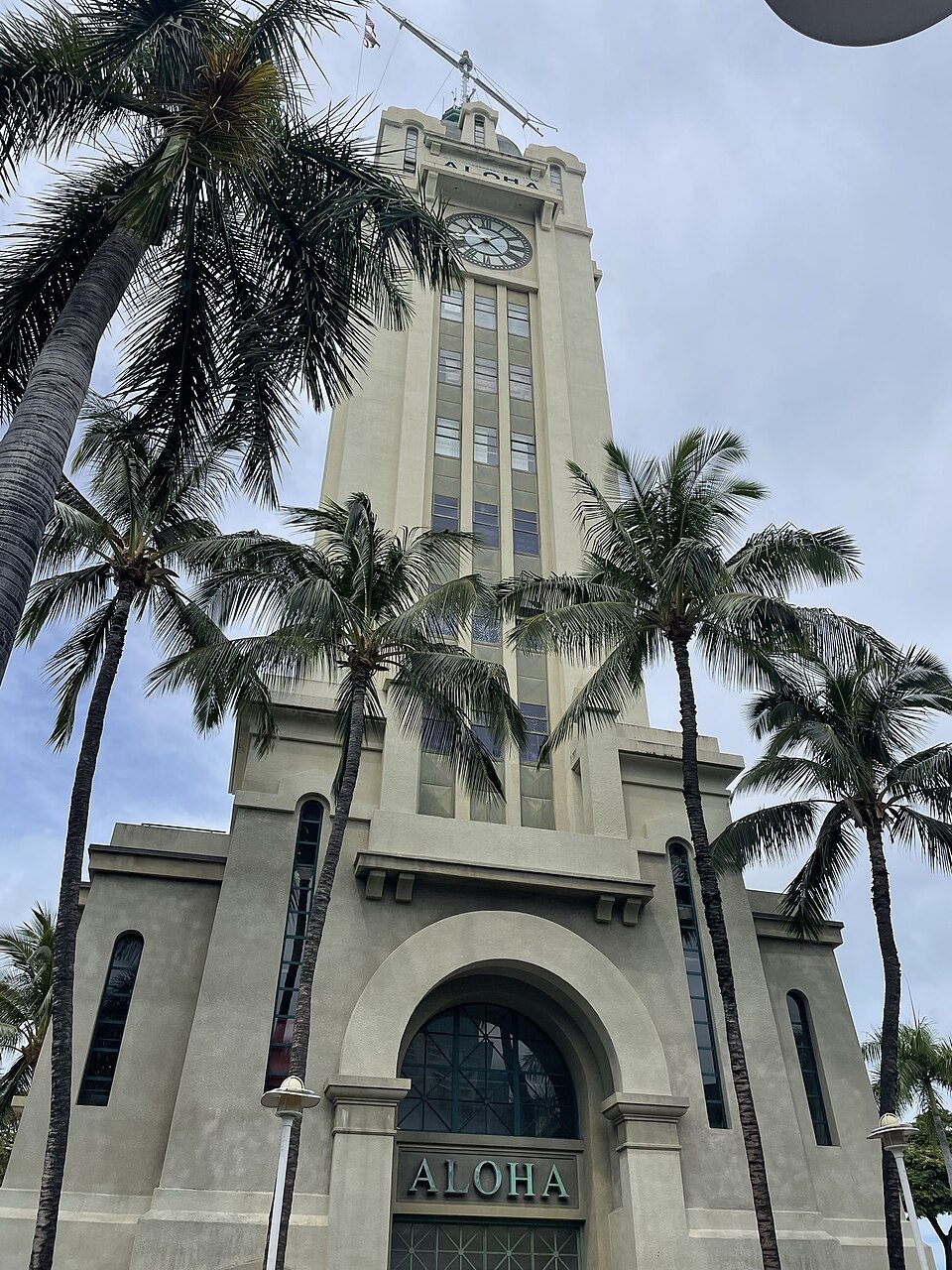
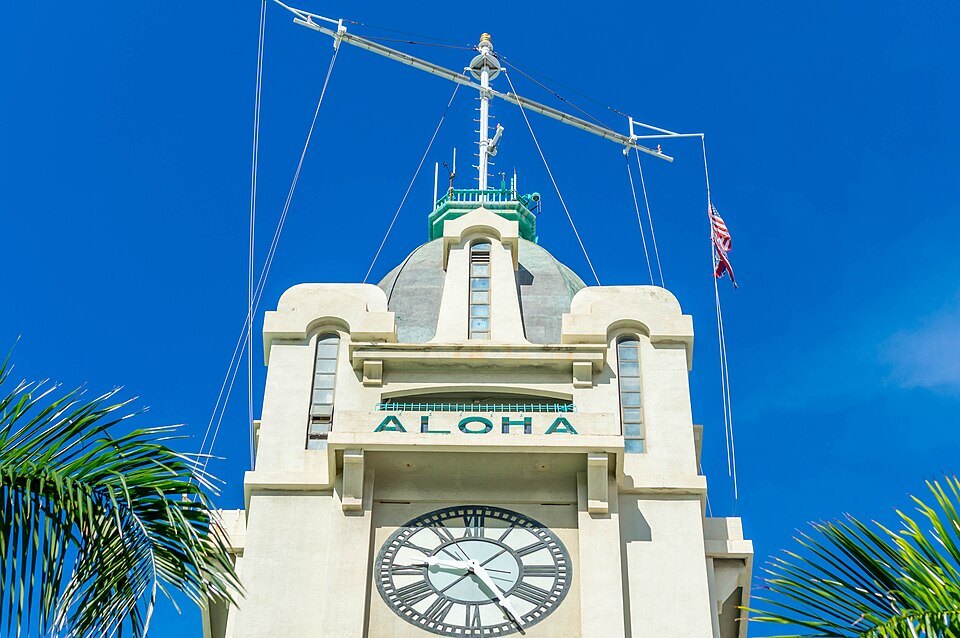
- iThe four clock facesA clock on each side of the tower's top, with the word ALOHA set above them.
- iiThe observation deckA deck near the top of the tower, looking over the piers, downtown and the ocean.
- iiiThe piersNumbered piers either side of the tower, where cargo ships, cruise liners and tugs tie up.
- ivThe flagstaffA forty-foot mast on the tower's crown, bringing its full height to more than two hundred feet.
- vThe waterfront promenadeThe open quay along the base of the tower, facing the harbor channel.
Reading the place
Why it matters
Honolulu means “sheltered harbor” in Hawaiian, and the city grew outward from this water. For most of the twentieth century, anyone arriving in Honolulu by sea saw Aloha Tower first. Dedicated at Pier 9 on 11 September 1926, it was a lighthouse and a guiding beacon for ships, and it was often compared to the Statue of Liberty: it greeted hundreds of thousands of immigrants, as well as the wealthy travelers who came by liner before the age of air travel.
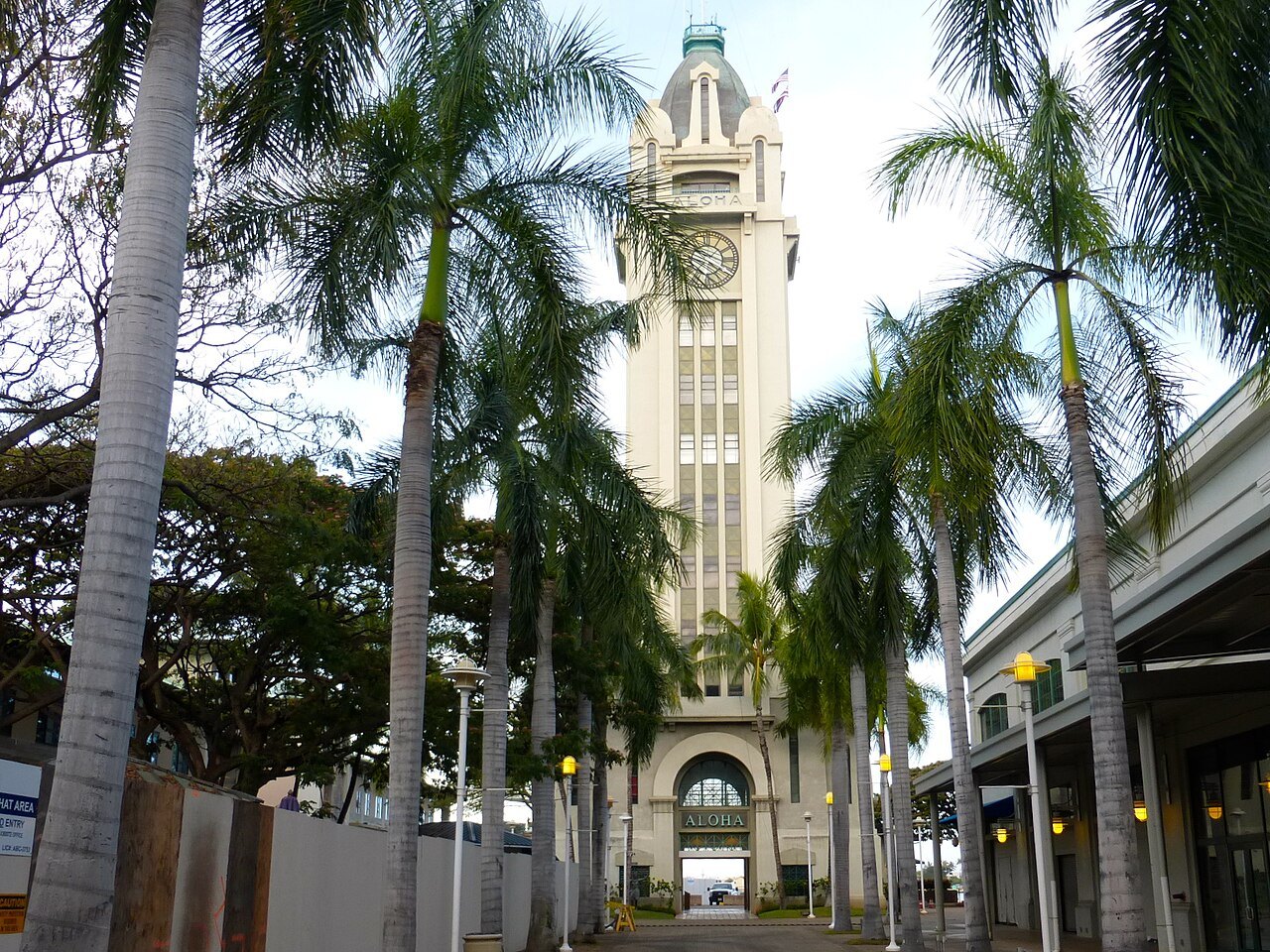
At ten stories and 184 feet, with a forty-foot flagstaff on top, it was the tallest structure in Hawaiʻi for four decades. Its style is called Hawaiian Gothic. The towers of downtown now rise behind it, but it is still the landmark of the harbor, and the stop on the homepage walk where the city meets the sea.
The harbor before the tower
Archaeological surveys show that the shore around the harbor was busy with human activity before 1100. The first European boat to enter it was a longboat from the British merchant ship King George, which rowed in on 12 December 1786, piloted by a Hawaiian named Towanooha. In 1794 the British captain William Brown brought his ship Butterworth into the harbor, and his crew called it “Brown's Harbor.”
In the early nineteenth century Honolulu became the stopping place for ships crossing the Pacific: first for the sandalwood and fur trades and then for the whaling fleets. When Kamehameha III moved the kingdom's capital here from Lāhainā in 1845, the harbor was deepened and developed for larger ships. The dredged sediment was dumped on tidelands and marshes, making the new land on which much of the downtown waterfront now stands. When the high-rises along the shore were built, workers found poi pounders, fishing lures and human remains in the old ground near the tower.
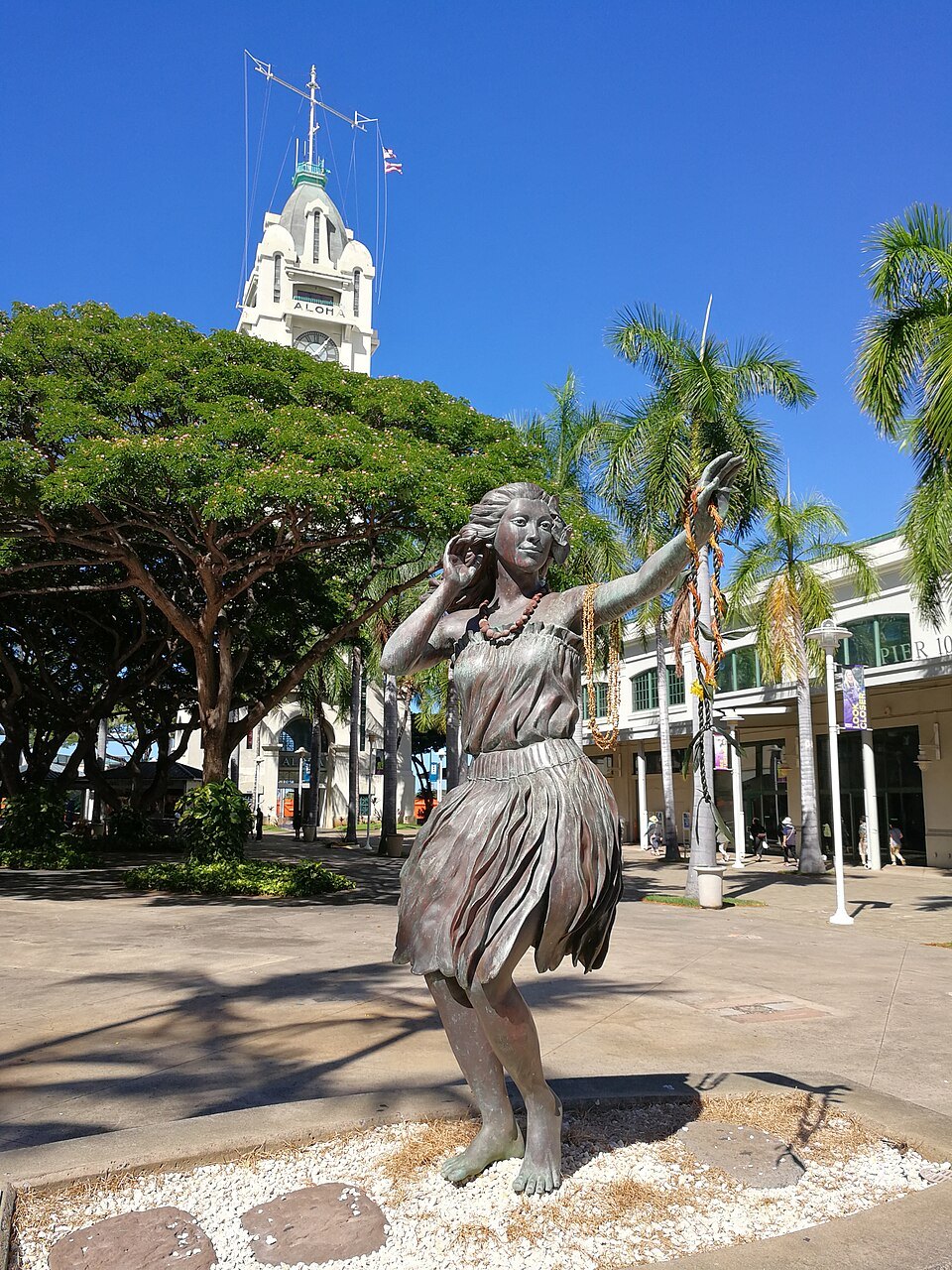
The harbor is still the working port of the state. It handles millions of tons of cargo a year, and it matters because Hawaiʻi imports more than eighty percent of the goods it needs.
The names of the harbor
The harbor has had several names. Hawaiians knew it as Kuloloia and as Ke Awa O Kou, the harbor of Kou, the old name for the district between what are now Nuʻuanu Avenue and Alakea Street, and between Hotel Street and Queen Street: the heart of downtown today. Captain Brown's “Fair Haven” and “Brown's Harbor” did not last, and the Hawaiian name Honolulu, the sheltered harbor, passed to the town that grew up around it.
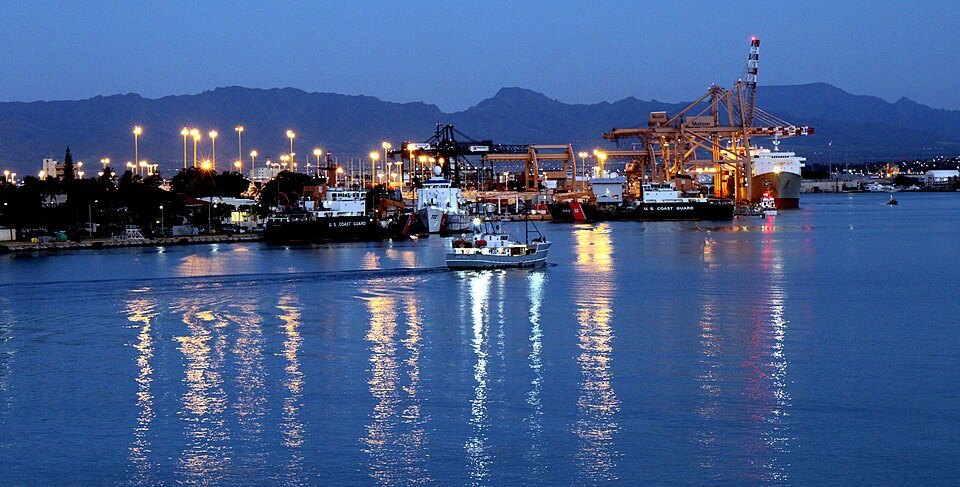
Kamehameha I moved his court to this shore in 1809, and from the early 1800s the chiefs lived close to the water here, where the ships came in. The port runs past the tower to Sand Island, where the container terminals of the shipping lines stand. When you look along the harbor from the tower, you are looking at the reason the capital is here at all.
The tower
Aloha Tower took five years to build. Its four clock faces, with ALOHA lettered above them, were meant to be read from the decks of arriving ships. After the attack on Pearl Harbor on 7 December 1941, Coast Guardsmen from the cutter Taney took up defensive positions around the tower, and it was painted in camouflage for the rest of the war.
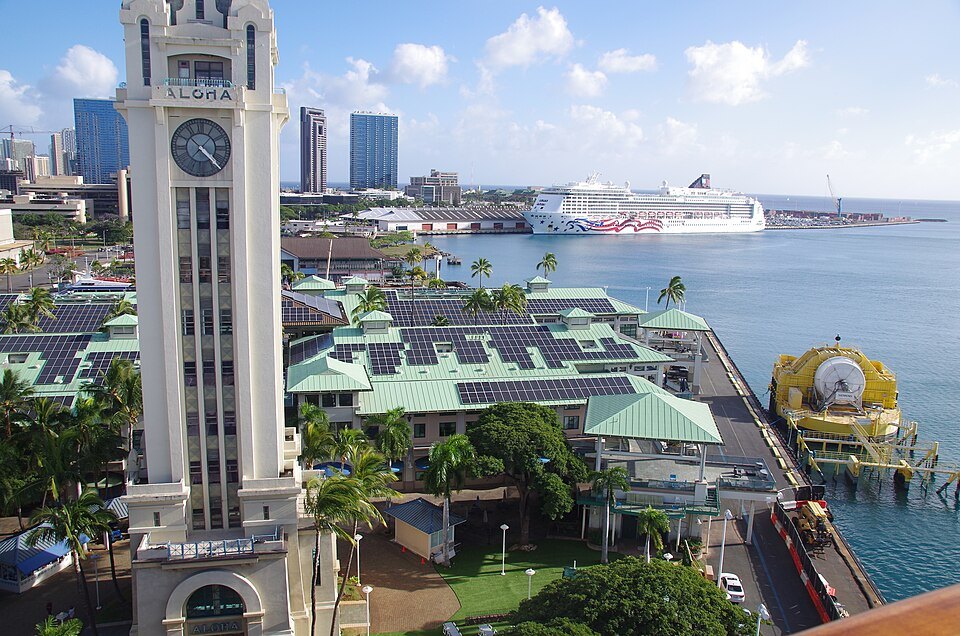
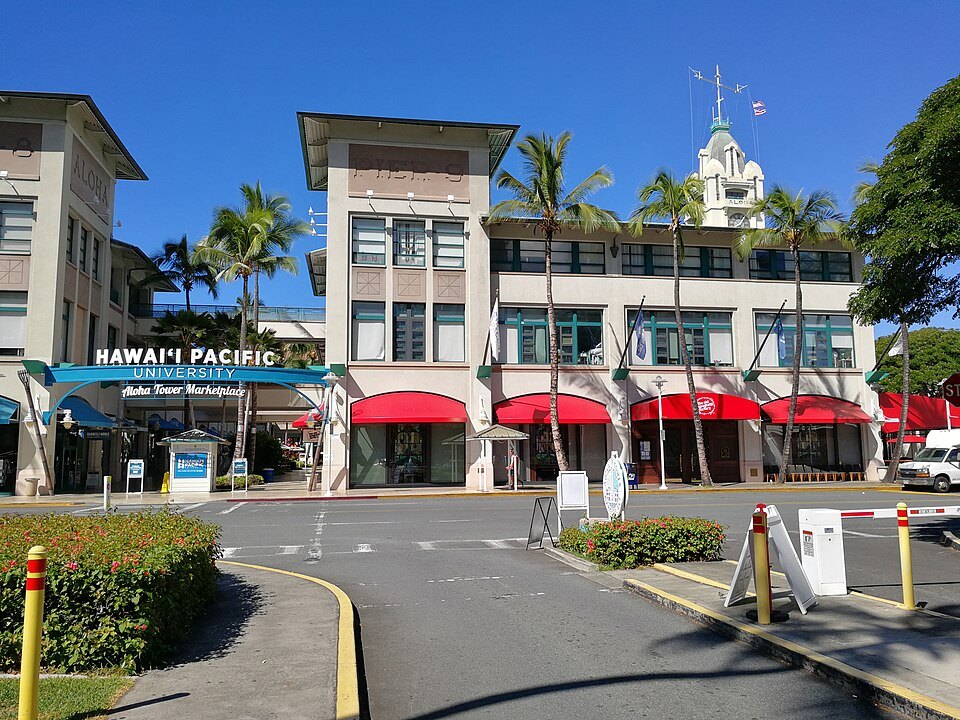
From 1981 a state development corporation worked to open the waterfront around the tower to the public while keeping the commercial port. The Hawaiʻi Maritime Center opened beside it in 1982 on an old royal pier; it later became part of the Bishop Museum and closed in 2009. The Aloha Tower Marketplace opened in 1994, and in 2015 Hawaiʻi Pacific University turned it into student housing and campus space. The historic sailing ship Falls of Clyde, moored at the royal pier for decades, was scuttled in 2025.
What you see
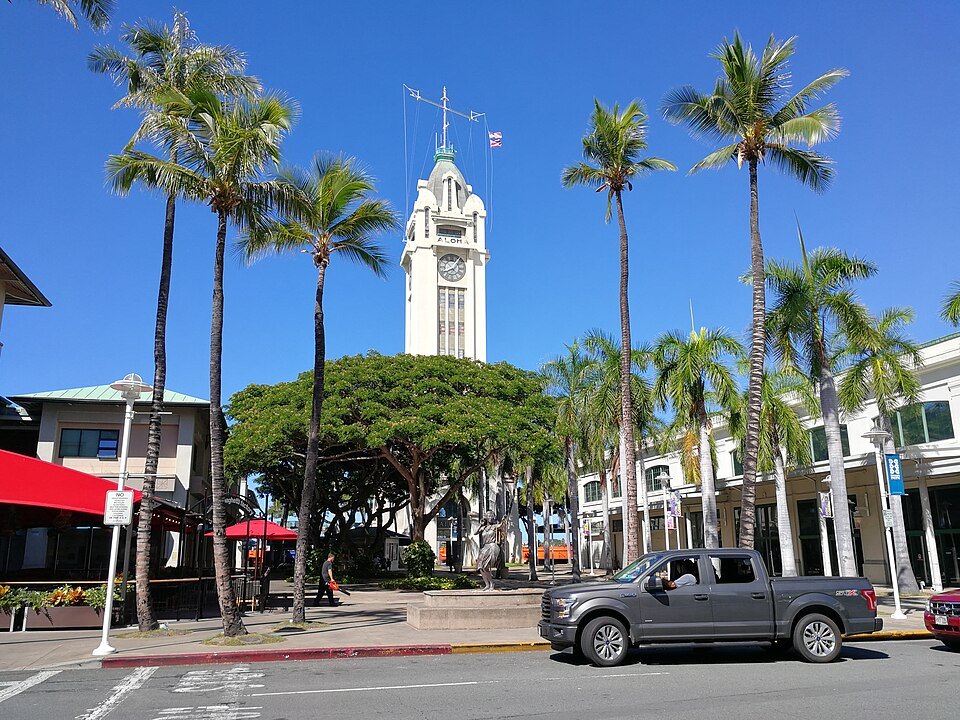
From the quay, the tower rises in a narrow pale shaft to the clock stage and the mast above it. Cruise ships often tie up at the piers beside it, their hulls taller than the tower itself, and tugs and cargo vessels move in the channel. Looking inland, the glass towers of the business district stand behind, with Chinatown a few blocks to the west.
The observation deck near the top, closed to the public for a time after 2001 for security, has reopened. From it you look straight down on the piers and out along the harbor to Sand Island, and inland over downtown to the green ridge behind the city.
How to visit
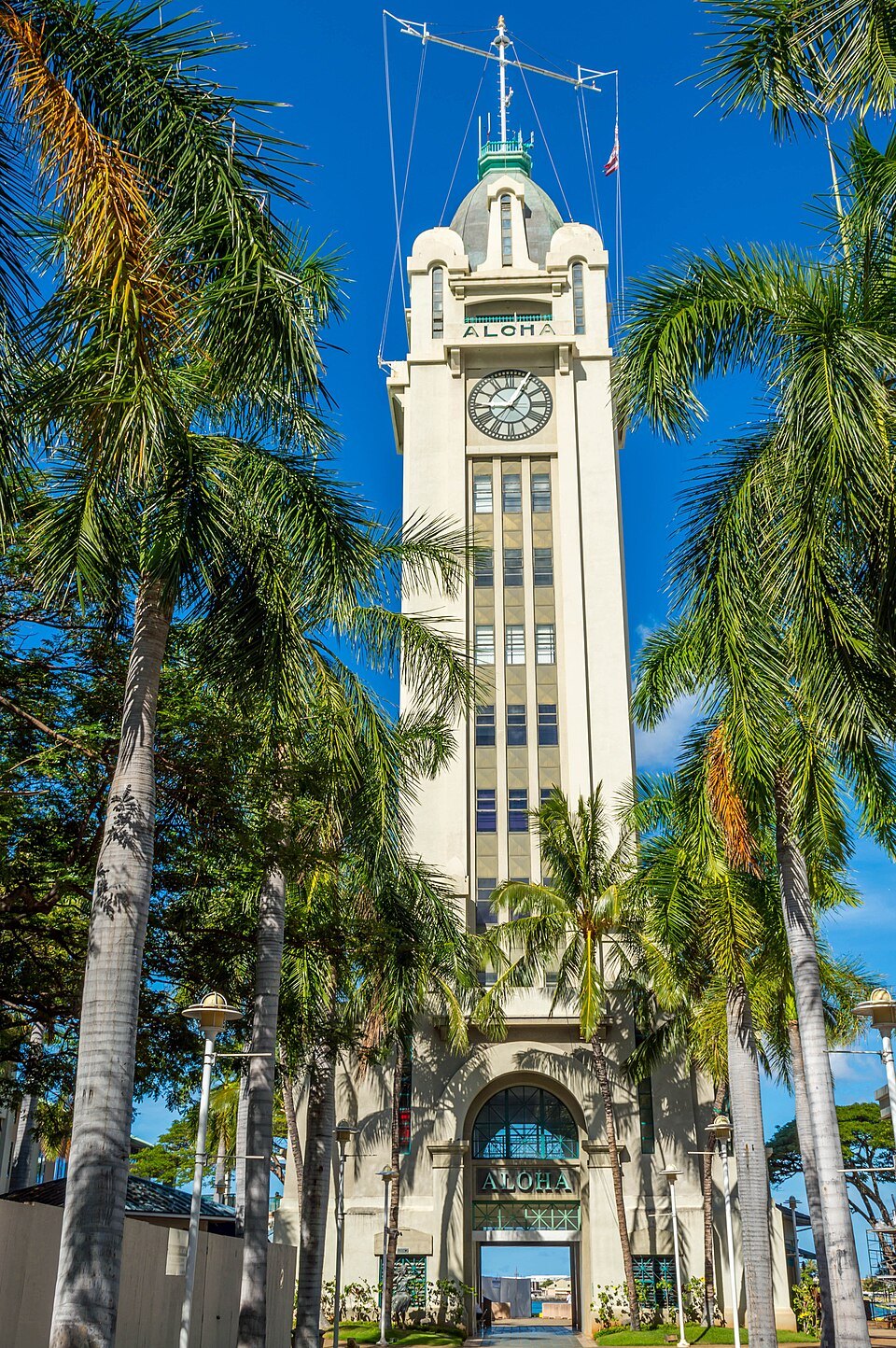
The tower stands on the downtown waterfront, a short walk from the Capitol District and from Chinatown. Check the tower's own information for the days visitors can go up, and expect it to close when there is a security reason at the port. Allow time to walk the quay.
It fits naturally between Chinatown and the Capitol District on a downtown walk; getting around explains the buses from Waikīkī. When the downtown section of the Skyline rail line opens, planned for 2031, one of its stations, Kuloloia, will stand near the tower.
Honest notes
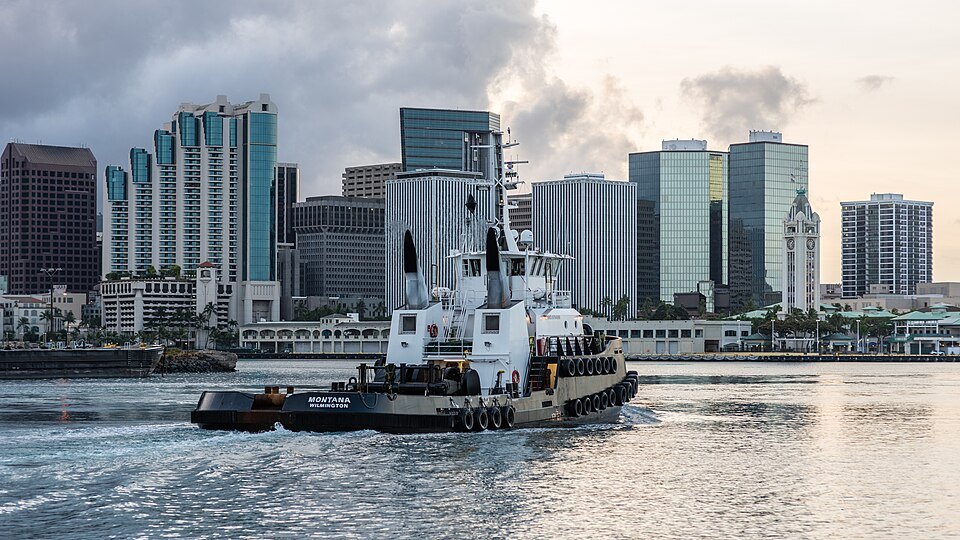
The comparison to the Statue of Liberty is the one Honolulu has always made, but the people who arrived here were a different crowd: plantation workers from Asia and elsewhere, American and European visitors on the liners, and the returning families of the islands. The tower welcomed them all, and the city's mix of peoples, described on where to stay and eating and drinking, came in largely through this harbor.
Nearby
- NearbyChinatownOne of the oldest Chinatowns in the United States, burned in 1886 and again in January 1900, and rebuilt in the low masonry blocks that line Hotel, King and Maunakea streets today.Read the page
- NearbyAliʻiōlani Hale and the Kamehameha StatueA government building begun by Kamehameha V in 1872, the home of Hawaiʻi's Supreme Court today, and in front of it the gilded statue of Kamehameha I that arrived in Honolulu in 1883 after the first casting was lost at sea.Read the page
- NearbyKakaʻakoThe district between downtown and Ala Moana, a Hawaiian community of fishponds and salt pans, then an industrial zone of warehouses, and now painted with murals and rising in glass towers, with a waterfront park and a boat harbor on its shore.Read the page