Chinatown
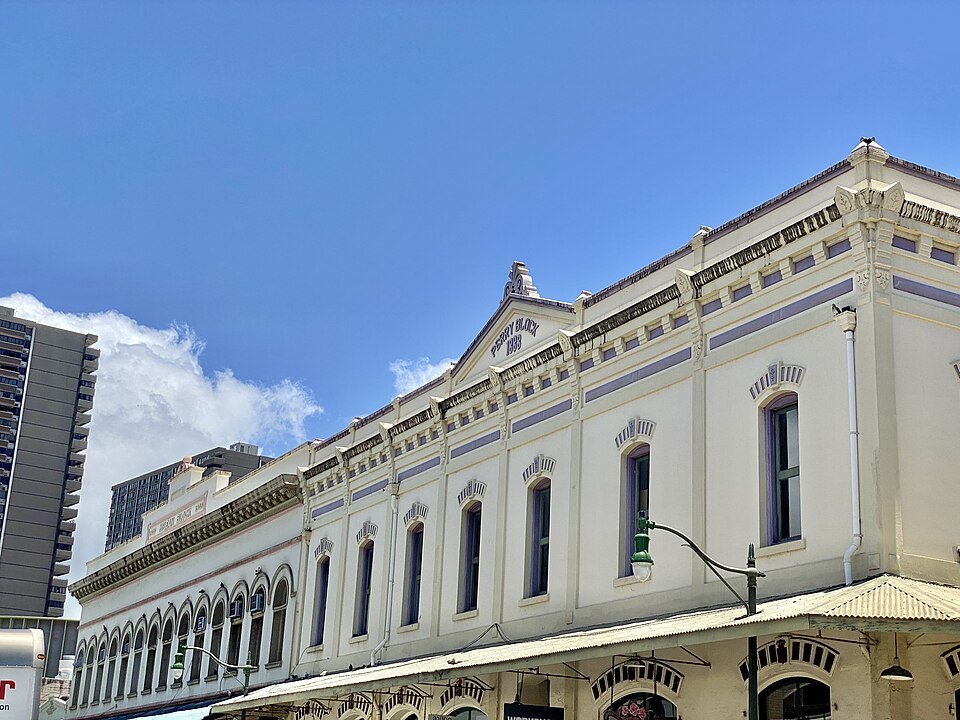
- iThe 1901 blocksTwo- and three-story brick and stone buildings put up after the fire, few of them more than four stories.
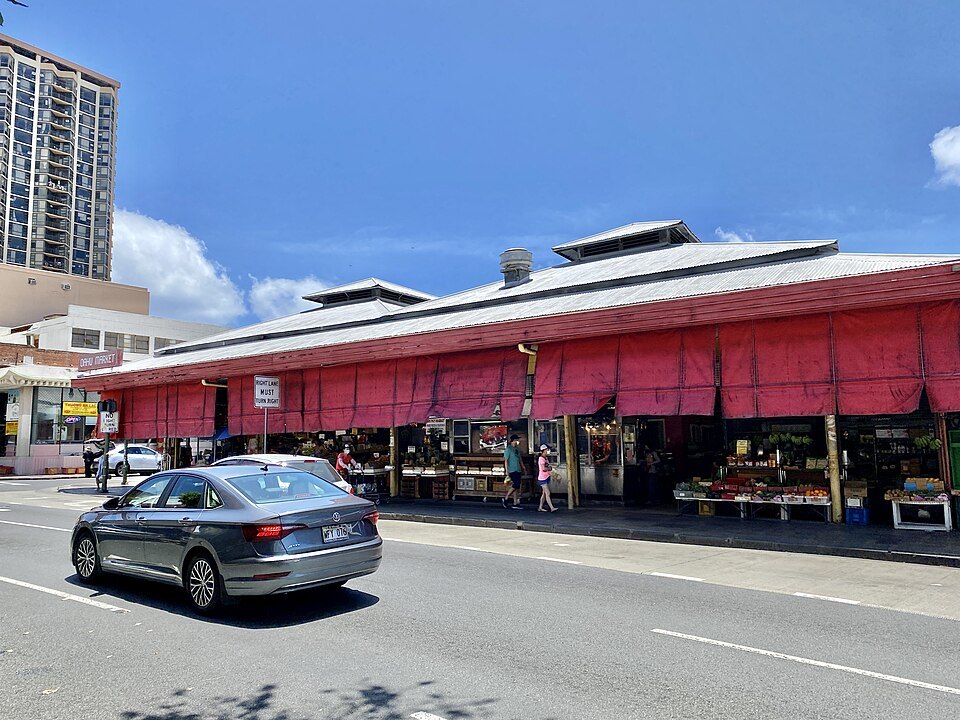
- iiOʻahu MarketAn open-air covered market of 1904 on King Street, divided into stalls selling fresh fish and produce.
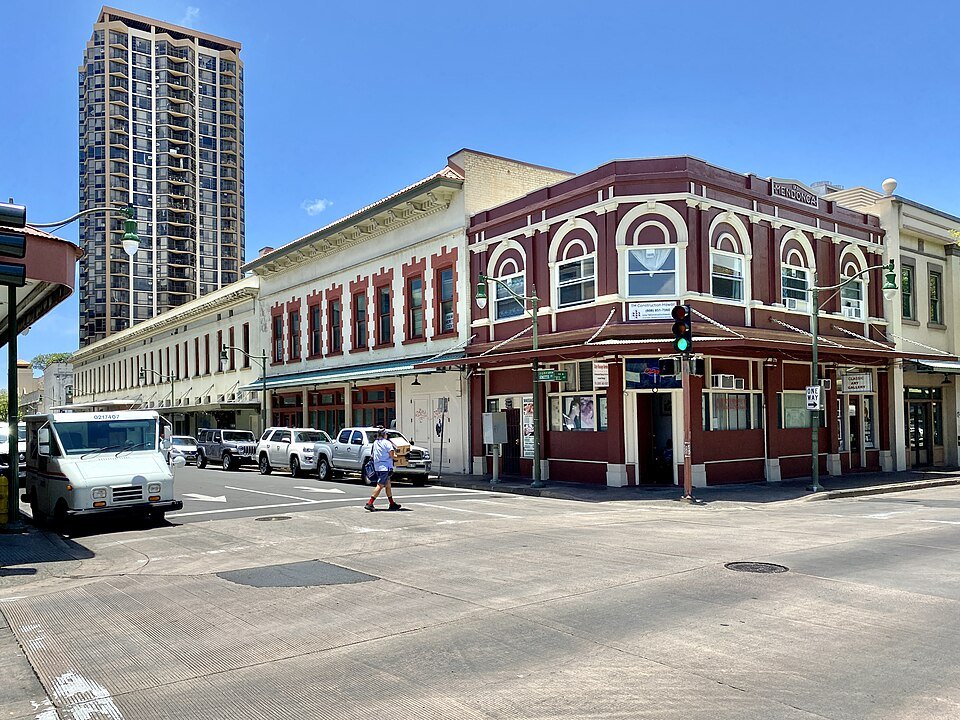
- iiiHotel StreetThe old commercial spine, lined with the Mendonca and other rebuilt blocks, and a red-light district in the war.
- ivThe Hawaiʻi TheatreA 1922 theater on Bethel Street, restored and reopened in 1996 at the edge of the Arts District.
- vDr. Sun Yat-sen Memorial ParkA small park at Hotel and Bethel honoring the revolutionary who studied in Honolulu from 1879.
- viThe gatewaysTwo small paifang on King Street and a pair of guardian lions at the Hotel Street entrance.
Reading the place
Why it matters
Chinatown fills the blocks between the harbor, Nuʻuanu Stream and Beretania Street, and it is one of the oldest Chinatowns in the United States. In the nineteenth century laborers were brought from China to work on the sugar plantations, and many who finished their contracts moved here and became merchants. At its peak, in the 1900 census, about 56 percent of the people living here were Chinese; it has always been a mixed neighborhood, and it still is.
Before it was Chinatown, the ground by the harbor was probably worked by Hawaiian fishermen, and at the end of the eighteenth century Kealiʻimaikaʻi, a brother of Kamehameha I, lived here. The Spaniard Francisco de Paula Marín, one of the first foreigners to settle, planted a vineyard at the northern end; Vineyard Boulevard, on the district's edge, is named for it.
In Chinese, Honolulu is traditionally called Tánxiāngshān, “Sandalwood Mountain,” after the trade that first brought ships here. Chinatown is where the homepage walk begins, and it is the part of the city where you most feel the harbor town that Honolulu was before the towers.
Two fires
Fire shaped this district twice. On 18 April 1886 a fire consumed about sixty acres and destroyed almost all of Chinatown, leaving some eight thousand people homeless. The second fire was worse in the way it came about. Bubonic plague reached Honolulu in late 1899, and the Board of Health quarantined Chinatown and began burning buildings where the disease had been found. On 20 January 1900 the wind picked up one of these controlled burns and carried it across the district. It burned for days and destroyed some thirty-eight acres.
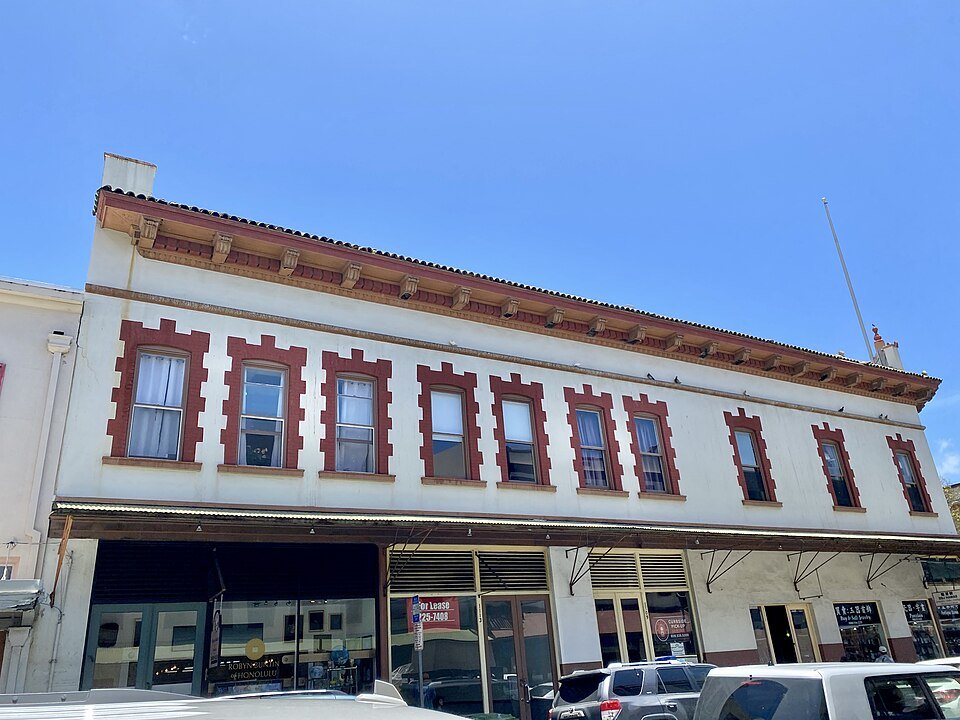
No one died in the fire, but thousands of people of many backgrounds lost their homes and were marched into quarantine camps; accounts describe white onlookers forcing them along with bats and pick handles. Many Chinese residents believed the fires had been set to destroy their community, and some left for other parts of the city. The rest rebuilt, this time in brick and stone rather than wood. That is why so many of the buildings you see date from 1901, and why few rise above four stories.
The twentieth century
After the fire, Chinese businesses reopened and learned to sell the district's exoticism to visitors; the Wo Fat restaurant building of 1938 on Hotel Street, remodeled in a self-consciously “oriental” style, is the best-known example. During the Second World War, with servicemen crowding into the city, Hotel Street became a red-light district, and after the war the neighborhood declined and got a reputation for being unsafe.
Urban renewal projects in the 1950s and later cleared large areas on the edges of Chinatown and displaced thousands of residents. Opposition from residents' groups helped get about thirty-six acres listed on the National Register of Historic Places in 1973, which protected the old blocks from further demolition and opened grants for restoring them. The Hawaiʻi Theatre, closed in 1984, was restored and reopened in 1996, and the blocks around it became the Arts District.
What you see
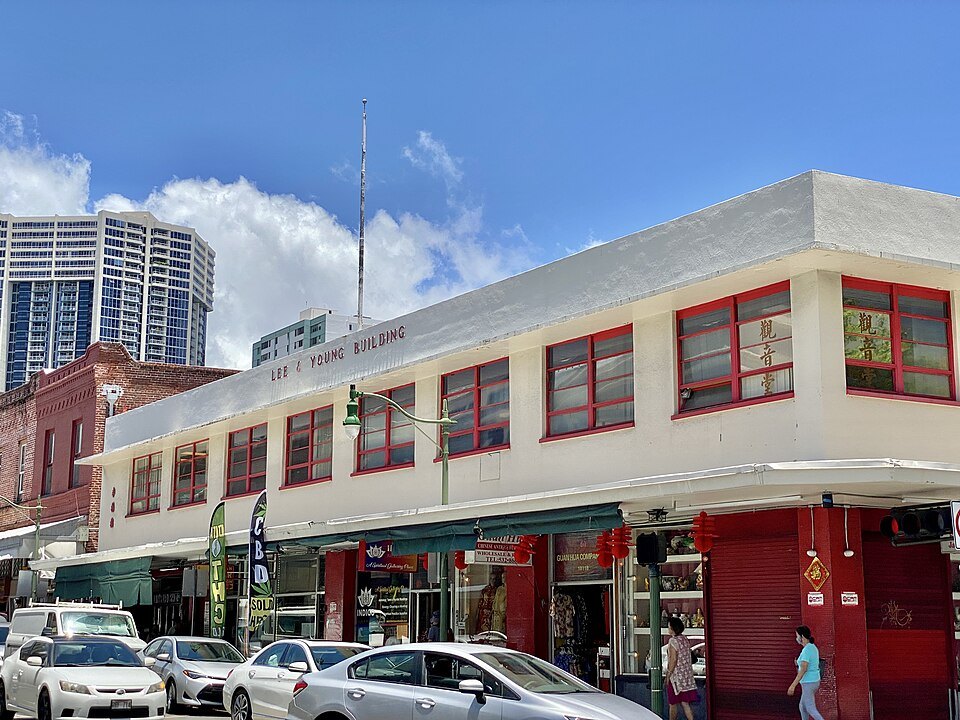
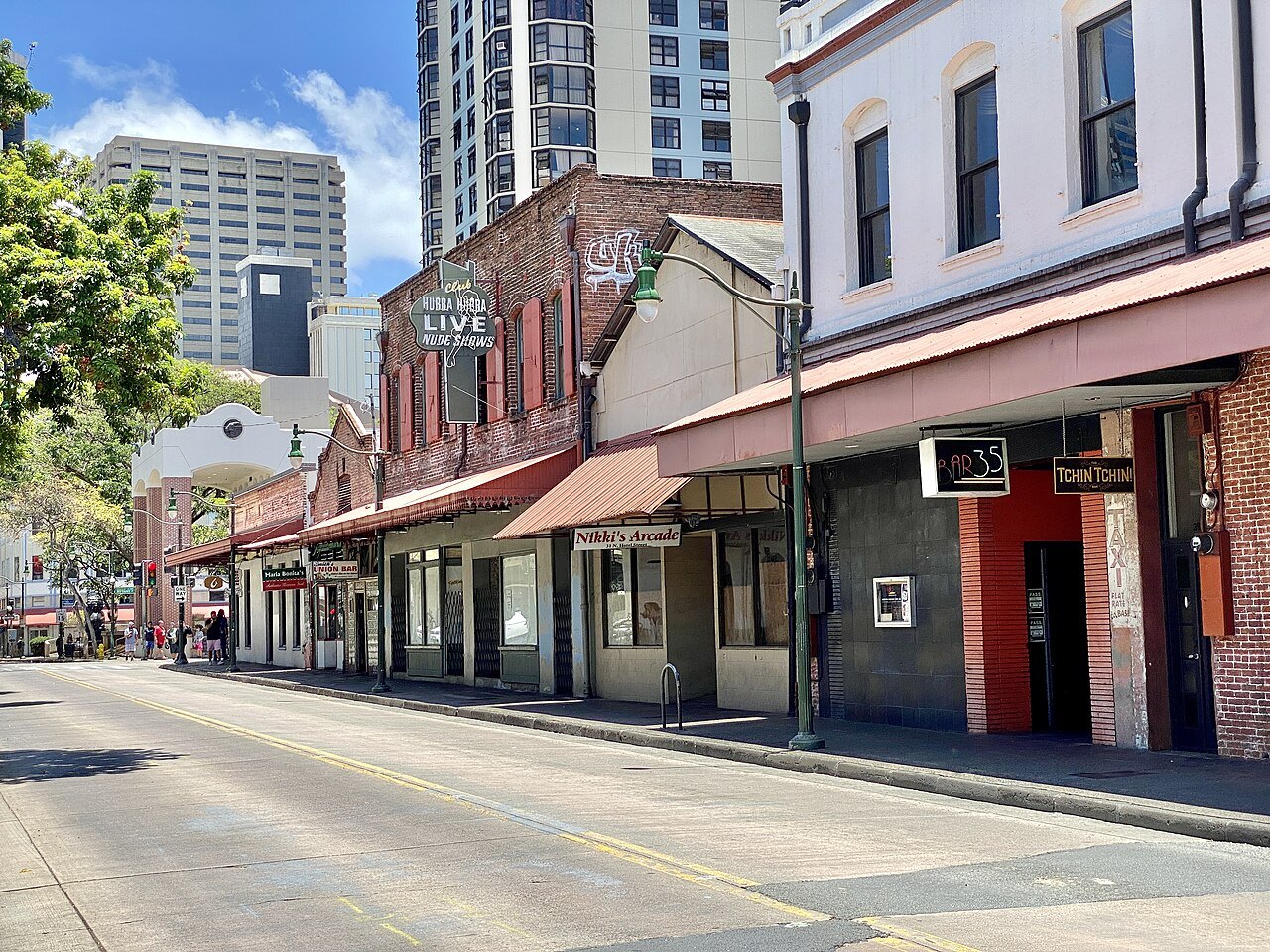
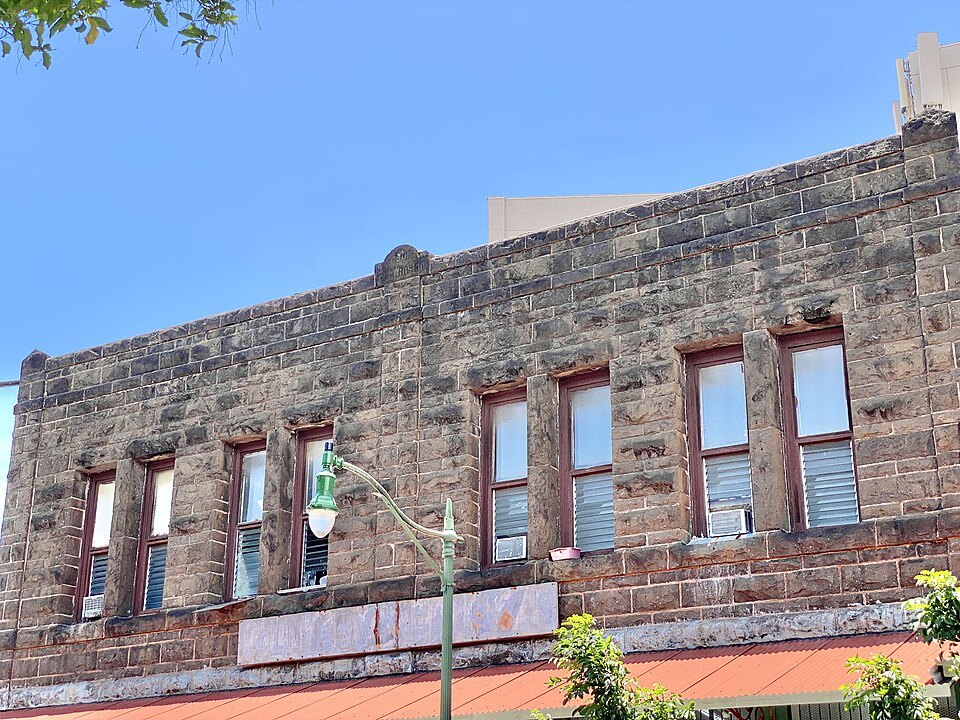
Walk Hotel Street and King Street between Nuʻuanu Avenue and River Street and look up. Above the shopfronts are the rebuilt facades of 1901 and the decades after: the red-and-white Mendonca Building at Hotel and Smith, the stone front of the E. C. Winston Block on King Street, the Lee and Young Building at Maunakea and King. On King Street at Kekaulike, the Oʻahu Market, opened in 1904, is still a covered, open-sided hall of stalls selling fish and produce, and Maunakea Street has a small brick arch into the Maunakea Marketplace.
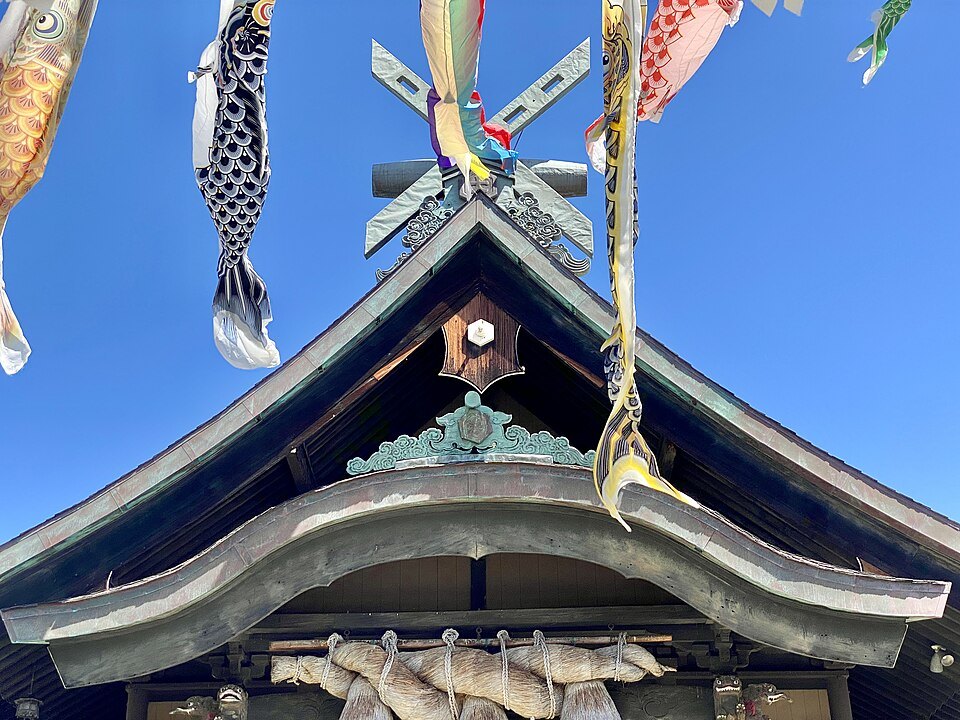
Toward Bethel Street, the Hawaiʻi Theatre opened in 1922 and was called “The Pride of the Pacific”; its exterior mixes neoclassical, Byzantine and Moorish ornament, and its 1938 marquee carried the largest neon display in the islands. Nearby, Dr. Sun Yat-sen Memorial Park honors the founder of the Chinese republic, who came to Honolulu in 1879, was educated here and planned the revolution of 1911 during his time in the islands. At Kukui Street and College Walk, on the northern edge, stands the Izumo Taishakyo Mission, a Shinto shrine.
Eating here
Chinatown is where much of the city shops for food, and its market stalls, noodle shops and bakeries are part of any tour of the city's cooking; see eating and drinking. The Arts District around the theater is at its liveliest in the evening, when there are performances.
How to visit
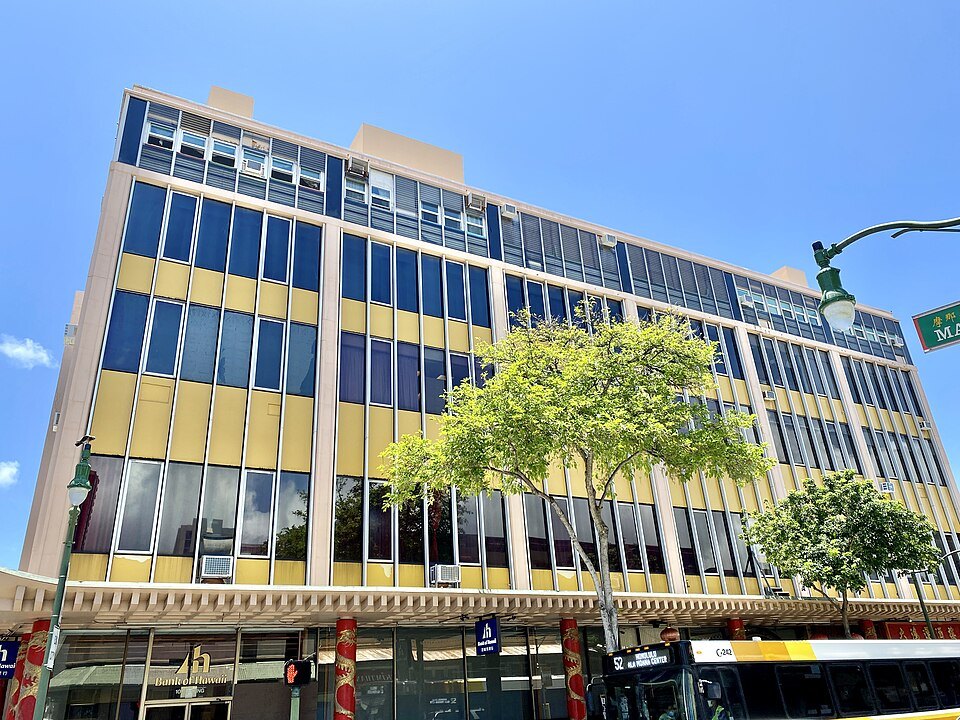
Chinatown is flat and compact and best seen on foot, starting from Aloha Tower and the harbor a few blocks away, or from the Capitol District. Buses from Waikīkī run along King and Hotel streets (see getting around). When the downtown section of the Skyline rail line opens, planned for 2031, a station named Hōlau will stand on Nimitz Highway between River and Kekaulike streets.
Like any old downtown, parts of Chinatown are quiet after the shops close, and some blocks have visible homelessness. Walk the lit streets around the theater in the evening, keep an eye on your belongings in the markets, and be respectful when photographing people at work.
Honest notes
The story that the 1900 fire was set on purpose to destroy Chinatown is a belief many residents held, not an established fact; the record shows a controlled burn that got out of control during a plague quarantine, and a response to the homeless that was harsh and racially charged. Both halves are part of why the district looks as it does.
Nearby
- NearbyAloha Tower and the HarborA ten-story lighthouse and clock tower at Pier 9, dedicated in 1926 and for four decades the tallest structure in Hawaiʻi, standing over the harbor the city is named for.Read the page
- NearbyFoster Botanical GardenThirteen and a half acres of giant trees and orchids at the edge of Chinatown, begun by a German doctor in 1853 and left to the city by Mary Foster, with a sacred fig grown from the Bodhi tree.Read the page
- NearbyAliʻiōlani Hale and the Kamehameha StatueA government building begun by Kamehameha V in 1872, the home of Hawaiʻi's Supreme Court today, and in front of it the gilded statue of Kamehameha I that arrived in Honolulu in 1883 after the first casting was lost at sea.Read the page