Read on
Begin in Hawaiian Hall
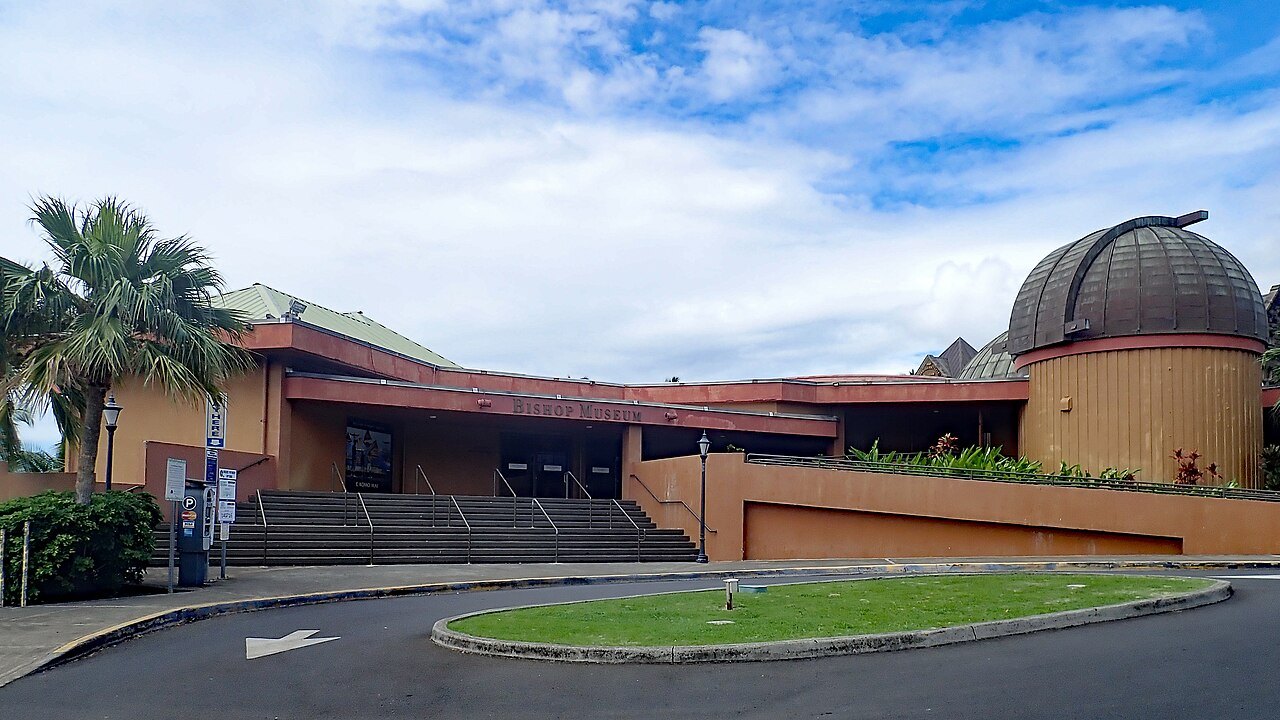
The Bernice Pauahi Bishop Museum holds the world's largest collection of Polynesian cultural artifacts and more than twenty-four million natural history specimens, making it the largest museum in Hawaiʻi. For a first visit, go straight to Hawaiian Hall. Everything else on the campus, from the science center to the planetarium, makes more sense once you have walked its three stories.
Galleries rise around an open center, lined with display cases built of koa wood so fine that the wood itself is now said to be worth more than the nineteenth-century building around it. A complete sperm-whale skeleton hangs above the central gallery, its bones paired with a papier-mâché body, visible from every landing as you climb.
Much of what fills the cases is sacred: images of gods, feathered cloaks and helmets worn by chiefs, and objects drawn from burials. The museum displays them with care and asks visitors to do the same, following whatever photography rules are posted gallery by gallery rather than treating the cases as a backdrop.
A museum built for a princess
Businessman Charles Reed Bishop founded the museum in 1889 in memory of his wife, Princess Bernice Pauahi Bishop, who had died five years earlier. She was born into the royal family and was the last legal heir of the Kamehameha dynasty, which had ruled the kingdom from 1810 to 1872; read more on the kingdom page.
Bishop first meant the museum to house family heirlooms that had passed to him through his wife's line. Her will instead left her lands to found the Kamehameha Schools for Native Hawaiian children, and the museum was built on the schools' original boys' campus in Kalihi, which it fully took over once the schools moved in 1940.
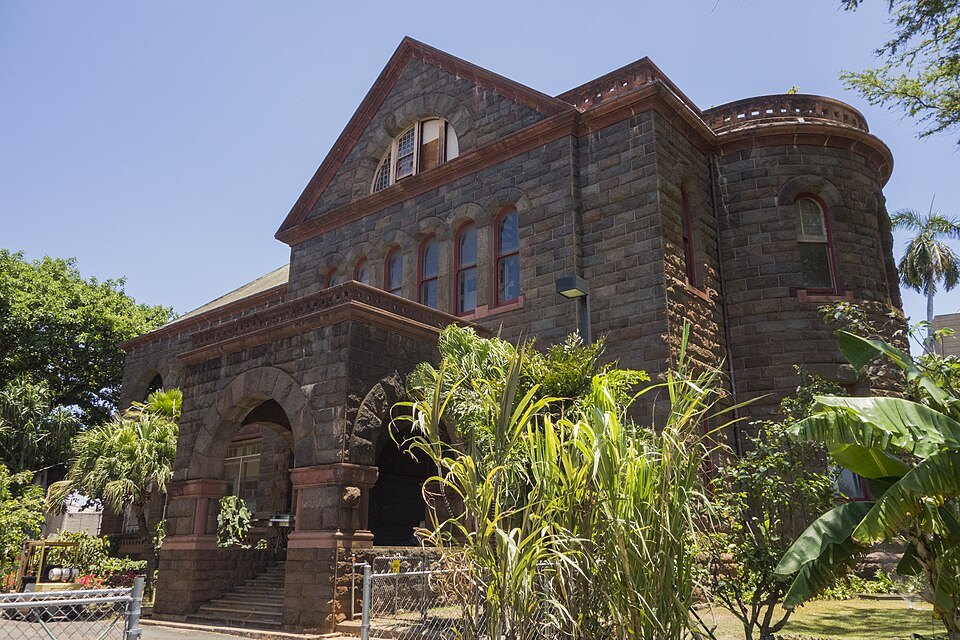
The museum's first curator, William Tufts Brigham, went on to direct it for twenty years, shaping its early collections of Hawaiian and Pacific material into the foundation of what visitors see today.
The dark stone halls
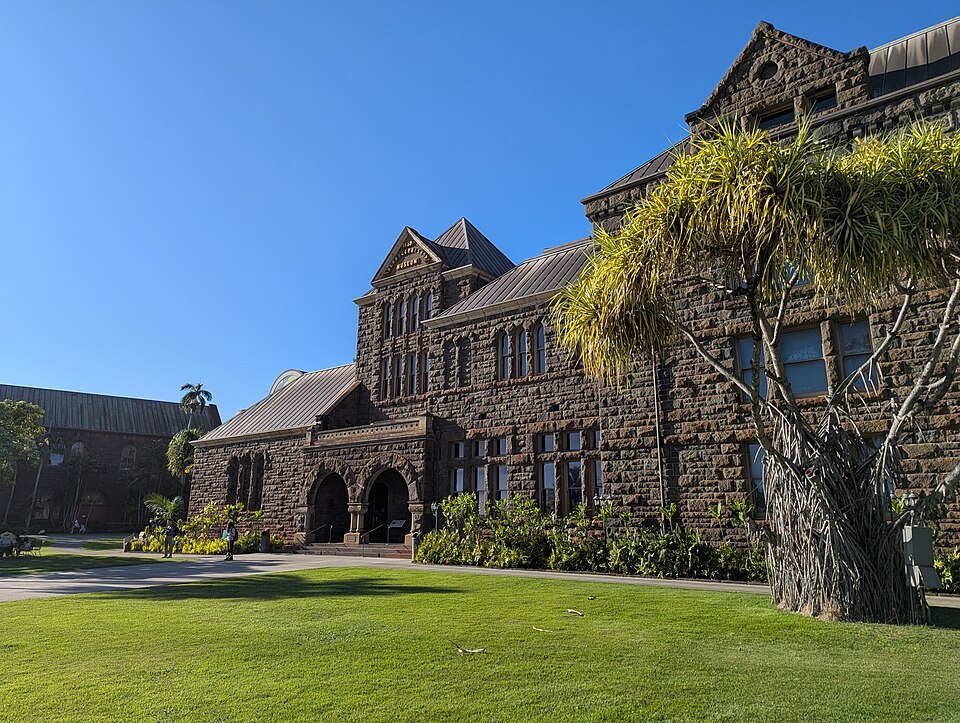
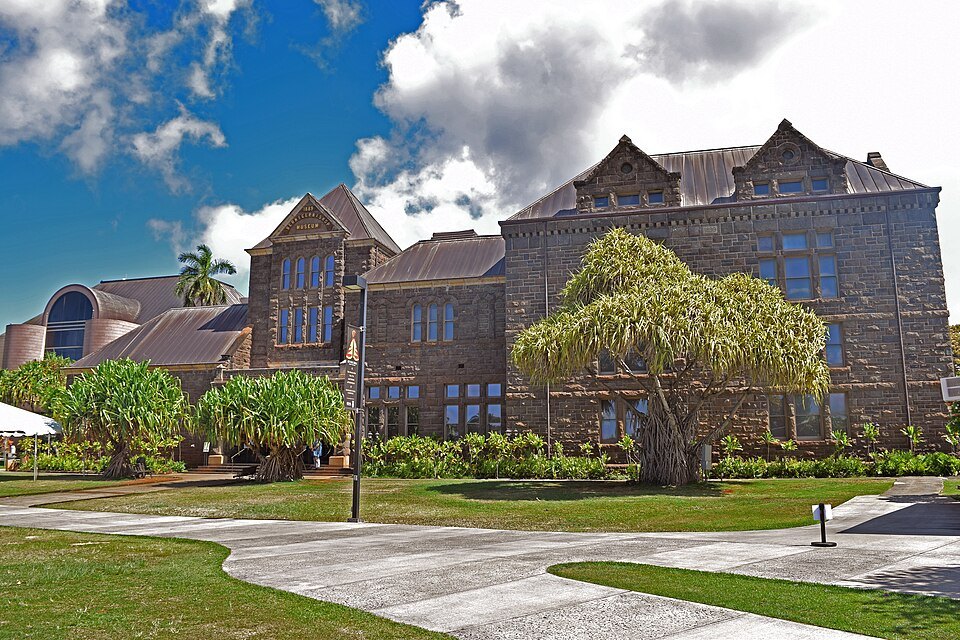
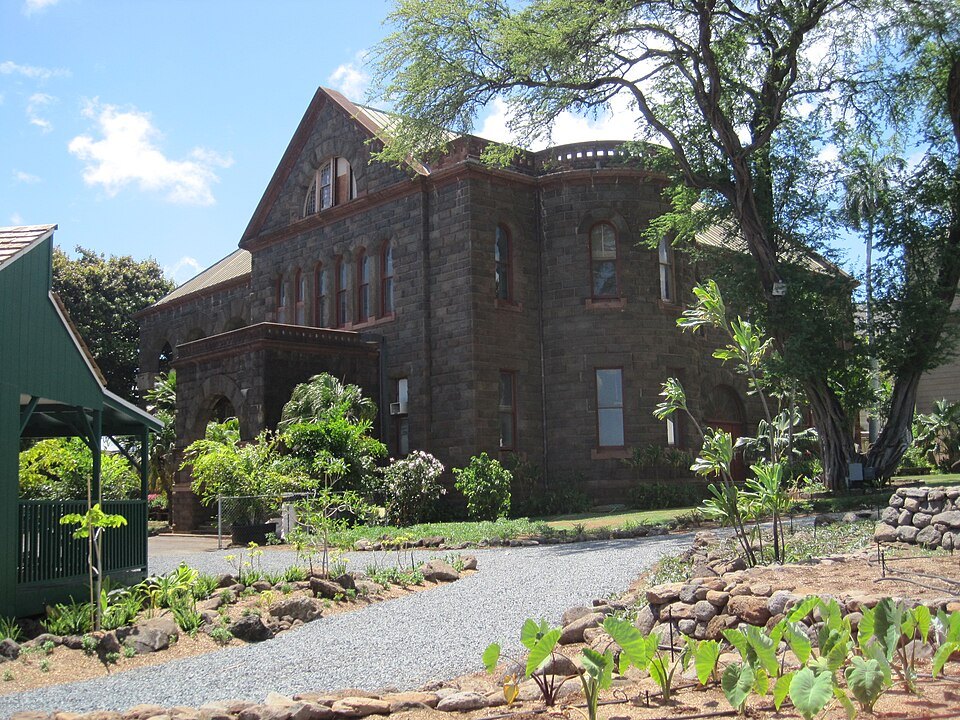
Hawaiian Hall and the adjoining Polynesian Hall date to 1898, built in the heavy, dark Richardsonian Romanesque style fashionable at the time; a Honolulu newspaper of the day called them the noblest buildings in the city. Both are listed on the National Register of Historic Places.
Seen from the lawn, their rough volcanic stone, deep-set windows and towers look closer to a Victorian college than to anything else nearby in Kalihi, west of downtown and off the usual visitor routes between Waikīkī and downtown.
Inside, the contrast with the newer buildings on the campus is sharp: stone corridors and wood cases in the old halls, glass and steel in the science center. Walking from one to the other is part of understanding how the museum has grown since 1889.
The shark god in the floor
Set into the floor of Hawaiian Hall is a stone image of the shark god Kāneikokala. Museum staff have been unable to move it through successive renovations of the building, and it remains exactly where it was first placed.
It is treated with respect by the museum and by the Hawaiian community alike. It is not a photo prop: visitors should not stand on it or touch it, and should treat it, and the gods and ancestors it represents, as they would any sacred image elsewhere in the halls.
Beyond Hawaiian Hall
Pacific Hall sits beside Hawaiian Hall and widens the view outward, from the islands of Hawaiʻi to the cultures of the rest of the Pacific that share its canoes, navigation and belief. Seeing the two halls together is the clearest way to place Hawaiʻi within the ocean around it.
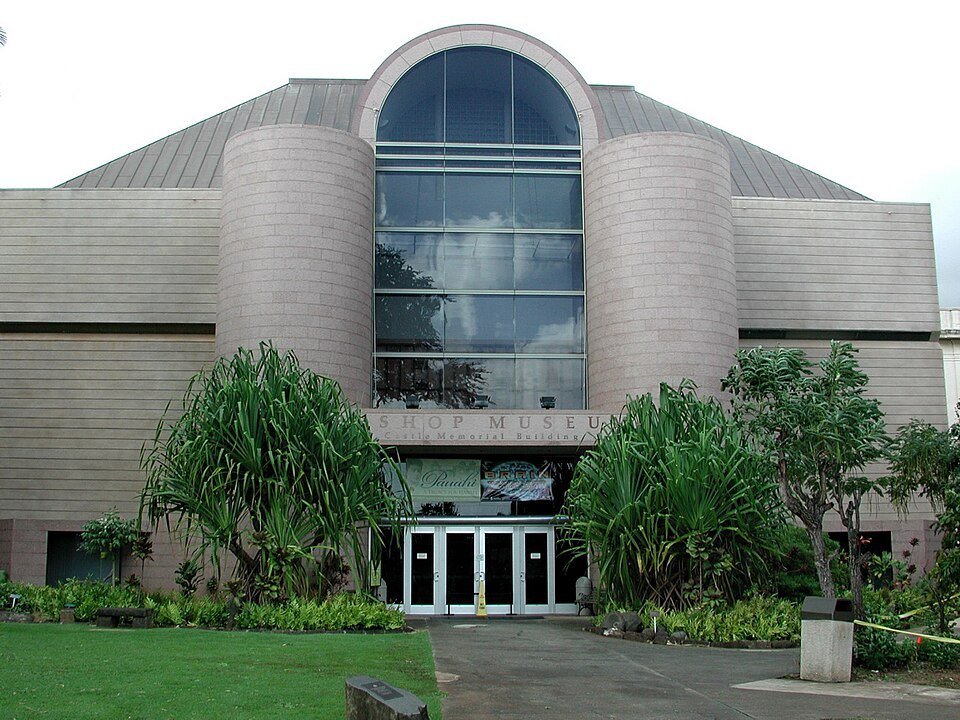
The Castle Memorial Building, dedicated in 1990, houses the major traveling exhibitions the museum brings in from elsewhere; check what is on display before a visit if a particular exhibition matters to the trip.
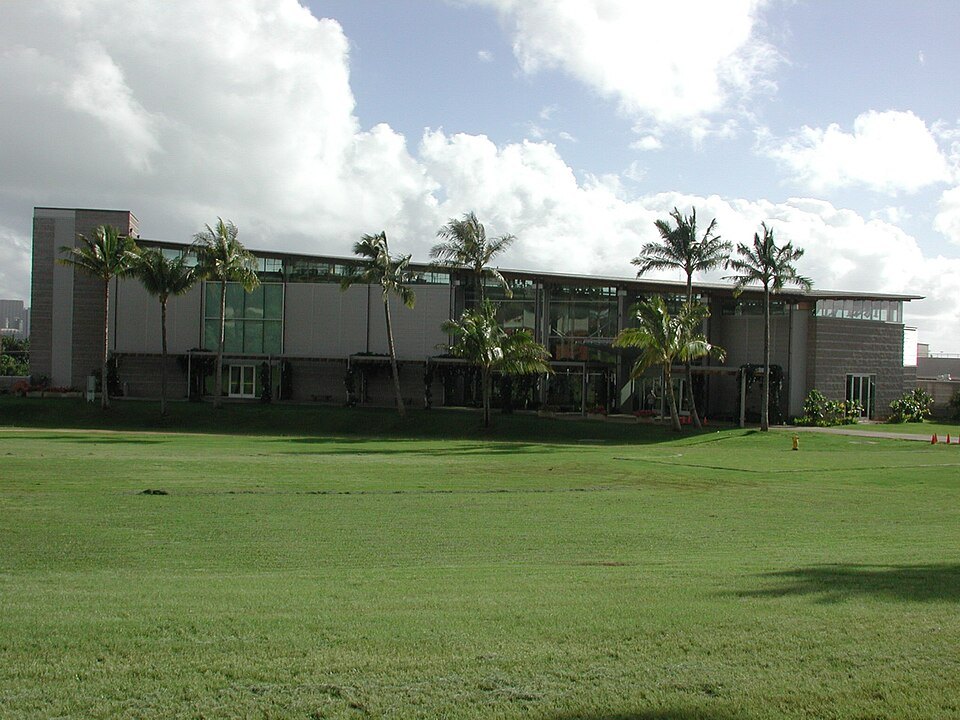
The Richard T. Mamiya Science Adventure Center, opened in 2005, is a hands-on hall aimed mostly at children, with exhibits on marine science, volcanoes and the natural forces that built the islands. The domed Jhamandas Watumull Planetarium stands apart on the lawn, a landmark from across the campus.
The museum has also sent its own expeditions to sea: in 1924 scientists sailed aboard the four-masted barquentine Kaimiloa on a planned five-year voyage through the Pacific, collecting plants, insects and ethnological material and recording songs and chants along the way.
Honest notes
A museum built from a colonized people's heritage carries disputes about origin and ownership, and the Bishop Museum has not hidden from them. One recent case concerns a wooden image of the war god Kū, bought at a Paris auction in 2017 and given to the museum the following year.
It was catalogued as dating from roughly 1780 to 1820, but specialists in Pacific art have questioned that age, and the question remains unsettled. Visitors who want the fuller story behind such objects should ask museum staff, who are generally candid about what is known and what is not.
None of this diminishes the collection; it is part of what a serious museum of Hawaiian and Pacific heritage has to carry, alongside the feathered cloaks, the carved images and the koa cases that hold them.
Planning the visit
The museum keeps its own calendar of days and hours and charges an admission fee, so check its site before setting out, and note what traveling exhibition is on display in the Castle Memorial Building if that is part of the draw.
TheBus runs to Kalihi from downtown and Waikīkī; at the time this was written the routes named A, 1, 2, 7 and 10 served the museum, but confirm current routing with TheBus before you go, as detailed on the getting around page.
Give the visit real time. Hawaiian Hall alone rewards a slow walk through all three floors, and families will want a separate stretch of time in the science center, so plan for a morning rather than a quick stop between other errands.
Many visitors pair the museum with a visit to ʻIolani Palace on a different day, reading the halls here as the long history behind the kingdom the palace shows in its final decades.
More from the journal
- The KingdomWhat happened to the Hawaiian Kingdom, and where can you see it in Honolulu?How the kingdom was founded, how it ended in 1893, and a walk through the downtown blocks where its palace, government house, royal church and the queen's house still stand.Read the piece
- Getting AroundDo you need a car in Honolulu?Why most visitors can see Honolulu without a car, what TheBus, Skyline, bikes and taxis cover, where a car makes sense, and how to rent one for just the days you need it.Read the piece
- ʻIolani PalaceWhat will you see on a tour of ʻIolani Palace?What to expect from a tour of ʻIolani Palace, room by room, from the throne room to the queen's imprisonment cell.Read the piece