Read on
Why the ocean here needs respect
Most visitors come to Honolulu for its water, and the south shore is among the gentlest on Oʻahu, sheltered by reef that keeps most seasons' waves small. But this is still the open Pacific. Conditions shift through the day, and every year visitors are hurt by waves, currents, or reef they did not see coming.
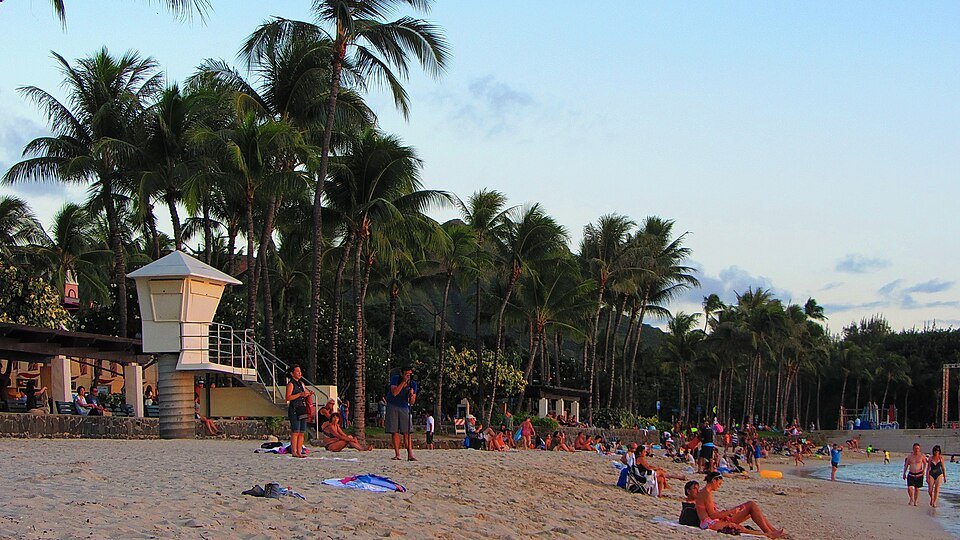
The state health department's advice is simple and worth repeating: swim at beaches with lifeguards, ask the lifeguard before going in, and read every posted sign. None of this guarantees calm water, and the absence of a sign is not a promise of safety.
This page covers the warnings you will see at the city's beaches and how to deal with the two currents that cause most rescues. For the beaches themselves, see Waikīkī, Ala Moana, and Kapiʻolani Park.
The city's beaches differ from the ones that make the news on Oʻahu. Waikīkī, Ala Moana, and Kaimana sit behind reef that blunts the surf for most of the year, while beaches elsewhere on the island, reached on a day trip, carry far rougher water. Knowing which kind of beach you are standing on changes how closely you need to watch the signs.
Lifeguards and the signs
The Honolulu Ocean Safety Department staffs towers on the city's main beaches and posts warning signs for the day's conditions. The same sign system is used across the islands, so learning it once is useful anywhere you swim in Hawaiʻi.
What matters is the sign at the tower today, not what the beach looked like yesterday or in a photo online. Surf, current, and marine life all change quickly, sometimes within hours of a shift in wind or swell.
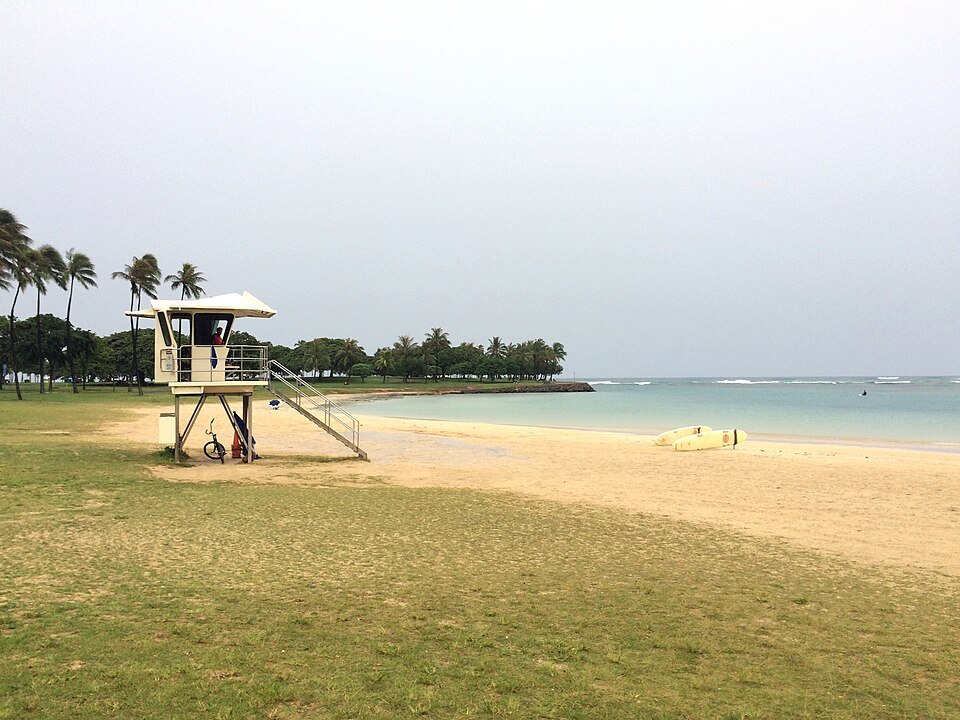
Walk to the tower when you arrive, read the signs, and ask the lifeguard where the best spot to swim is that day. They expect to be asked and would rather answer a question than make a rescue. Swim between the towers where you can, and not alone.
Towers are placed where a lifeguard can watch the clearest stretch of water, which is exactly why staying between them matters. Drift far down the beach, past the last tower, and you are swimming where no one is looking, whatever the water looks like from the sand.
Spotting a rip current
A rip current is a narrow, fast channel of water pulling away from shore, often in a spot where waves are not breaking the way they are on either side of it. It can look like the calmest patch of water on the beach, which is exactly why it catches people off guard.
A strong current is different: a powerful flow along or away from the beach, usually turning up with high surf and fast-changing tides, visible as a turbulent channel running between areas where waves are breaking normally.
Both are easiest to see from dry sand, before you wade in. Look for a gap in the breaking waves, a line of foam or debris moving steadily seaward, or a patch of churned, discolored water, and ask the lifeguard before swimming near it.
Rip currents often form where a gap in a sandbar or reef lets water, piled up by breaking waves, rush back out to sea along the shortest path. That is why they tend to run in a straight, narrow channel rather than spreading evenly across the beach.
Escaping a rip current
If a current catches you, the single worst response is to fight it by swimming straight back toward the beach. Rip currents are narrow but can be strong, and swimming against one exhausts people fast, which is how calm swimmers become emergencies.
Instead, stay calm and float. Currents do not pull you under, only away from shore, so there is time to think. Swim parallel to the beach, or angle diagonally across the current, until you feel it loosen its pull, then turn and swim in.
If you cannot get out of the current or you are tiring, raise an arm and shout for help rather than struggling in silence. Lifeguards are watching the water, and a clear signal brings them faster than thrashing does.
The simplest protection is to avoid needing any of this: check with the lifeguard before you enter the water, tell someone where you are swimming, and stay within sight of a tower. A current you never meet is easier to manage than one you have to escape.
Which beach suits which swimmer
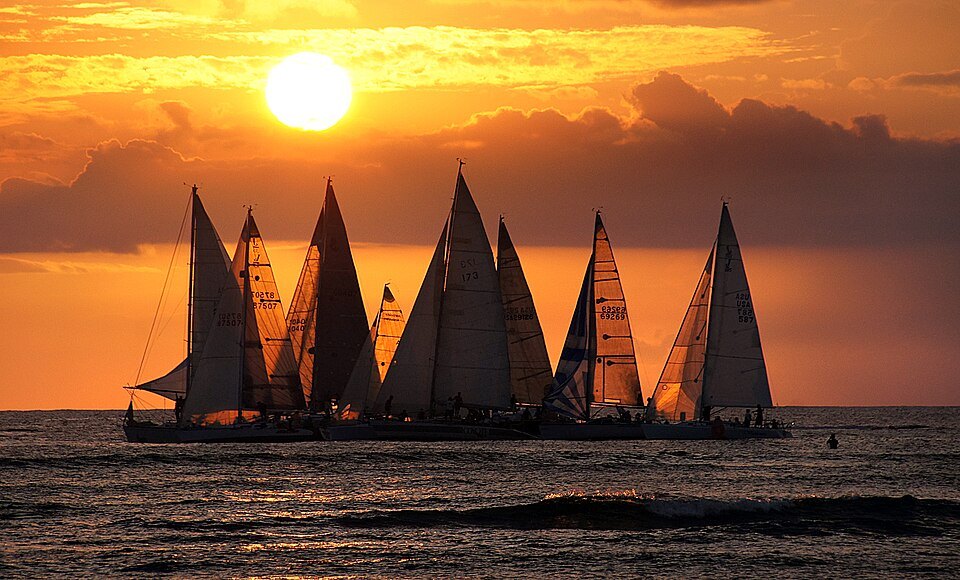
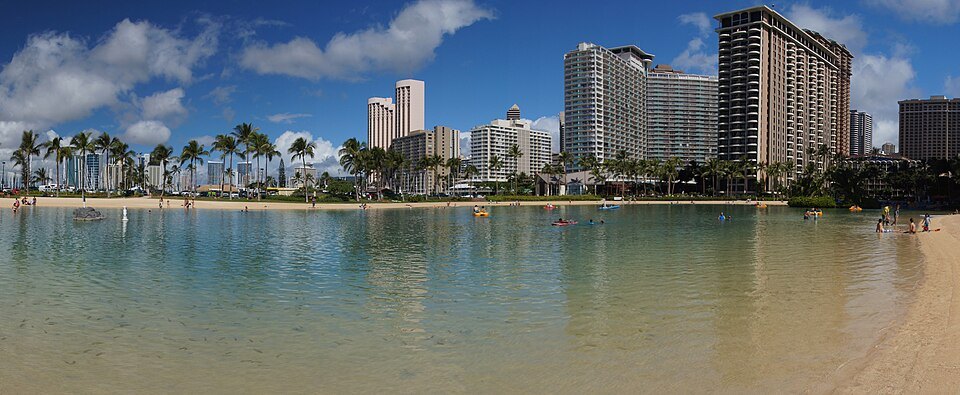
Waikīkī's long, gentle break is the classic place to learn to surf, and the water behind the Kūhiō Beach seawall suits children and weak swimmers. The bottom stays shallow a long way out, but it is rocky reef, not sand, and waves carry real force on windy days.
At Ala Moana Beach Park the reef usually keeps the water calm, yet the bottom drops within a few steps into an old dredged channel some twenty to thirty feet deep. Weak swimmers do better at the sandy eastern end or in the lagoon at Magic Island.
Kaimana Beach, at the Diamond Head end of Waikīkī beside the Natatorium, is sandy and watched from a lifeguard tower. The genuinely dangerous beaches on Oʻahu, such as Sandy Beach, Makapuʻu, and Waimea Bay, lie outside the city; if you drive out for a day trip, choose a lifeguarded beach and ask before you swim.
If you want to surf, take a lesson from an established beach school rather than renting a board and paddling out alone. A lesson teaches you where to paddle, how to stay clear of experienced surfers, and how to fall safely over shallow reef. Outrigger canoe rides also launch from the beach, and swimming areas are kept separate from the surf zone for good reason.
Reef, animals, and sun protection
The reef that keeps the south shore calm is alive and easily damaged. Do not stand on, touch, or take coral, and wear something on your feet wherever a sign warns of sharp coral underfoot. Box jellyfish tend to arrive on the south and leeward shores roughly nine to ten days after the full moon, and lifeguards post warnings when they do.
Portuguese man-o-war can also wash ashore with strong onshore winds, and they can still sting after they have stranded on the sand. Treat anything jellyfish-shaped on the beach as capable of stinging, whether or not it looks alive, and give it a wide berth.
You may meet a green sea turtle off Waikīkī or, occasionally, a Hawaiian monk seal resting on the sand; both are protected by law. Federal guidance asks for at least ten feet of distance from turtles, fifty feet from monk seals, and a hundred and fifty feet from a mother seal with a pup. Never touch, chase, or feed them, and report a sick or stranded animal to the NOAA marine wildlife hotline.
Since the start of 2021 it has been illegal in Hawaiʻi to sell sunscreen containing oxybenzone or octinoxate without a prescription, because the legislature found both chemicals harm coral reefs. A later proposal to add avobenzone and octocrylene to the ban did not become law, whatever some labels claim; check the state's current guidance if in doubt, and pack a shirt and hat as well.
Surf, swell, and the seasons
The south shore, where the city lies, takes its biggest waves in summer from swells generated far to the south, while the North Shore takes the huge winter surf that draws visitors on day trips. The two seasons can make the same Honolulu beach look entirely different a few months apart.
On a big south swell, surf at Waikīkī and Ala Moana can grow large enough for the state to issue high surf advisories, and lifeguards will close areas that are calm at other times of year. A beach that suited a weak swimmer last week may not suit one today.
Check the lifeguards' signs and the day's surf forecast before you paddle out or swim beyond the shallows, and see when to come for how the seasons generally shape conditions around the island.
More from the journal
- The OceanWhere can beginners swim safely in Honolulu?The calmest water in the city for children and weak swimmers, what makes each beach easy or tricky, how to read the lifeguards' signs, and the reef, jellyfish and sunscreen rules to know before you get in.Read the piece
- Getting AroundDo you need a car in Honolulu?Why most visitors can see Honolulu without a car, what TheBus, Skyline, bikes and taxis cover, where a car makes sense, and how to rent one for just the days you need it.Read the piece
- Getting HereHow do you get from Honolulu airport to Waikīkī without a car?By bus, by shuttle, by taxi or ride app, or partly by the new Skyline rail line: how each way from the airport to Waikīkī works, what to do with your luggage, and which suits whom.Read the piece