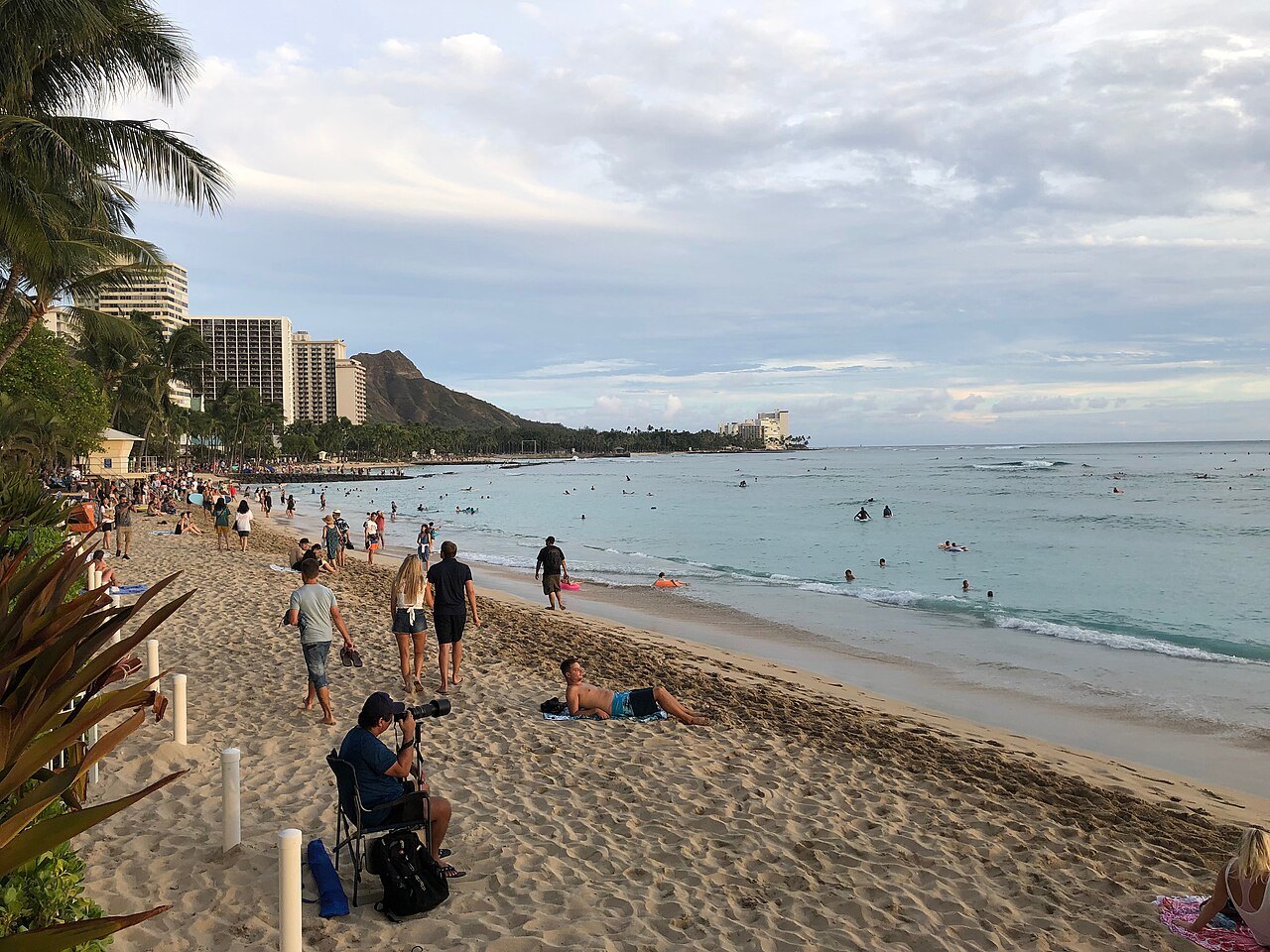
Home · Sights · Waikīkī Beach and Kalākaua Avenue
Waikīkī Beach and Kalākaua Avenue
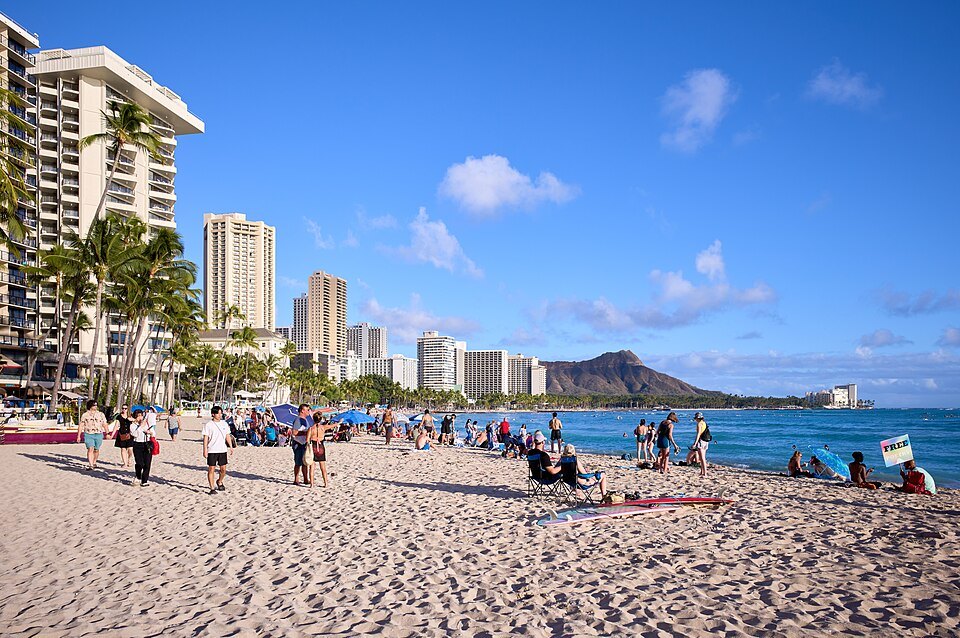
- iThe long rolling breakGentle waves that break far out over a shallow bottom, the classic place to learn on a longboard.
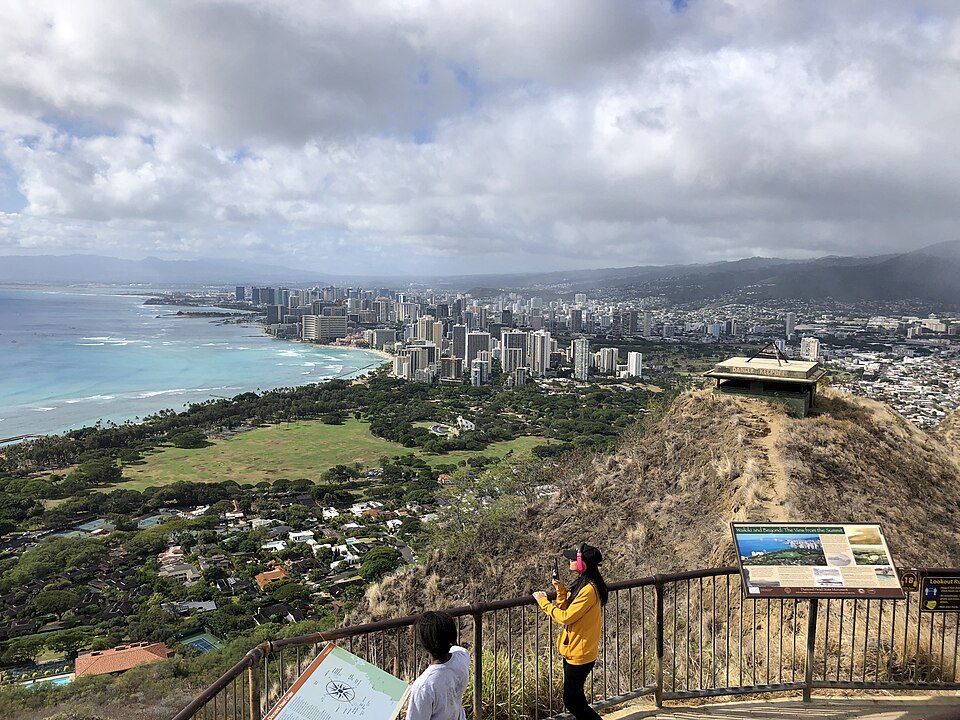
- iiDiamond Head at the endThe cone of Lēʻahi closing the view east along the sand from almost anywhere on the beach.
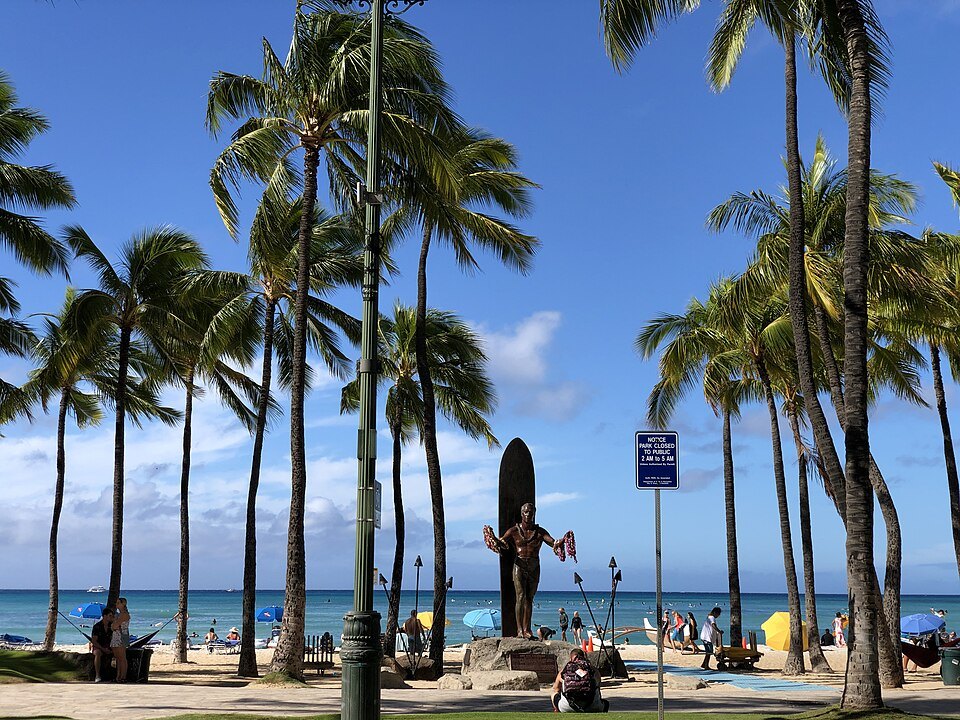
- iiiThe Duke statueA nine-foot bronze of Duke Kahanamoku with a surfboard at his back, set up in 1990 on Kūhiō Beach.
- ivThe Kūhiō Beach wallA seawall running out into the water, making a sheltered pool of calm shallows behind it.
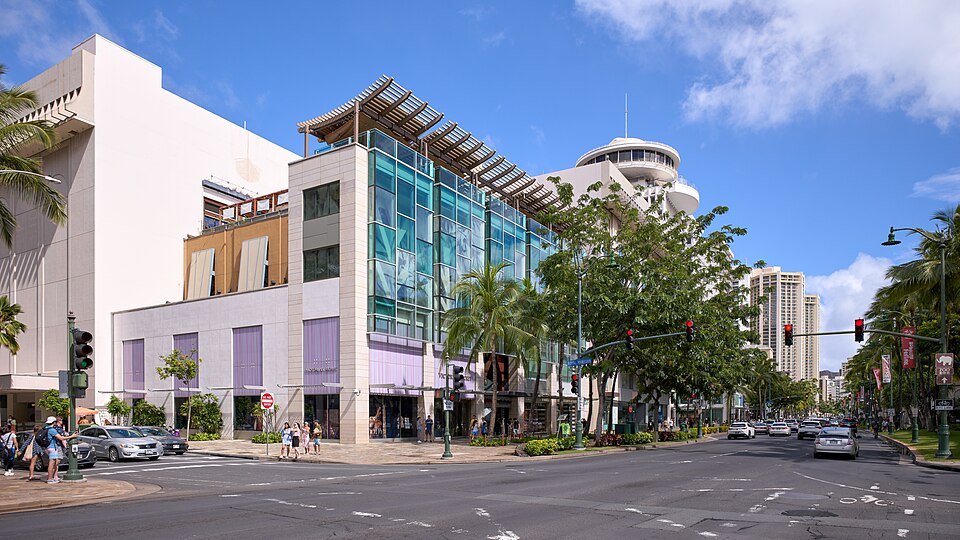
- vKalākaua AvenueThe avenue behind the sand, lined with the old and new hotels, shops and banyan trees.
- viSunsets in the seaFrom mid-September to late March the sun sets into the ocean in view of the beach.
Reading the place
Why it matters
Waikīkī means “spouting fresh water” in Hawaiian, for the springs and streams that once fed the wetlands behind the shore. It is the city's tourist district and the reason most visitors come to Honolulu at all, a strip of sand, hotels and surf between the Ala Wai Canal and Diamond Head. Waikīkī's hotels, shops and amenities produce about 42 percent of all the visitor spending in Hawaiʻi.
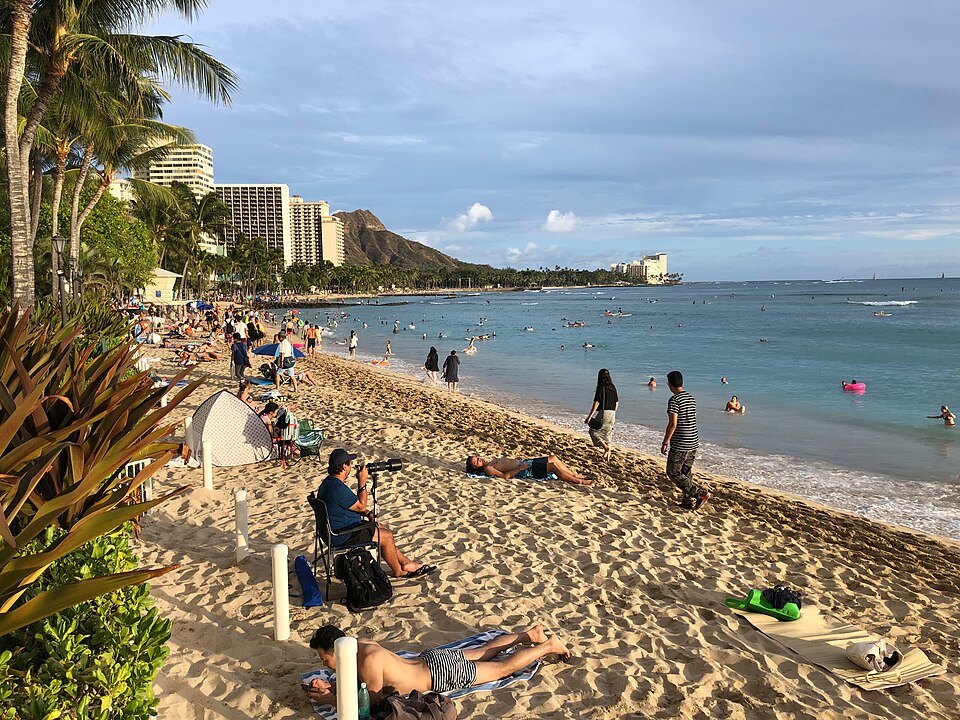
Long before the hotels, it was a place of the chiefs. Waikīkī was the first capital of the kingdom, in 1795 and 1796, and through the nineteenth century it was a retreat for Hawaiian royalty, who surfed here on early longboards. The name Waikīkī today stands both for the neighborhood and for the family of beaches along its shore.
A beach made by hand
The sand at Waikīkī is almost entirely man-made. Hotels and homes built too close to the shore from the late 1800s, with seawalls and other structures, cut off the natural drift of sand, and the beach began to erode. In the 1920s and 1930s sand was shipped in from Manhattan Beach in California, and sand was imported by barge until the 1970s; since 1951, close to 2,800,000 cubic feet of sand has been added, little of which is thought to remain.
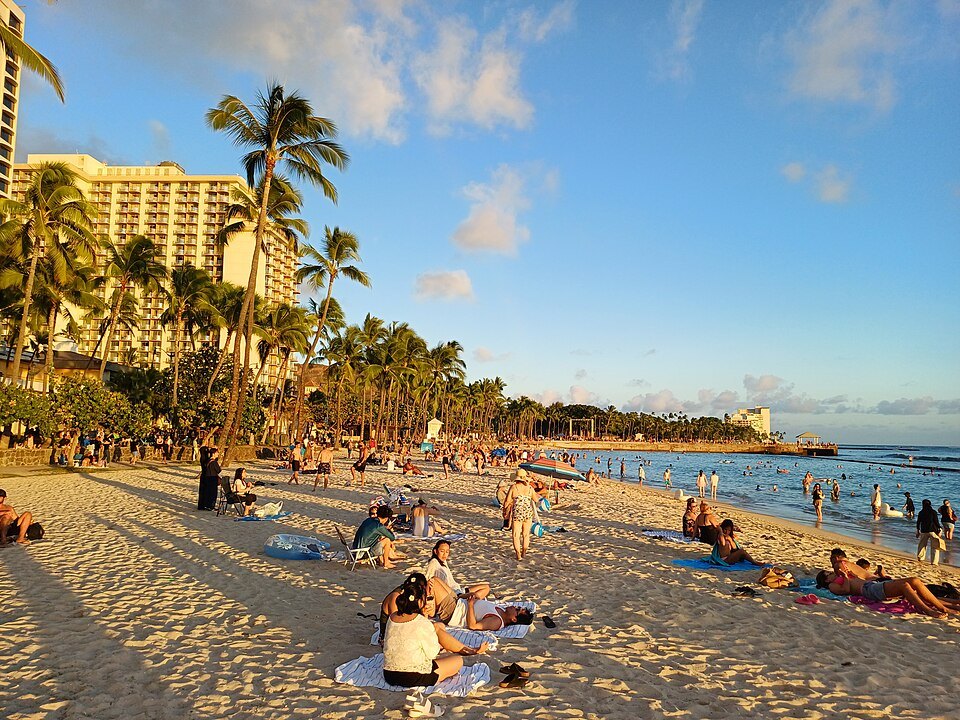
Before 1950 the shore was one continuous beach. Seawalls, groins, piers and storm drains, more than eighty of them by 1950, divided it into sections, and today there are eight named beaches: Fort DeRussy, Duke Kahanamoku, Halekulani, Royal Hawaiian, Kūhiō, Kapiʻolani, Queens and Kaimana. Most addresses use those names, but together they are still called Waikīkī Beach. Restoration continues: in 2012 sand from offshore shoals widened a 1,700-foot stretch by about 37 feet, and king tides and rising seas keep eating at it.
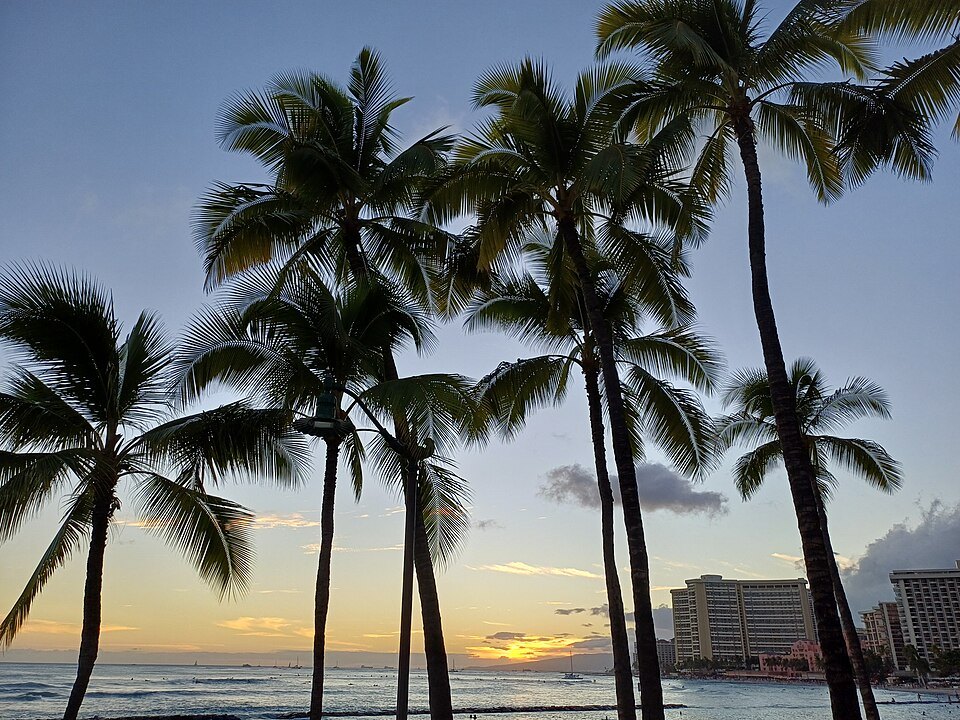
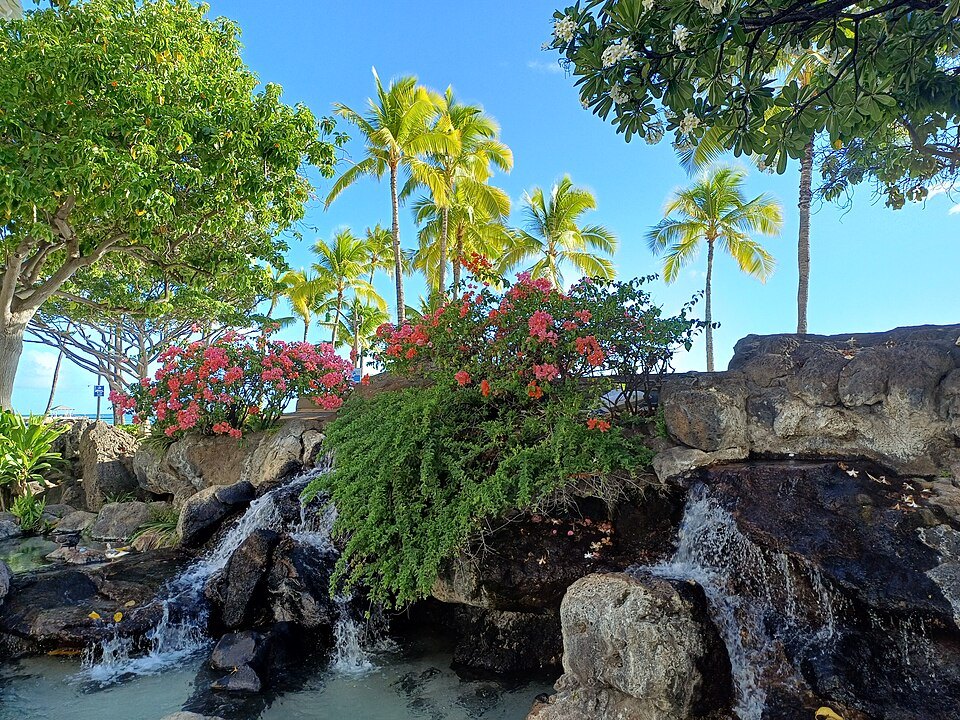
Behind the beach, the Ala Wai Canal was dug between 1921 and 1928 to drain the wetlands, which were blamed for disease-carrying mosquitoes. Draining them made the land that Waikīkī's hotels stand on.
The surf and Duke
The surf here is known for its long rolling break, far out over a shallow bottom with numerous rocks, which is why Waikīkī became the place to learn to surf, to ride tandem and to paddle outrigger canoes. Half of the beach is marked off for surfers. Waikīkī's surf was made famous by Duke Kahanamoku, born in 1890, three years before the overthrow, who won five Olympic medals in swimming in 1912, 1920 and 1924 and carried surfing as far as Australia, where his exhibition at Freshwater Beach in 1914 is remembered as a founding moment of the sport there. Many people around the world wanted to learn to surf because of him.
A nine-foot bronze statue of Duke by Gordon Fisher stands on Kūhiō Beach, installed in 1990, arms open, facing the street rather than the sea: it was meant to welcome people as they arrived. Visitors leave lei on its outstretched arms. Nearby are a bronze of Prince Jonah Kūhiō, installed in 2001, and at Queens Beach Robert Pashby's Surfer on a Wave, of 2003.
Kalākaua Avenue
The avenue behind the beach was first called Waikīkī Road and was renamed in 1905 for King Kalākaua. It runs about four and a half kilometers from Kapiʻolani Park past the zoo and the beaches, through the business district and across the Ala Wai to McCully. Its buildings mix Hawaiian, Gothic, Asian, Spanish and Moorish styles, and along it stand the best-known hotels, including the Moana and the Royal Hawaiian, and a run of luxury shops and surf brands.
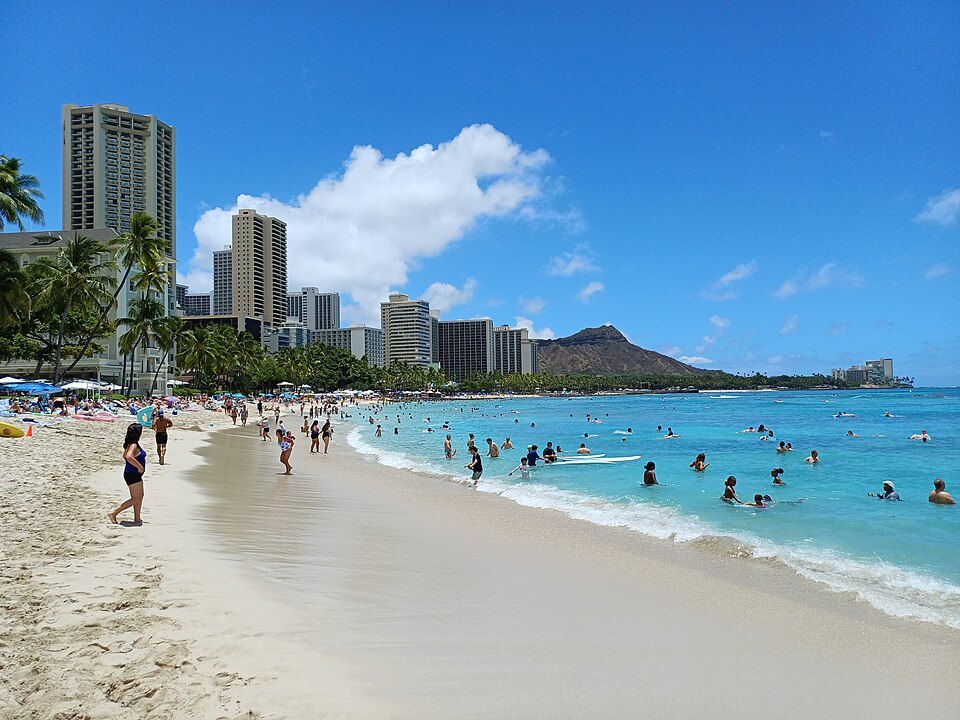
The avenue only became the center of the city's tourism after the canal drained the land; the high-rise boom of the late 1960s and early 1970s gave it the wall of towers it has today.
What you see
Stand on the sand at Kūhiō Beach and look east: the beach curves toward the green-brown cone of Diamond Head, with swimmers in the calm pool behind the Kūhiō seawall, surfers beyond it on the long break, and catamarans pulled up on the sand waiting for passengers. Look west and the hotels line the shore toward the Hilton towers and Fort DeRussy. From mid-September to late March, the sun sets into the sea in view of the beach.
Near the Duke statue, a fenced group of ancient basalt stones was set in place in 1997 as Nā Pōhaku Ola O Kapaemahu A Me Kapuni, the Stones of Life; the stones are honored in Hawaiian tradition, and this site does not picture them. Treat it as one: do not climb on the stones or the fence, and do not use it as a backdrop.
Swimming safely
Waikīkī is one of the gentlest beaches on the island, but it is not a pool. The water stays shallow for a long way out, with rocks and reef on the bottom, and waves can have some force on windy days. Swim near a lifeguard tower, keep to the swimming areas away from the surfers, and read the posted warning signs; the ocean page explains them. Hawaiʻi bans the sale of sunscreens containing oxybenzone and octinoxate; bring or buy a reef-safe one.
How to visit
Hawaiʻi's beaches are public, and you can walk onto the sand between the hotels. If you want to learn to surf, book a lesson with an established beach school rather than paddling out alone, and walk the beach end to end, from Kaimana at the Diamond Head end to the Hilton lagoon, to see all eight beaches.
For getting to and around Waikīkī, see getting around; for choosing where in Waikīkī to stay, where to stay. Kapiʻolani Park starts where the hotels end.
Nearby
- NearbyThe Moana and the Royal HawaiianWaikīkī's two historic hotels: the white colonnaded Moana of 1901, the first hotel on the beach, and the pink Spanish-Moorish Royal Hawaiian of 1927, built for the passengers of the great ocean liners.Read the page
- NearbyKapiʻolani Park and the NatatoriumThree hundred acres of lawn and shade at the foot of Diamond Head, dedicated in 1877 and named for Queen Kapiʻolani, with a crumbling war memorial of 1927 on the shore and the quietest beaches of Waikīkī.Read the page
- NearbyDiamond Head (Lēʻahi)A volcanic tuff cone some 400,000 to 500,000 years old, named for a tuna's fin in Hawaiian and for diamonds that were never there in English, with a steep army trail of 1908 to its summit.Read the page