Read on
The short answer
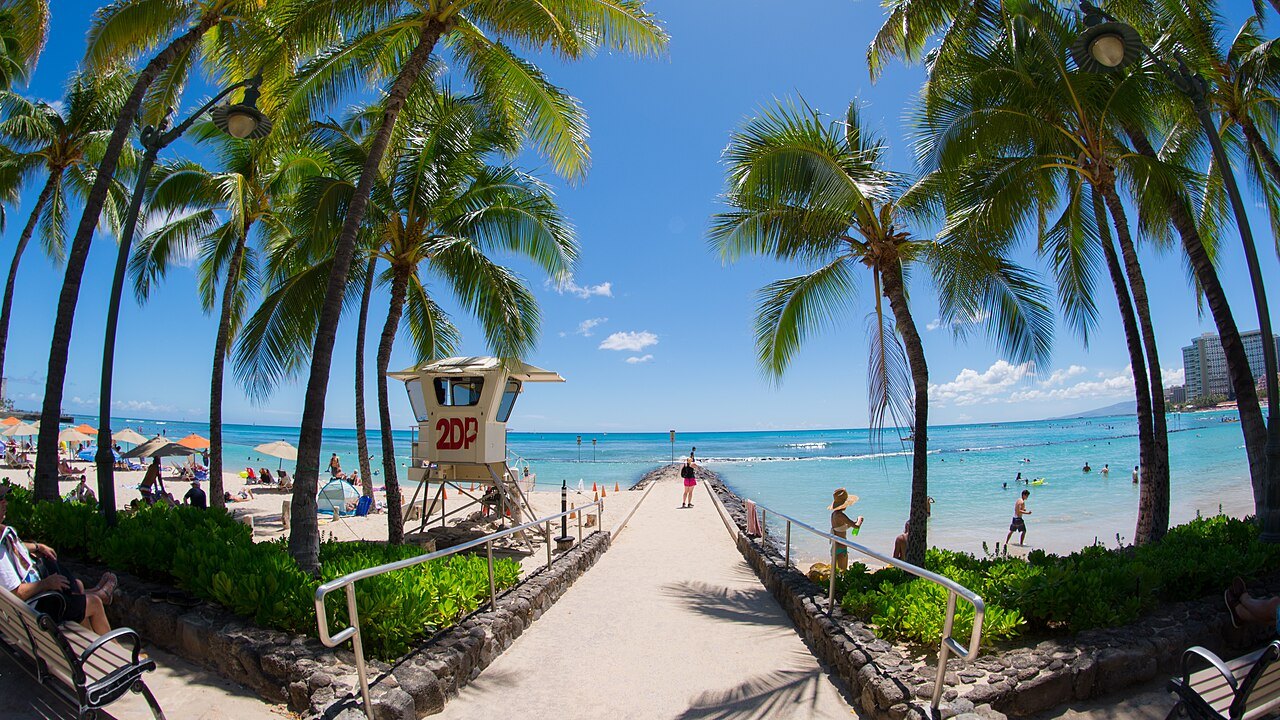
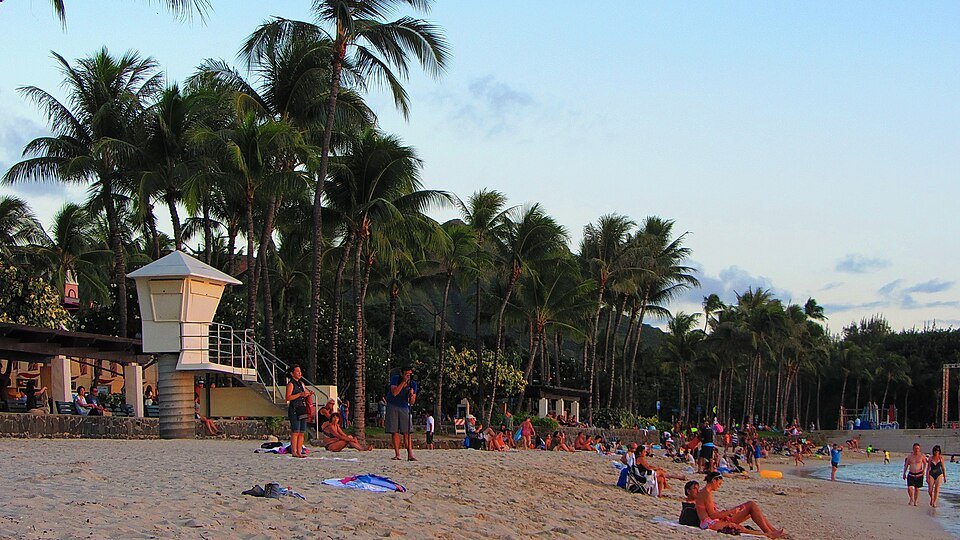
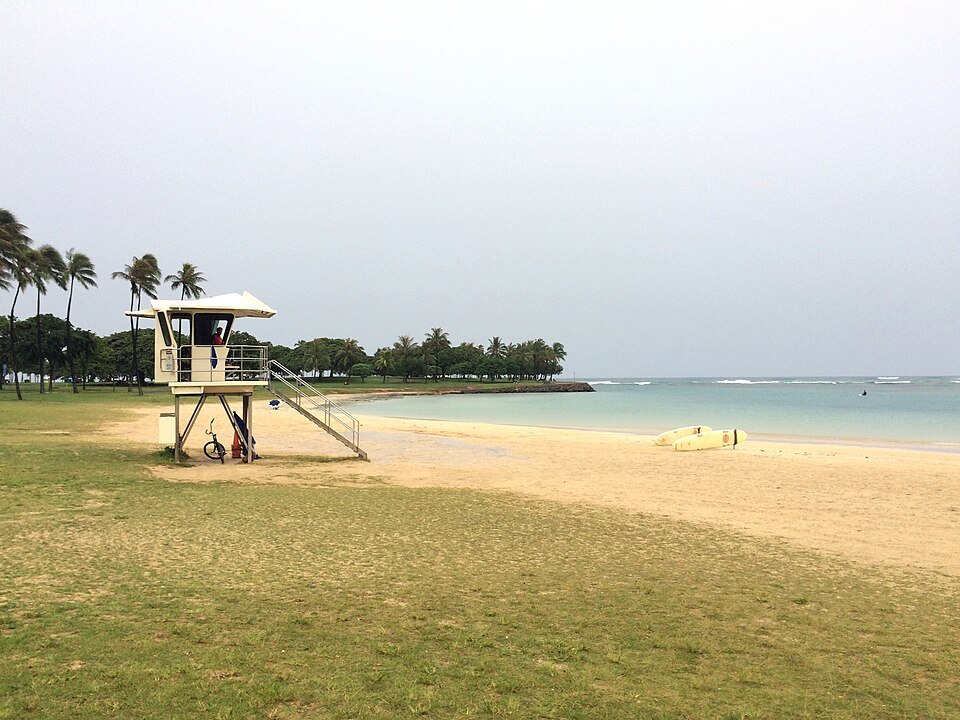
The gentlest water in Honolulu is on the south shore, where the reef breaks the waves before they reach the sand. For beginners and children, three places stand out: the sheltered water behind the seawall at Kūhiō Beach in the middle of Waikīkī, the lagoon at Magic Island at the end of Ala Moana Beach Park, and the sandy eastern end of Ala Moana's main beach. Kaimana Beach, at the Diamond Head end of Waikīkī, is another calm, sandy choice with a lifeguard tower.
Wherever you go, the rules are the same, and they come from the state's own advice: swim at a beach with lifeguards, talk to the lifeguard before you go in, and read and obey every posted sign. The absence of a sign does not mean the water is safe. The ocean page lists every sign and what it means.
Waikīkī
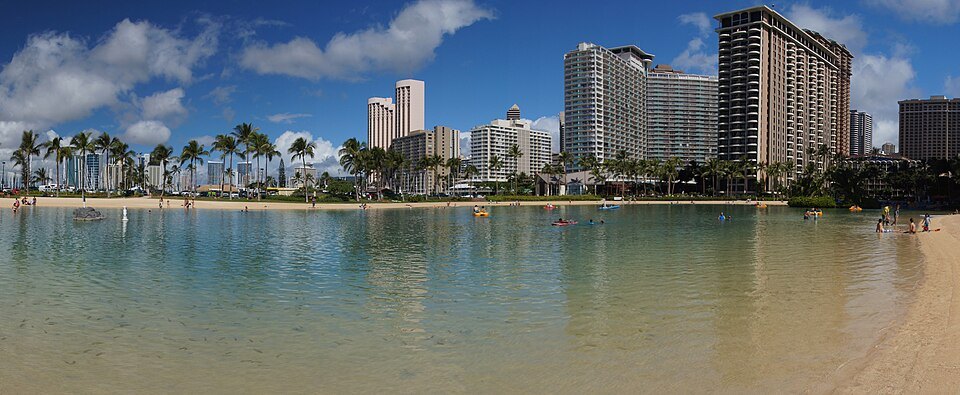
Waikīkī is famous for gentle surf: a long, rolling break far out over a shallow bottom, which is why beginners learn to surf here. For swimmers, the water stays shallow a long way out, but the bottom has rocks and reef, and waves can have some force on windy days. Half of the beach is marked off for surfers, so keep to the swimming areas.
The calmest spot is behind the Kūhiō Beach wall, a seawall that runs out into the water and makes a sheltered pool of shallows behind it, near the Duke Kahanamoku statue. It is the easiest place in the city to put a child in the sea. Further toward Diamond Head, Kaimana Beach beside the old Natatorium is sandy, has a lifeguard tower and is popular with the families of nearby neighborhoods.
Ala Moana and Magic Island
Ala Moana Beach Park is where Honolulu's own families swim. Its half-mile beach is protected by a shallow reef offshore, so the water is usually calm, and lifeguards are stationed there daily. But there is a trap. The deep water in front of the sand is not natural: it is an old boat channel dredged through the reef in the late 1920s, twenty to thirty feet deep, and the bottom drops into it only a few steps from the shore.
So choose your spot. The middle and western parts of the beach have rocks and sharp coral underfoot, which make getting in awkward; the eastern end, nearer Diamond Head, has a sandy bottom and is where most people swim. Better still for small children is the lagoon at Magic Island, at the park's eastern tip, sheltered behind a breakwater.
About Magic Island and Kaimana
Magic Island is not natural either. It was built in 1962 by reclaiming thirty acres of shallow reef with dredged coral, as the first of three islands for a resort hotel complex on the reef; after a public outcry, the rest was never built, and the state turned the peninsula into a park. In 1972 it was officially renamed ʻĀina Moana, “land from the sea,” but everyone still calls it Magic Island.
Kaimana Beach was once a rocky shore with a narrow strip of sand; it grew wider after the Natatorium was built beside it. Its name is not an old Hawaiian place name but the Hawaiian pronunciation of “diamond,” for Diamond Head above it, and older residents may still call it Sans Souci. It has showers and a lifeguard tower, and on calm days it is one of the easiest places in the city to swim.
Reading the signs
The Honolulu Ocean Safety Department posts warning signs at lifeguarded beaches, and the same signs are used across the islands. A few matter most to beginners. Sudden Drop Off means the bottom falls from wading depth to over your head without warning, as it does at Ala Moana. Sharp Coral means reef lies close to the shore: protect your feet and do not stand on the coral. Strong Current and Rip Currents mean fast channels of water that can carry you away from shore.
If you are ever caught in a current, do not swim against it. Float, stay calm, and swim parallel to the beach, or diagonally across the current, until you are out of it; then come in. Raise an arm and call for help if you need it. That is why you swim near a lifeguard tower: someone is watching.
Jellyfish, reef and animals
Box jellyfish tend to come onto the south and leeward shores, including Waikīkī, about nine to ten days after each full moon, and lifeguards post jellyfish warnings when they do. Portuguese man-o-war come ashore with strong onshore winds and can still sting when stranded on the sand, so do not pick them up. On those days, ask the lifeguard, and consider a day at a pool or a museum instead.
Coral is alive and easily broken: do not stand on it, touch it or take pieces. You may see green sea turtles in the water off Waikīkī. They are protected, and federal guidelines ask you to stay at least ten feet away, in the water and on land, and never to touch, chase or feed them.
Sunscreen
Since 1 January 2021, Hawaiʻi has banned the sale and distribution of sunscreens containing oxybenzone or octinoxate without a prescription, because the legislature found that they harm coral reefs. You can bring your own sunscreen, but choose one without those two chemicals. A later proposal to ban two more did not become law. A shirt and a hat protect your skin, and the reef, better than any cream, and the sun here is strong even under cloud.
When to go
Mornings are often calmer, and the light on the water is at its best. Summer can bring swells from the south that raise the surf at Waikīkī and Ala Moana, and in winter the North Shore's big waves are far away on the other side of the island. Whatever the season, the lifeguard's word on the day is what counts. For planning the rest of the day, see what to eat first in Honolulu, and for reaching the beach from the airport, getting from the airport to Waikīkī.
More from the journal
- Getting HereHow do you get from Honolulu airport to Waikīkī without a car?By bus, by shuttle, by taxi or ride app, or partly by the new Skyline rail line: how each way from the airport to Waikīkī works, what to do with your luggage, and which suits whom.Read the piece
- Eating & DrinkingWhat should you eat first in Honolulu?A plate lunch, poke, saimin, a malasada, shave ice and a plate of Hawaiian food: what each is, where it came from, and how to find it in the city without a reservation.Read the piece
- Getting AroundDo you need a car in Honolulu?Why most visitors can see Honolulu without a car, what TheBus, Skyline, bikes and taxis cover, where a car makes sense, and how to rent one for just the days you need it.Read the piece