Home · Sights · Kapiʻolani Park and the Natatorium
Kapiʻolani Park and the Natatorium
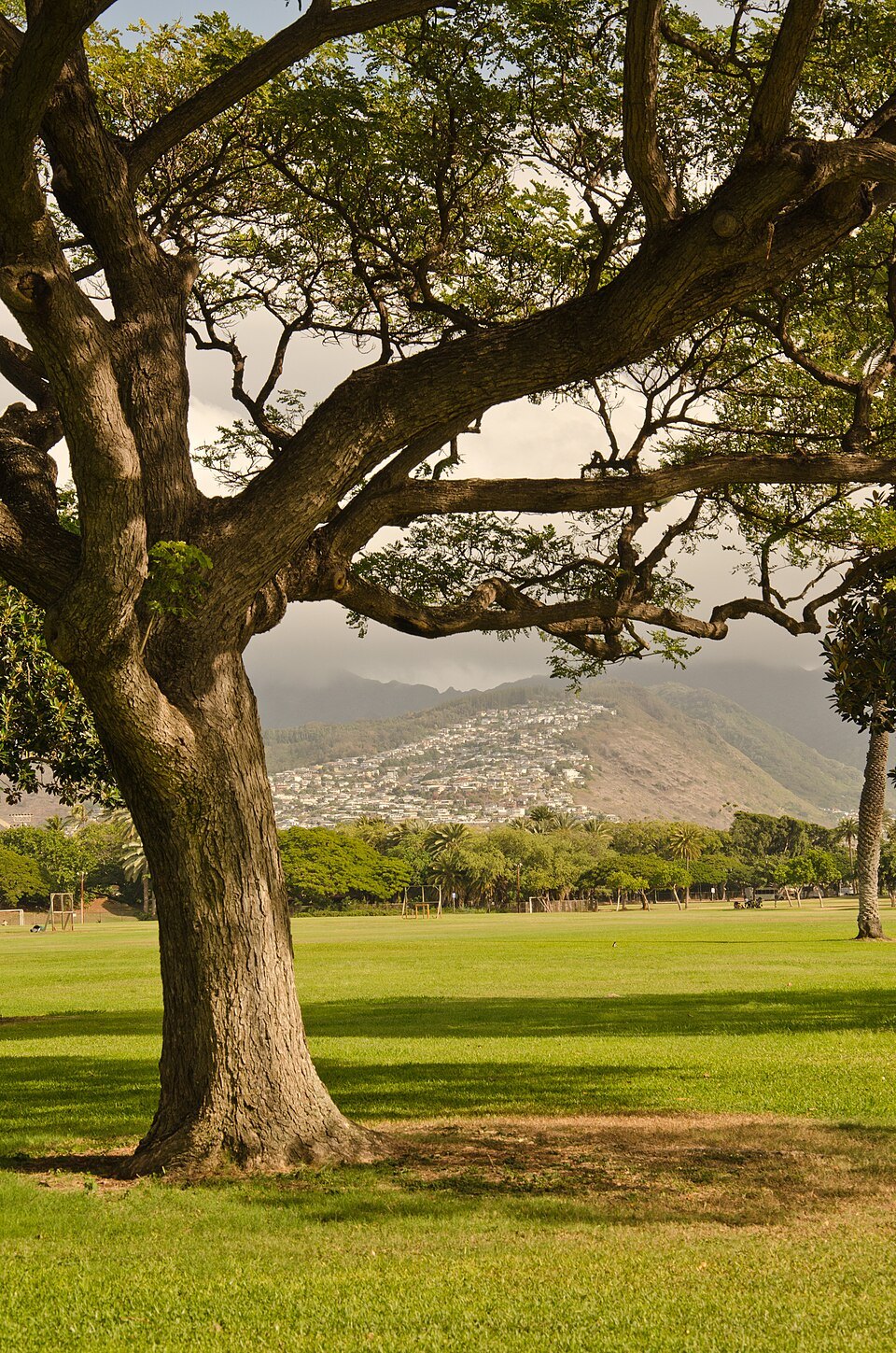
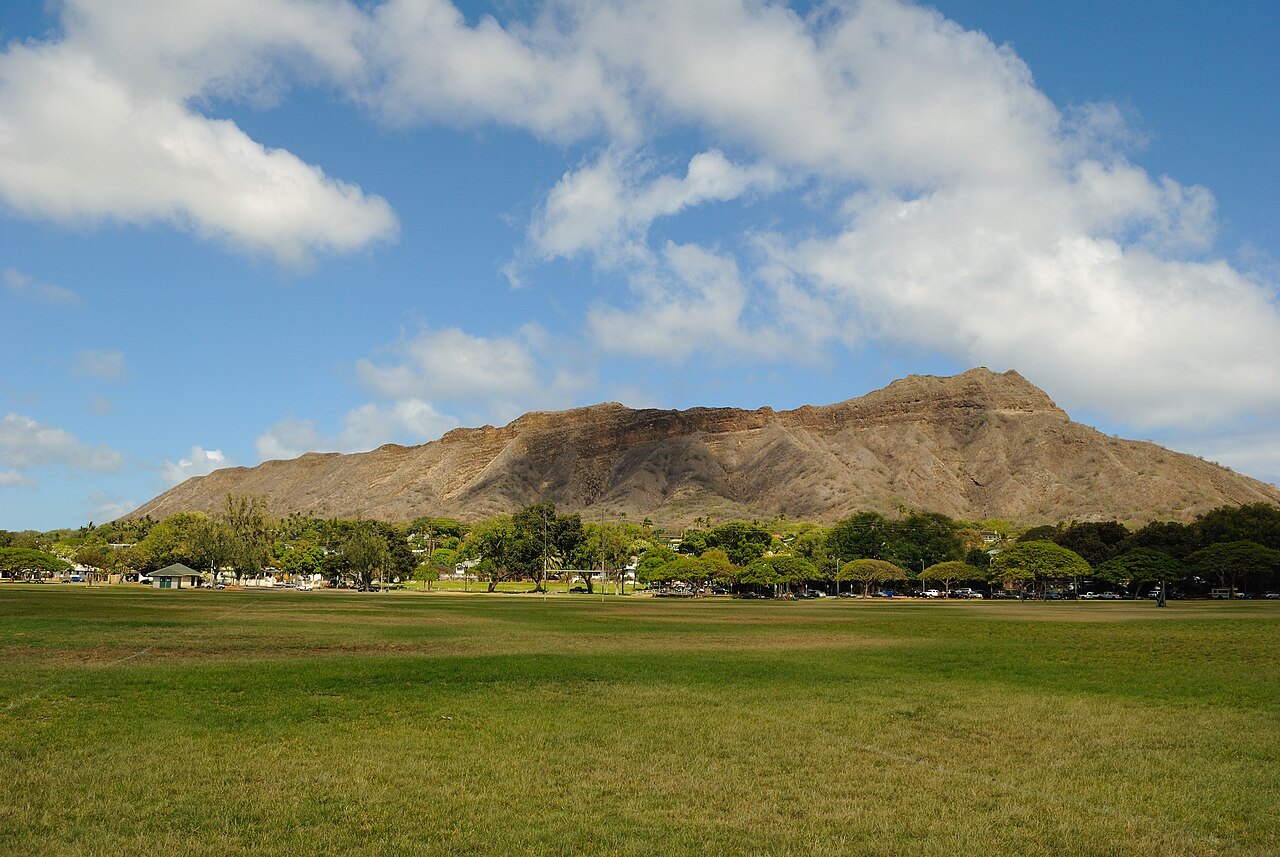
- iThe great lawnOpen grass and old trees stretching from the end of Waikīkī to the slopes of Diamond Head.
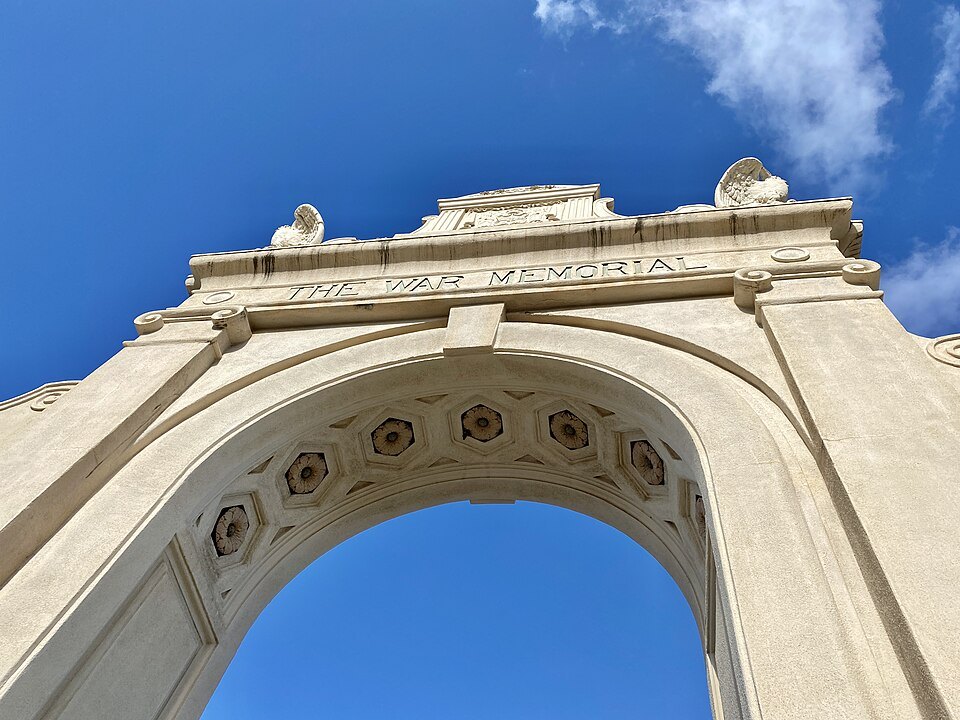
- iiThe Natatorium archA Beaux-Arts memorial gateway of 1927 with four stone eagles, facing Kalākaua Avenue.
- iiiThe saltwater poolA hundred-meter pool walled into the sea behind the arch, closed since 1979.
- ivQueen Kapiʻolani's statueThe queen consort in bronze among the trees of the park that bears her name.
- vThe Waikīkī ShellAn open-air concert venue with seats for 2,400 and lawn space for thousands more.
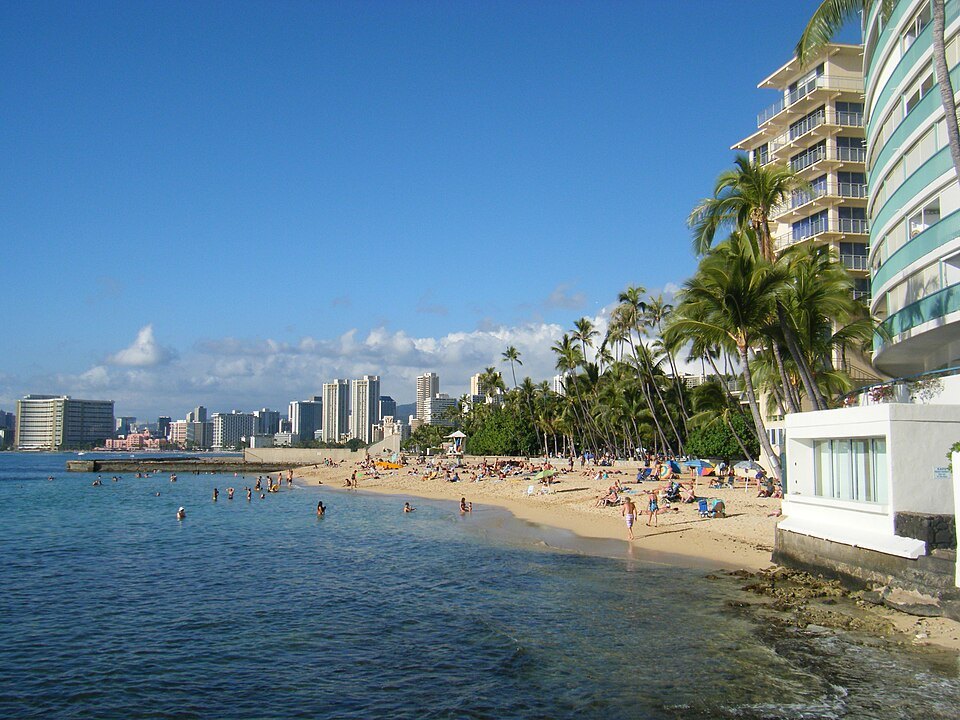
- viKaimana and Queens beachesSmall sandy beaches beside the Natatorium, calmer and less crowded than central Waikīkī.
Reading the place
Why it matters
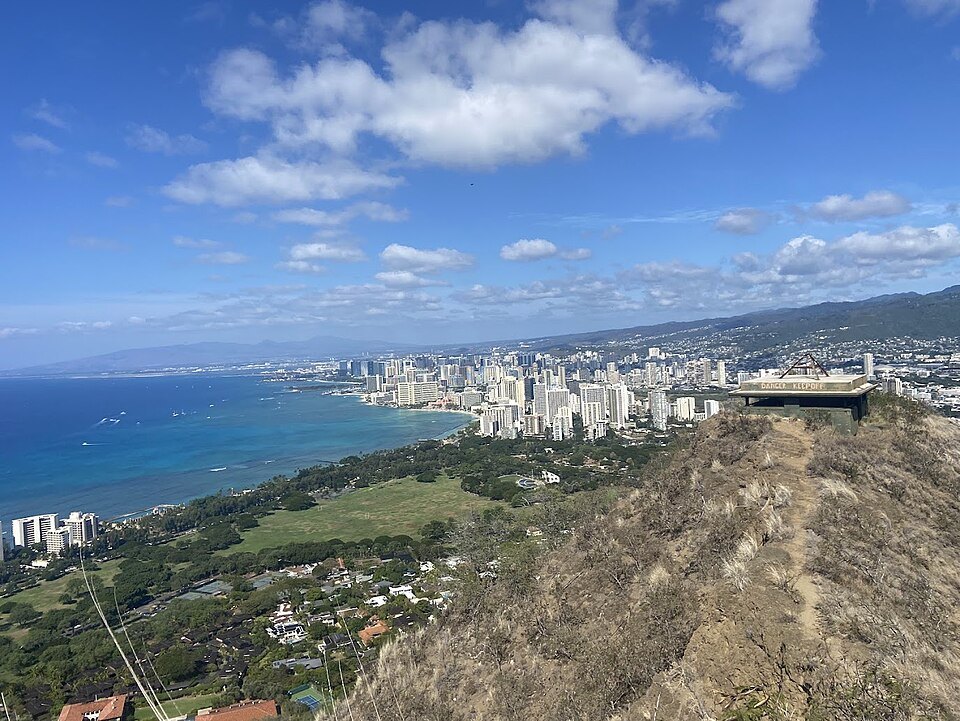
Queen Kapiʻolani Regional Park is the largest public park in Hawaiʻi and the second oldest. Its three hundred acres fill the ground between the last hotels of Waikīkī and the slopes of Diamond Head, and it serves as the border between Waikīkī and the Diamond Head neighborhood. After the density of Kalākaua Avenue, this is where the city opens up: lawns, banyans, joggers on the two-mile loop, picnics under the trees, and the crater standing over all of it.
It is named for Queen Kapiʻolani, the wife of King Kalākaua. Deeply interested in the health of Native Hawaiians, she founded a home for the daughters of patients at the leprosy settlement on Molokaʻi and a maternity home where Hawaiian mothers and newborns could receive care.
A racetrack for a king
In the 1870s King Kalākaua was asked to find a permanent, dry course for horse racing, and because Waikīkī was popular with wealthy racing fans, he chose the empty plain at the foot of Diamond Head. The park was dedicated on 11 June 1877, the second public park in the islands after Thomas Square. It was run by the Kapiʻolani Park Association, a group of businessmen led in part by the Scotsman Archibald Cleghorn, who held it on a long lease and let shareholders lease land along the beach.
After the overthrow, the land passed to the Republic of Hawaiʻi, which set it aside permanently as a free public park: the law forbade selling or leasing land in it and charging any entrance fee. Since 1913 the city's parks department has kept it. In the 1920s the digging of the Ala Wai Canal filled the park with mud and rubbish, and it was little used until it was renovated and given its present boundaries in 1952.
The Natatorium
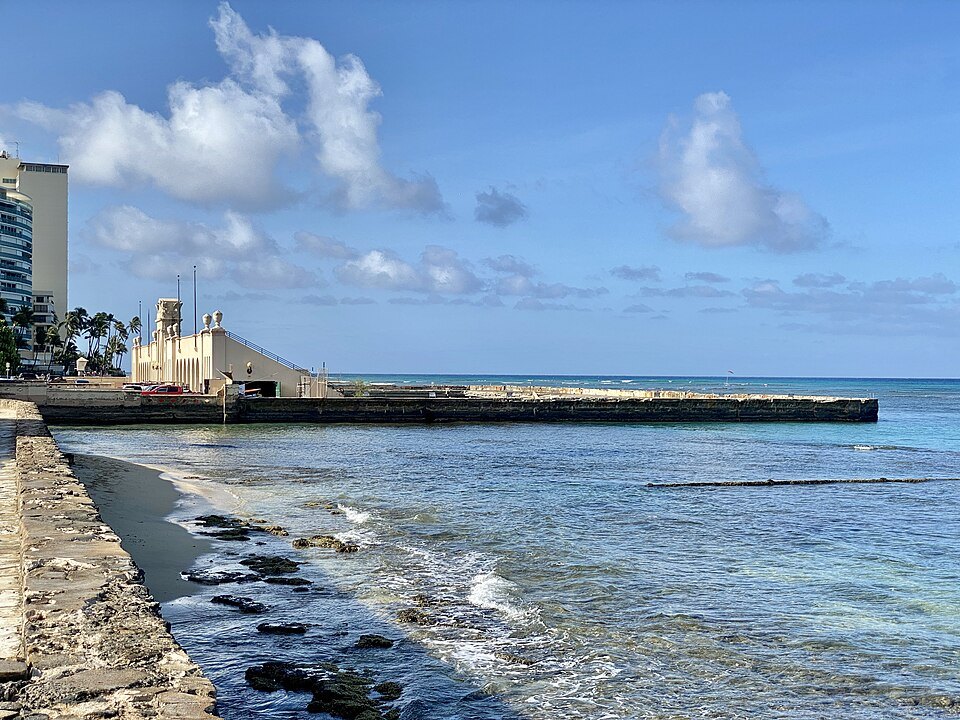
On the shore at the Waikīkī end of the park stands the Waikīkī Natatorium War Memorial, a monument to the more than ten thousand people from the Territory of Hawaiʻi who served in the First World War. Rather than a statue, the territory built a living memorial: a saltwater swimming pool, a hundred meters by forty, walled into the sea, behind a Beaux-Arts gateway designed by the San Francisco architect Lewis P. Hobart, with four stone eagles on its arch. The 1921 law that paid for it required a swimming course of at least a hundred meters, and a jury that included the California architect Bernard Maybeck chose Hobart's design in an open competition.
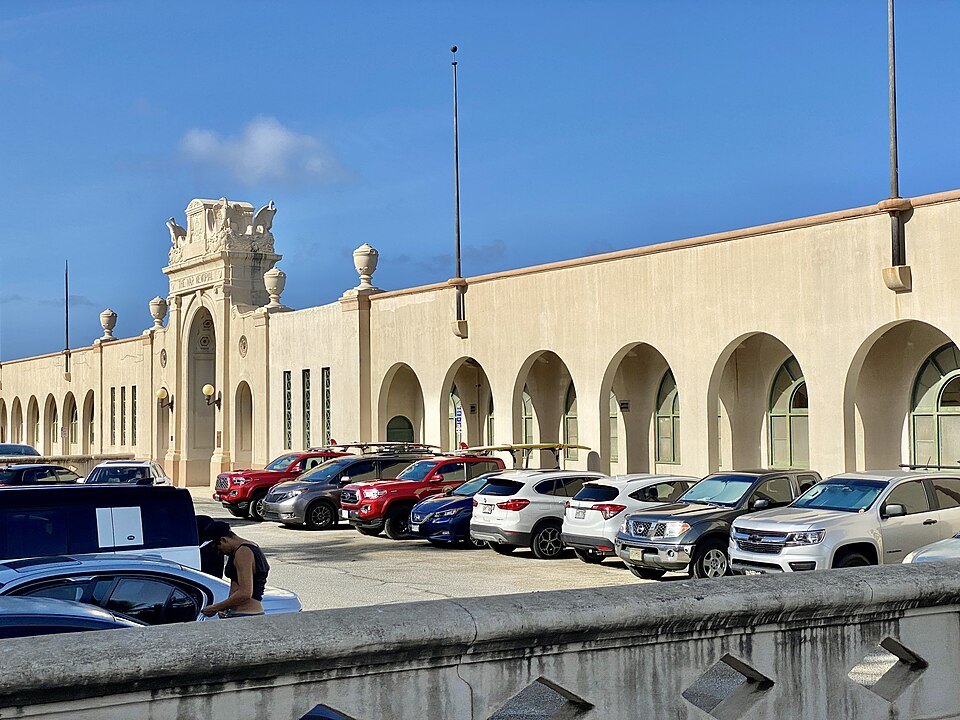
It opened on 24 August 1927, and Duke Kahanamoku, the Olympic champion from Waikīkī, made the first swim, on his birthday. In the meet that followed, Johnny Weissmuller, the world record holder, won the 100, 400 and 800 meters, and Buster Crabbe, another local swimmer, won the 1,500. The Army used it for training in the Second World War. Afterward it deteriorated, and it closed to the public in 1979 for safety reasons.
Its future has been argued over for decades: some want it demolished and replaced, others repaired, and the city has backed each side at different times. You can see the arch and the walls of the pool from the sidewalk and the beach, but you cannot swim in it. It is on the National Register of Historic Places. A study begun by the city in 2018 weighed the options for bringing it back into use.
What you see
Walk in from Kalākaua Avenue and the park is mostly open lawn with tall trees, framed by the green-brown ridge of Diamond Head. The bronze statue of Queen Kapiʻolani stands among the trees. The Waikīkī Shell, an open-air concert venue with 2,400 seats and room for six thousand more on the lawn, holds evening concerts. There are tennis and basketball courts, playing fields and an archery range, and the Honolulu Cricket Club, founded in 1893 and said to be the oldest sporting club in the Pacific, plays here.
On the shore, the Natatorium's arch faces the avenue, and beside it is Kaimana Beach, a sandy beach with a lifeguard tower that grew wider after the pool was built. It is also called Sans Souci, after a small resort opened here in 1893, where Robert Louis Stevenson stayed. Queens Beach lies between the Natatorium and Kūhiō Beach.
Using the park
The park is free to walk through, and it is the easiest green space to reach from Waikīkī's hotels. It is the start and finish of the city's big road races, so on those days it is crowded and parts of it are fenced off. The Honolulu Zoo also occupies part of the park, next to Kalākaua Avenue.
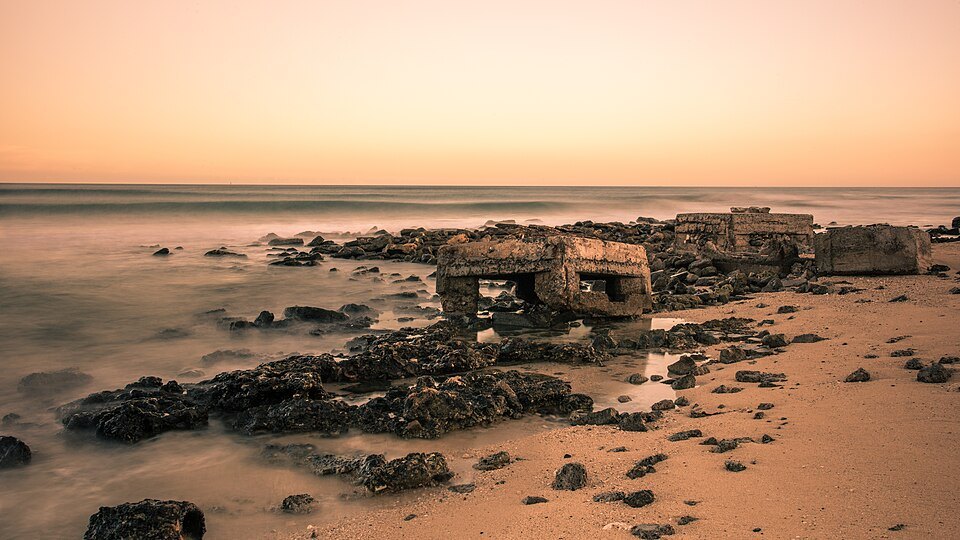
Kaimana Beach is a good choice for a calmer swim than central Waikīkī, and it is popular with residents of the nearby neighborhoods. As at any beach, swim near the lifeguard and read the posted signs; the ocean page explains them. The Diamond Head trail starts from the crater, a short bus ride or a longer walk from the park; booking ahead explains the reservation.
Honest notes
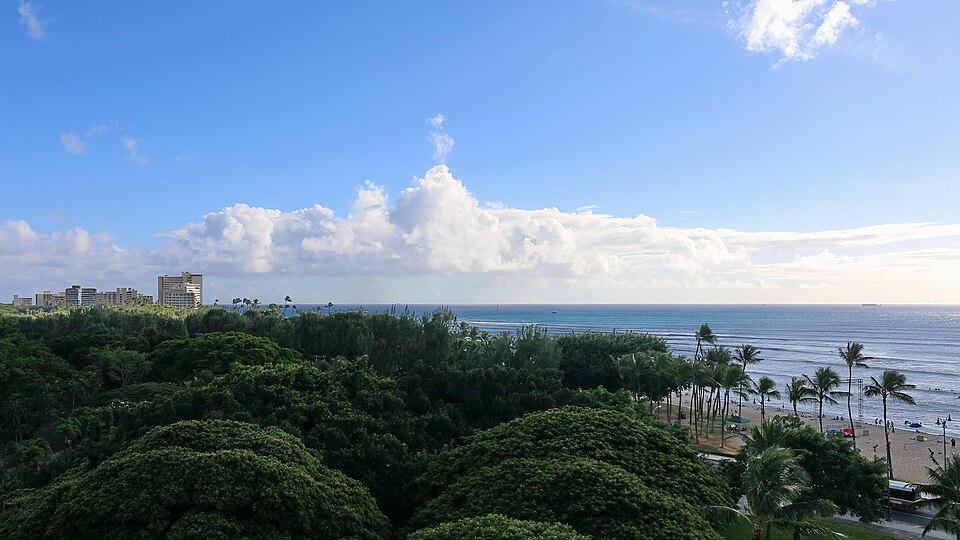
One more piece of history lies under Kaimana's sand. The first telegraph cable from California came ashore here, dragged in through the channel in 1902 by, it is said, Duke Kahanamoku's uncle David Piʻikoi; the first message over it was sent on 1 January 1903 to President Theodore Roosevelt. Nothing on the beach marks it, and the story of the uncle is a family tradition rather than a record.
Nearby
- NearbyWaikīkī Beach and Kalākaua AvenueEight beaches strung between the Ala Wai Canal and Diamond Head, a long rolling surf break that taught the world to ride a longboard, and behind the sand the avenue named for a king.Read the page
- NearbyDiamond Head (Lēʻahi)A volcanic tuff cone some 400,000 to 500,000 years old, named for a tuna's fin in Hawaiian and for diamonds that were never there in English, with a steep army trail of 1908 to its summit.Read the page
- NearbyThe Moana and the Royal HawaiianWaikīkī's two historic hotels: the white colonnaded Moana of 1901, the first hotel on the beach, and the pink Spanish-Moorish Royal Hawaiian of 1927, built for the passengers of the great ocean liners.Read the page