Home · Sights · Punchbowl: The National Memorial Cemetery of the Pacific
Punchbowl: The National Memorial Cemetery of the Pacific
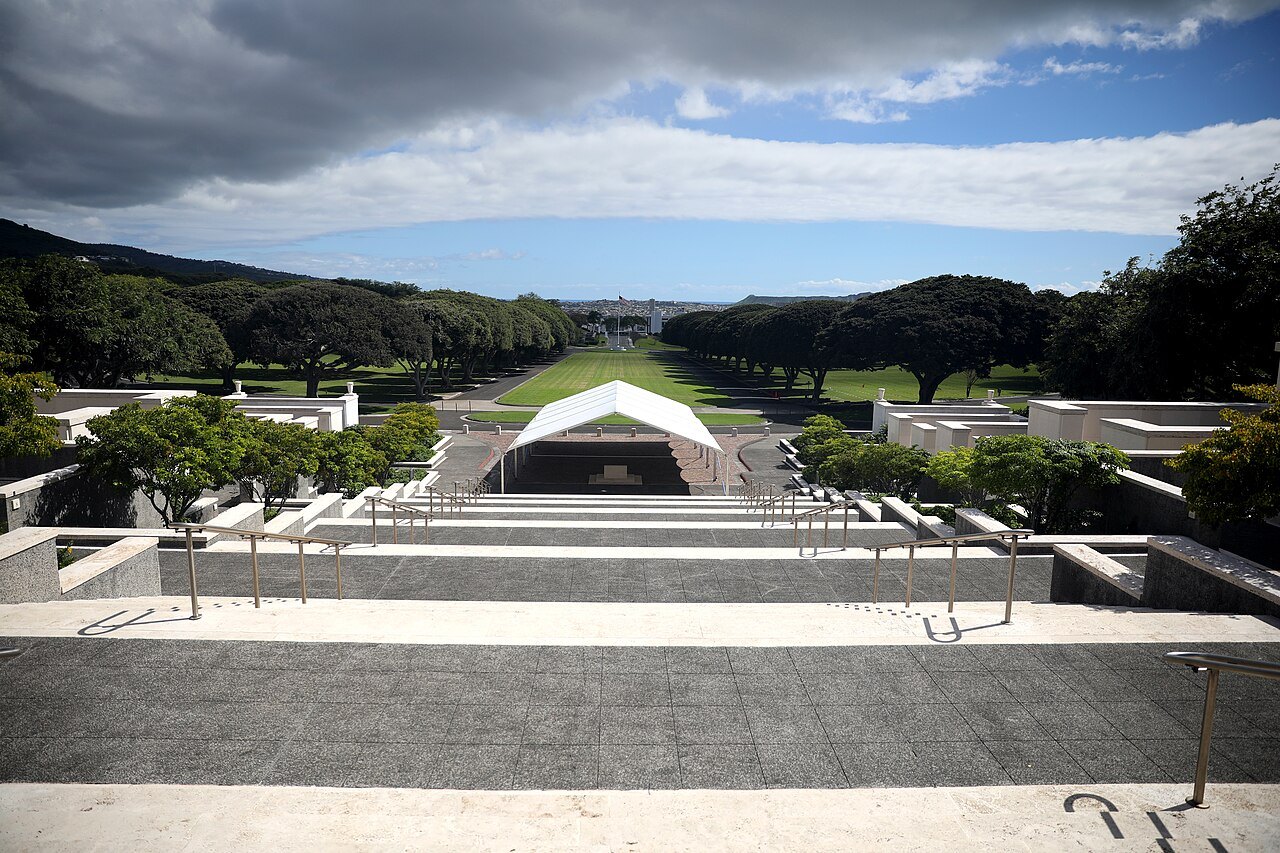
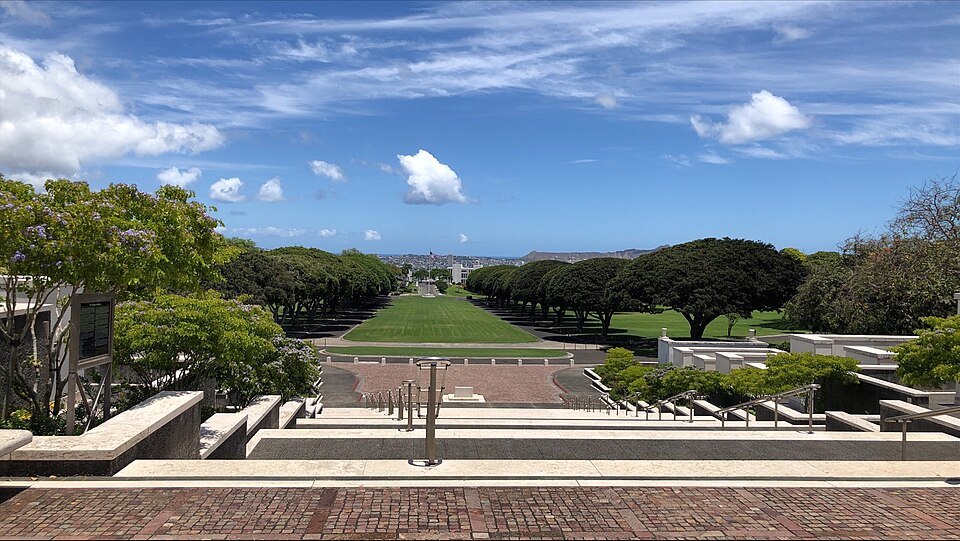
- iThe crater floorA broad, level lawn inside the crater rim, set with rows of flat granite grave markers.
- iiThe Honolulu MemorialA monumental staircase of 1964 rising to a chapel and the statue of Lady Columbia.
- iiiThe Courts of the MissingTen courts flanking the stairs, with the names of 28,788 missing service members on marble.
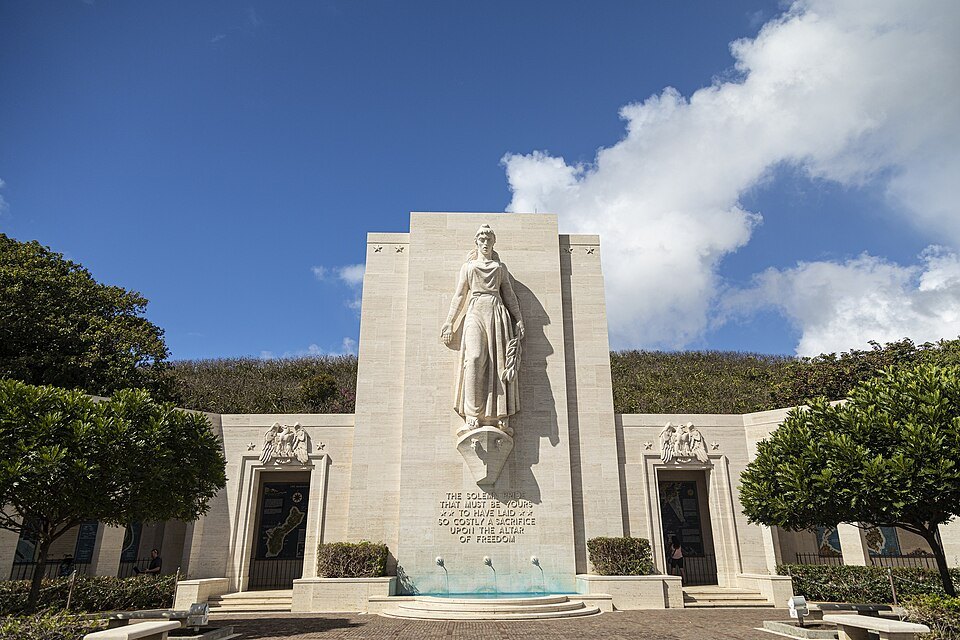
- ivThe Court of HonorThe terrace at the top of the stairs, with Lady Columbia on the bow of a ship.
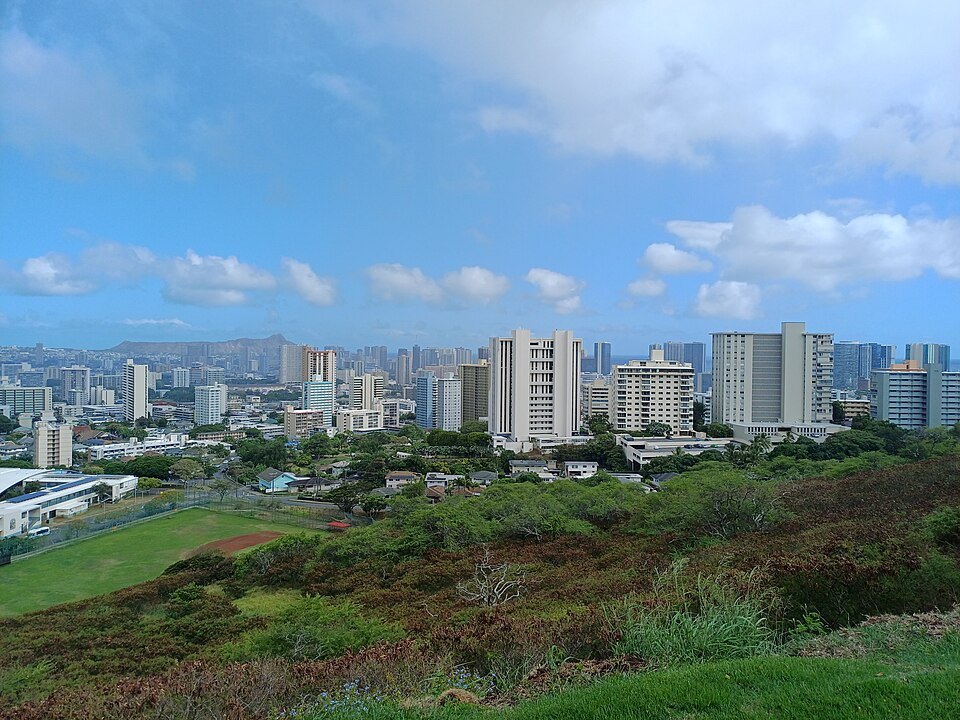
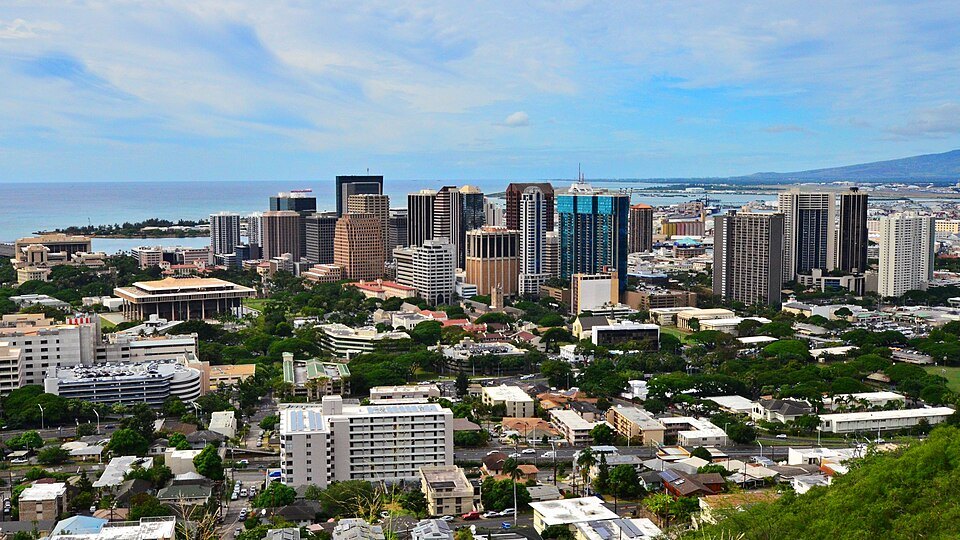
- vThe lookoutA point on the crater rim looking down over downtown, Waikīkī and Diamond Head to the sea.
Reading the place
Why it matters
The National Memorial Cemetery of the Pacific lies inside Punchbowl, an extinct crater above downtown Honolulu. Since it was dedicated on 2 September 1949, some 53,000 veterans of the Second World War, the Korean War and the Vietnam War, with their dependents, have been laid to rest here, and it is on the National Register of Historic Places. It is one of the most visited places in Hawaiʻi, and it is a cemetery before it is anything else.
This page describes a place of mourning. It is written to help you visit it with the respect it asks for: what the memorial is, what you will see, and how to behave while you are there.
The crater and its name
Punchbowl is one of the younger volcanic cones of the Honolulu Volcanic Series, the same family as Diamond Head. Its Hawaiian name, Pūowaina, is most often translated as “hill of sacrifice.” The earliest known use of the crater was as a place where people who had broken certain kapu, sacred restrictions, were put to death as offerings to the gods. Around 1800, in the time of Kamehameha I, two cannon were mounted on its rim and fired for ceremonies, to salute important arrivals.
In the 1890s a committee proposed a city cemetery in the crater, but the idea was rejected, partly for fear of polluting the water supply and partly from reluctance to build a city of the dead above the city of the living. Half a century later Congress authorized a national cemetery here.
The cemetery
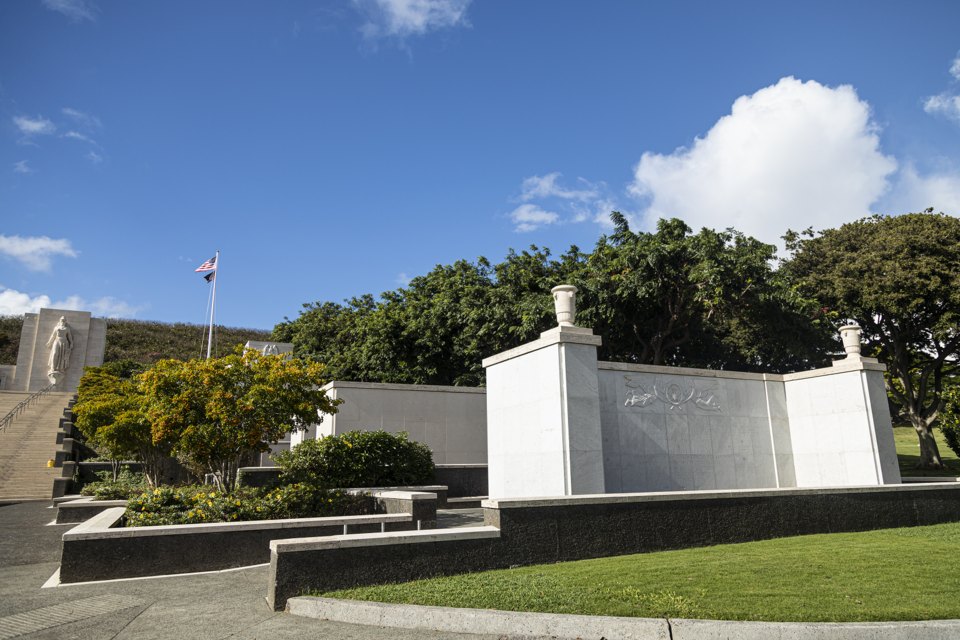
Before the cemetery opened, the remains of servicemen who had died across the Pacific, on Guam, Wake Island and in prisoner-of-war camps, were brought to Hawaiʻi for burial. The first interment took place on 4 January 1949. The cemetery opened to the public on 19 July 1949, with services for five war dead: an unknown serviceman, two Marines, an Army lieutenant, and the war correspondent Ernie Pyle. Eventually more than 13,000 soldiers and sailors who died in the Second World War were buried here.
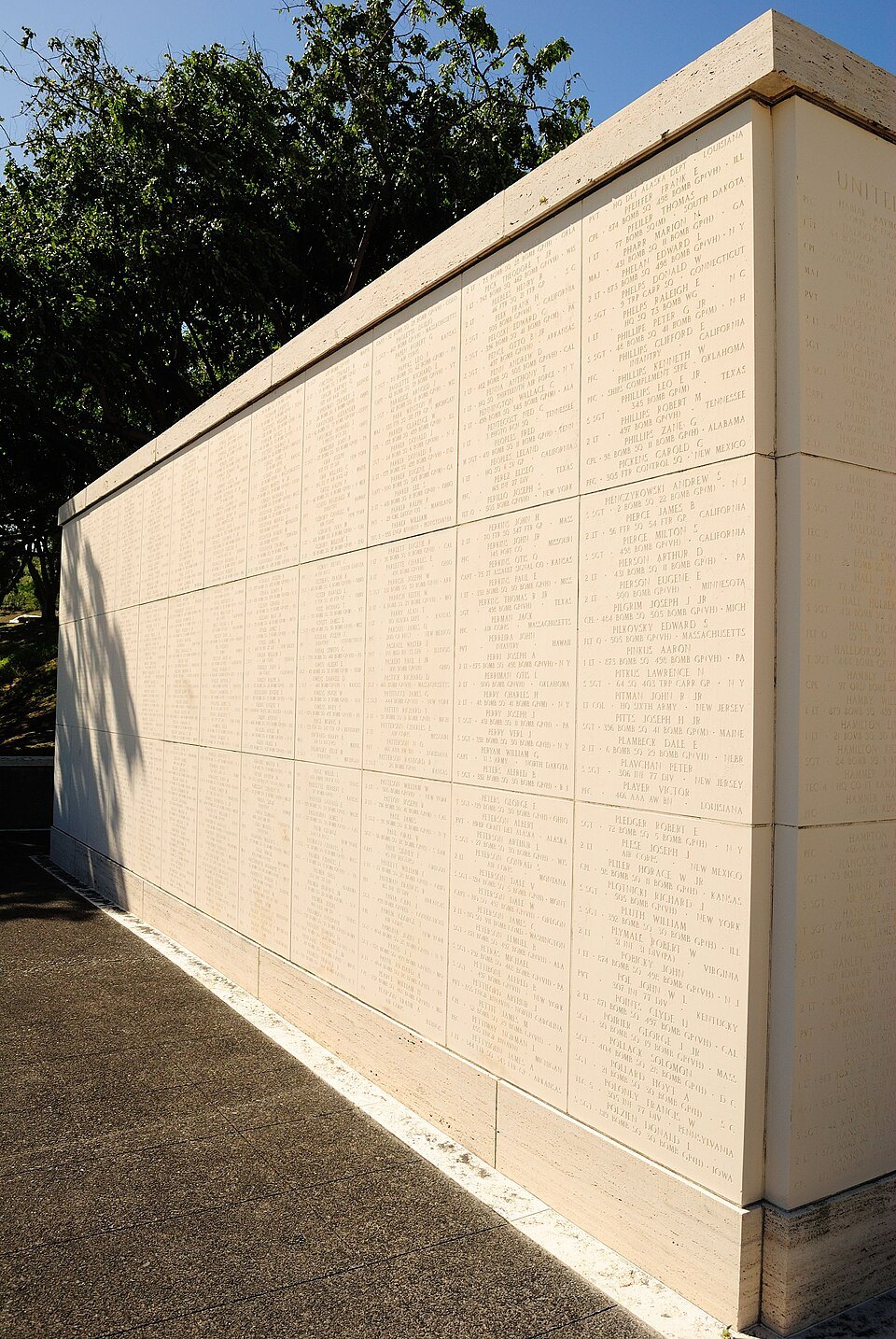
The graves were first marked with white wooden crosses and Stars of David, as in the American cemeteries abroad; when flat granite markers replaced them in 1951, there was a public outcry. The flat stones remain, level with the lawn. The cemetery today accepts mainly cremated remains, placed in columbaria around the crater. Work to identify the unknown dead continues: in 2001 markers for about seventy unknown men who died at Pearl Harbor were changed to name the battleship USS Arizona, and identifications of Korean War unknowns buried here have continued since.
The Honolulu Memorial
In 1964 the American Battle Monuments Commission built the Honolulu Memorial at the head of the crater, to honor the American forces in the Pacific in the Second World War and the Korean War; it was extended in 1980 to include Vietnam. A wide stone staircase climbs toward it, flanked by ten Courts of the Missing, where the names of 28,788 service members missing in action or lost or buried at sea in these wars are carved on marble slabs.
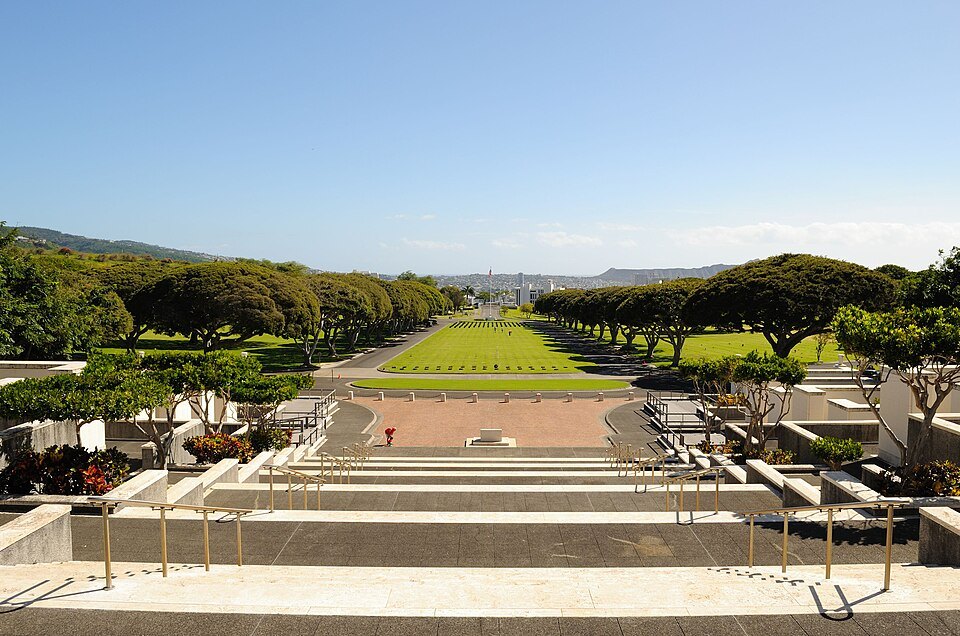
At the foot of the staircase, the dedication stone says that the gardens record the names of Americans whose resting place is known only to God. At the top, in the Court of Honor, stands the statue of Lady Columbia, sometimes called Lady Liberty, on the bow of a ship with a laurel branch; she is said to represent all grieving mothers. The inscription beneath her comes from Abraham Lincoln's letter to Mrs. Bixby, a mother who had lost sons in the Civil War. The memorial is one of three in the United States run by the Commission, with memorials to the missing in New York and San Francisco.
What you see
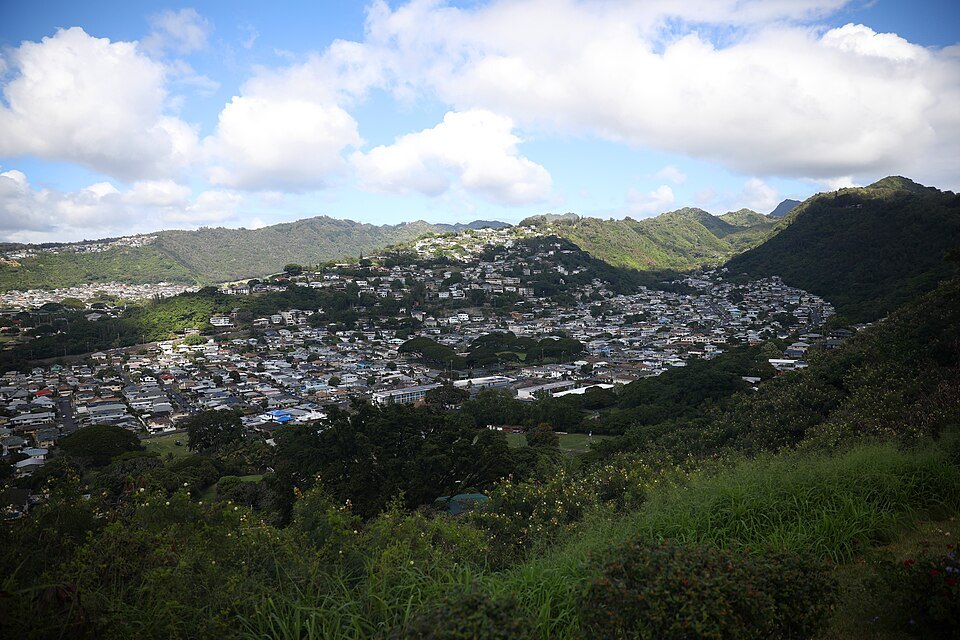
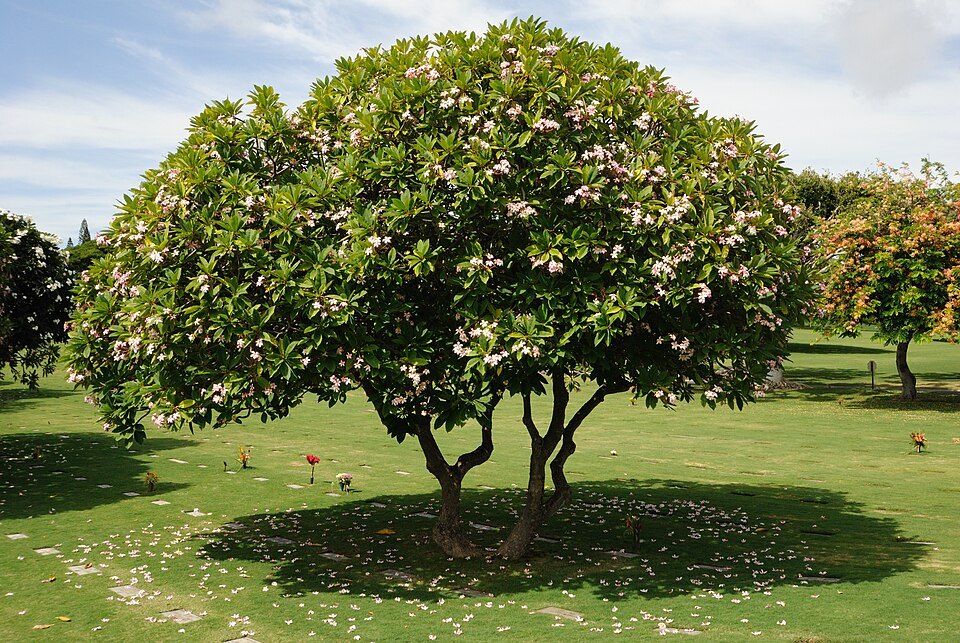
The cemetery is a wide, green bowl, quieter than anywhere else in the city. The grave markers lie flat in long rows across the lawn under shade trees, so that from a distance it looks like parkland. The memorial and its staircase rise at the far end. A path leads up to a lookout on the crater's rim, where the whole city spreads below: downtown's towers, the harbor, Waikīkī, and Diamond Head at the end of the coast. A carillon of twenty-five bells was dedicated here at the Veterans Day services of 1956. Views from the lookout, rather than graves, are what the photographs on this page show.
How to visit
The cemetery is run by the Department of Veterans Affairs and keeps its own visiting hours; there is no charge to enter. Funerals and interments still take place here. If you come upon one, keep your distance, keep quiet, and do not photograph mourners. Walk on the paths rather than across the graves, do not sit on or touch the markers, and dress as you would for any cemetery. Picnics, sports and loud music are not for this place.
Many visitors come as part of a day that includes Pearl Harbor, which is a day trip from the city. From downtown or Waikīkī, the cemetery is most easily reached by car, taxi or tour. Tantalus and its lookout lie above it on the same side of the city.
Honest notes
Punchbowl has become part of many sightseeing tours, and it can feel like a stop between other stops. It is a working cemetery where families still bury their dead and come to visit them. The best way to see it is slowly, on foot, and without a camera raised for much of the time.
Nearby
- NearbyTantalus and Puʻu ʻUalakaʻaA six-mile loop road climbing through eucalyptus and bamboo up an old cinder cone behind Honolulu, and a forested state wayside on its lower slope with a lookout over the whole south shore from Diamond Head to Pearl Harbor.Read the page
- NearbyThe State Capitol and Washington PlaceA capitol opened in 1969 whose columns are palms and whose chambers are volcanoes, open to the sky; beside it Washington Place, where Queen Liliʻuokalani was arrested in 1895 and lived until her death.Read the page
- NearbyʻIolani PalaceCompleted for King Kalākaua in 1882, the seat of the Hawaiian Kingdom until its overthrow in 1893, the queen's prison in 1895, a government office for most of the twentieth century, and a museum since 1978.Read the page