Read on
Who was Duke Kahanamoku
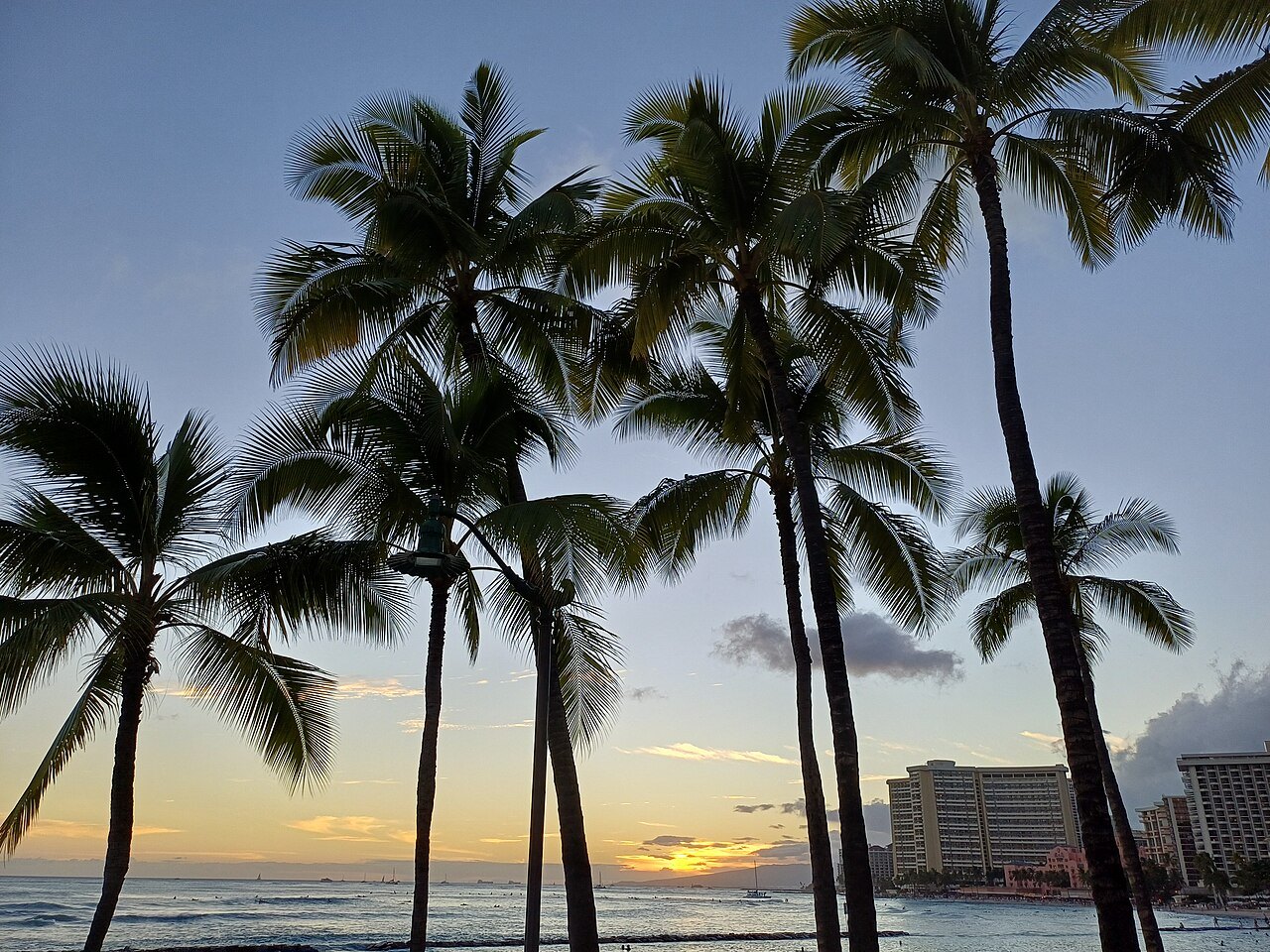
Duke Kahanamoku was born in 1890, three years before United States sailors and Marines landed and the Hawaiian Kingdom was overthrown. He grew up on the sand at Waikīkī, once a retreat of Hawaiian chiefs who surfed here on early longboards, and became, in his lifetime, the best-known Hawaiian in the world. His story runs through the whole history of this beach, from the kingdom era into the twentieth century, and his statue now stands close to where he learned to swim.
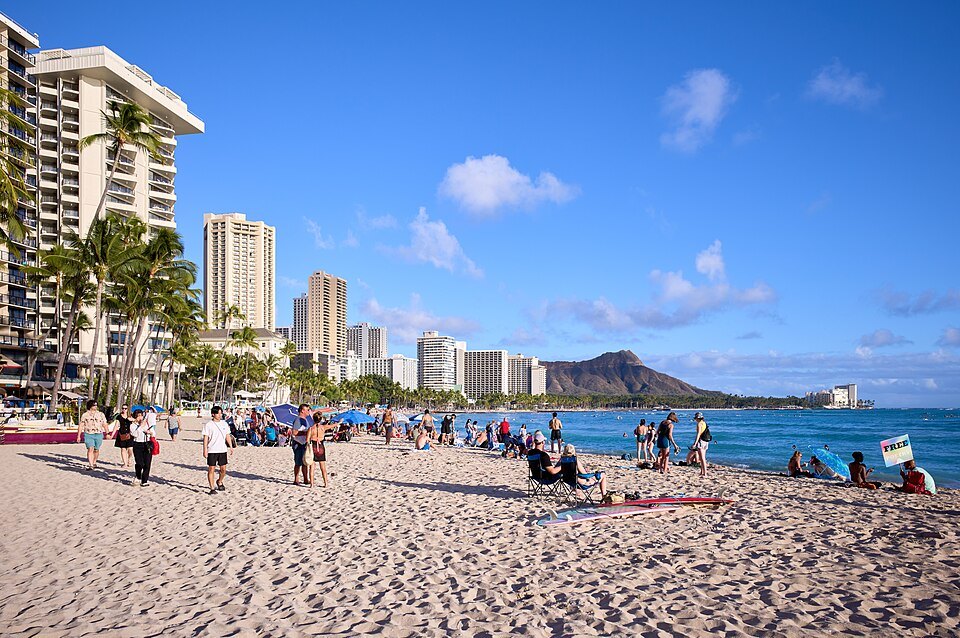
He won five Olympic medals in swimming across the games of 1912, 1920 and 1924, and used the fame it brought him to travel. He is remembered today less for the pool than for what he did afterward: giving exhibitions of surfboard riding wherever he went, at a time when almost nobody outside Hawaiʻi had ever seen the sport.
His exhibition at Freshwater Beach in Australia in 1914 is remembered there as a founding moment of surfing in that country. Wherever Duke appeared with a board, people wanted to learn, and surfing's spread around the world in the twentieth century is tied, more than to any other person, to him.
The statue on Kūhiō Beach
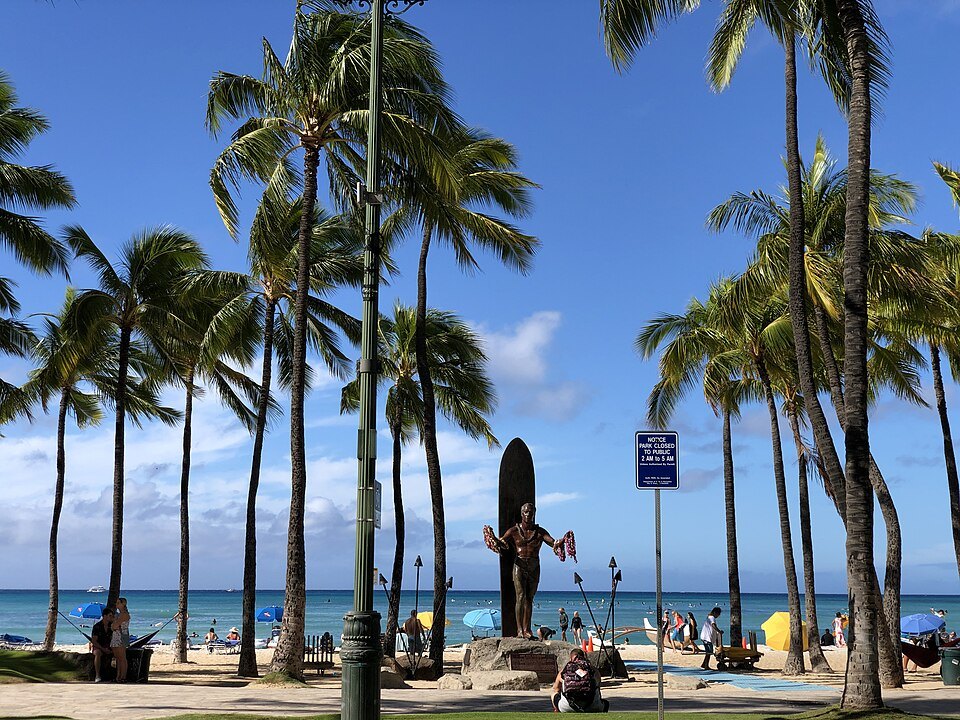
A nine-foot bronze statue of Duke stands on Kūhiō Beach, a short walk from the hotels along Kalākaua Avenue. Sculpted by Gordon Fisher, it was installed in 1990, Waikīkī's way of honoring its most famous son, placing him back on the very sand where he learned to swim and ride his first waves as a boy.
The statue shows Duke with his arms spread wide, but it does not face the sea. It faces the street, toward the people arriving in Waikīkī, which was the sculptor's intent: a figure meant to welcome visitors as they walk in off Kalākaua Avenue rather than to gaze out at the waves he rode.
Visitors drape lei over the statue's outstretched arms, a practice that has become part of visiting it, and the bronze is often hung with several at once. It stands close to a fenced group of ancient basalt stones, Nā Pōhaku Ola O Kapaemahu A Me Kapuni, which should be treated with the same respect as a shrine: not climbed on, not used as a backdrop.
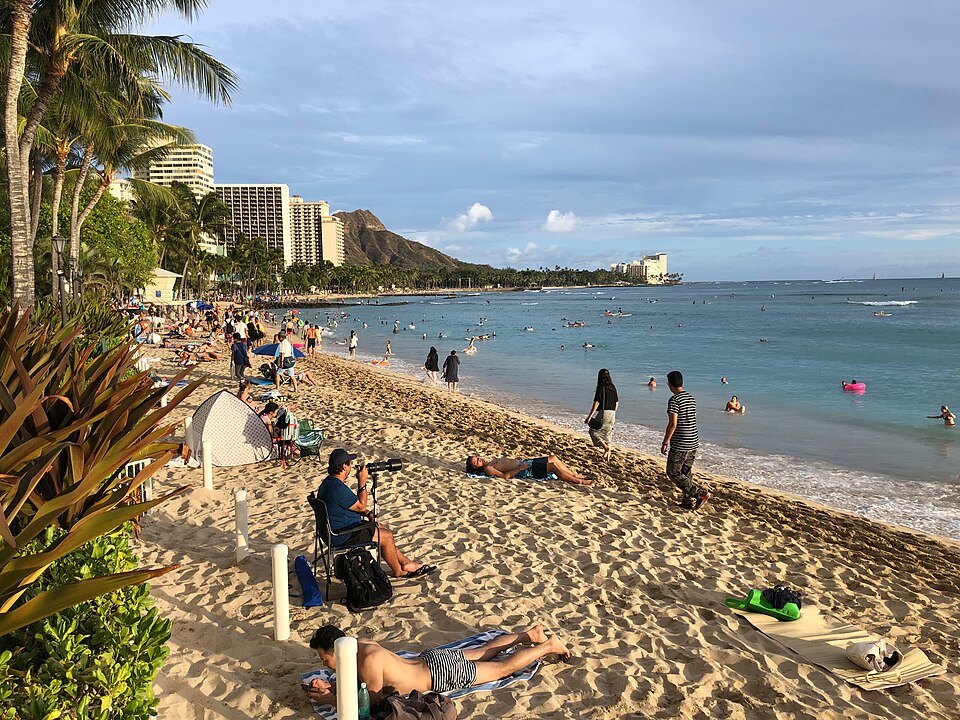
Stand at the statue and look toward the water: the calm pool behind the Kūhiō seawall holds swimmers, with the long surf break running beyond it and catamarans pulled up on the sand waiting for passengers, the same view that greets anyone walking off Kalākaua Avenue toward the beach itself.
Other memorials nearby
Two other bronzes stand within sight of Duke's statue. A memorial to Prince Jonah Kūhiō, the beach's namesake, was installed in 2001 on the same stretch of sand, honoring the prince who helped shape Hawaiʻi's politics in the decades after the overthrow of the kingdom, and whose name the beach itself carries.
Further along, at Queens Beach, stands Robert Pashby's bronze Surfer on a Wave, put up in 2003, a tribute to the surfers who followed Duke onto the same break. Together the three works make this short run of sand, between Kūhiō and Queens, the most densely commemorated stretch of Waikīkī Beach.
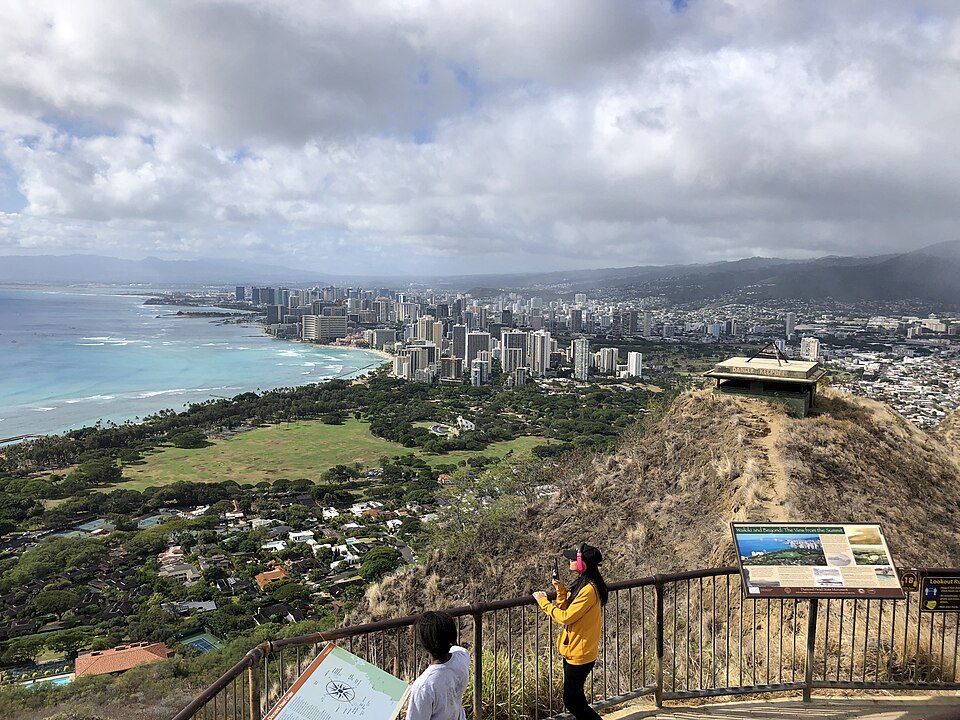
The statues mark the Diamond Head end of the hotel strip, where it gives way to Kapiʻolani Park. Walking from Duke's statue past Queens Beach is a short, flat stroll along the sand that takes in all three memorials before the beach opens into the park and the base of Diamond Head comes into view.
The surf he made famous
The break Duke rode is still there: a long, rolling wave that forms far out over a shallow, rocky bottom, gentle enough for beginners yet consistent enough to have made Waikīkī the place where outsiders first learned to surf, to ride tandem, and to paddle outrigger canoes, much as Hawaiian royalty had done on these same waters generations earlier.
Roughly half of Waikīkī Beach is set aside for surfers, kept apart from the swimming areas by markers in the water, so that the long boards and outrigger canoes that follow Duke's break have room to come in and go out without crossing paths with swimmers closer to the sand.
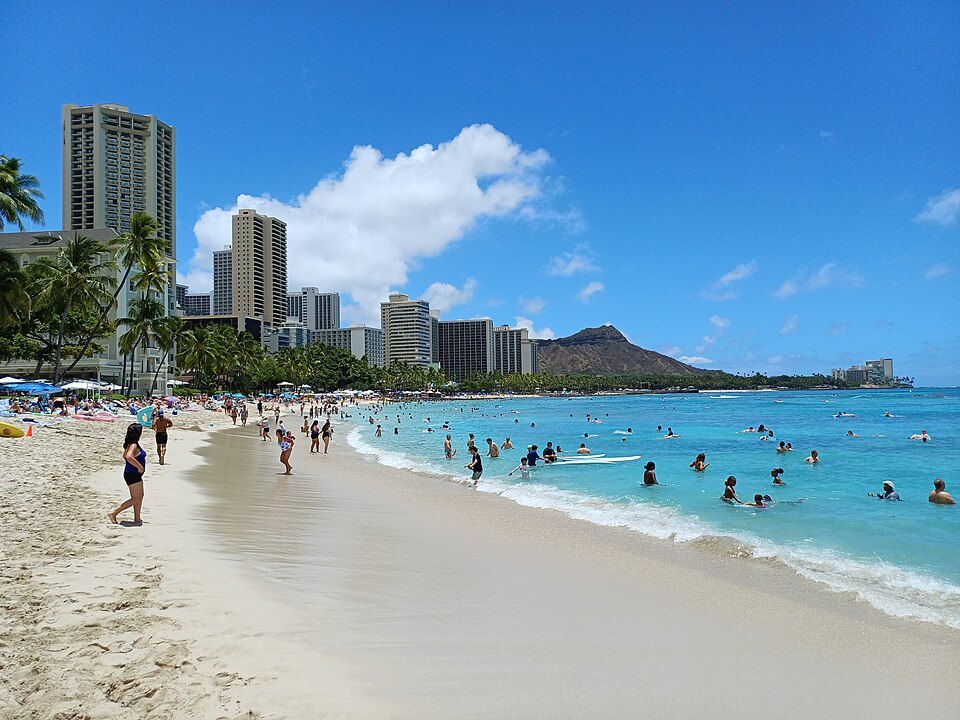
Duke's own board was long and heavy, in the style Hawaiian aliʻi surfed on a century before tourism arrived at Waikīkī; the rental and lesson boards used on the beach today are descendants of it, though far lighter and easier for a first attempt, something any established beach school can explain before a lesson begins.
Swimming and surfing near the statue
Waikīkī remains one of the gentlest beaches on the island, but the water stays shallow a long way out over rock and reef, and conditions change with wind and swell. Check conditions with a lifeguard before going in, and read the posted warning signs rather than guessing from the look of the water; see the ocean for what the flags and signs mean.
Anyone wanting to try surfing where Duke made it famous should book a lesson with an established beach school rather than renting a board and paddling out alone; an instructor can show where beginners belong on the break and keep the lesson away from more experienced surfers riding further out.
Hawaiʻi bans the sale of sunscreens containing oxybenzone and octinoxate, so bring or buy a reef-safe sunscreen before spending a day on the sand near the statue, as anywhere else along Waikīkī Beach, and pack a hat or rash guard for extra protection from the sun, since the sand and water here offer little shade.
Finding the statue
The statue stands on Kūhiō Beach, one of the eight named beaches that together make up Waikīkī Beach, reached on foot along Kalākaua Avenue or by walking straight across the sand from any of the hotels between the Ala Wai Canal and Diamond Head, the cone that frames the view down the beach.
It sits roughly at the point where the hotel strip begins to thin out toward Kapiʻolani Park, making it a natural stop on a walk from one end of Waikīkī Beach to the other, whether heading toward Fort DeRussy or toward Kaimana at the Diamond Head end, past the other beaches named along the way.
No ticket or booking is needed to see the statue or the bronzes nearby; they stand in the open, on public sand, and can be visited at any point during a walk along Waikīkī Beach, on the way to or from Kapiʻolani Park at the Diamond Head end of the shore.
The statue and its neighboring bronzes make an easy stop on any walk through the beach's eight named sections, from Fort DeRussy at one end to Kaimana at the Diamond Head end, taking in the full curve of the sand along the way, with Kalākaua Avenue running alongside the whole distance.
More from the journal
- Waikīkī Beach and Kalākaua AvenueWhere can you take a first surf lesson in Waikīkī?Why Waikīkī's gentle, man-made surf became the beach where visitors take their first lesson, and how to book one.Read the piece
- The OceanHow do you spot and escape a rip current at a Honolulu beach?How to read Honolulu's beach warning signs, spot a rip current, and swim free of it safely.Read the piece
- The KingdomWhat happened to the Hawaiian Kingdom, and where can you see it in Honolulu?How the kingdom was founded, how it ended in 1893, and a walk through the downtown blocks where its palace, government house, royal church and the queen's house still stand.Read the piece