Read on
A Beach Built for Beginners
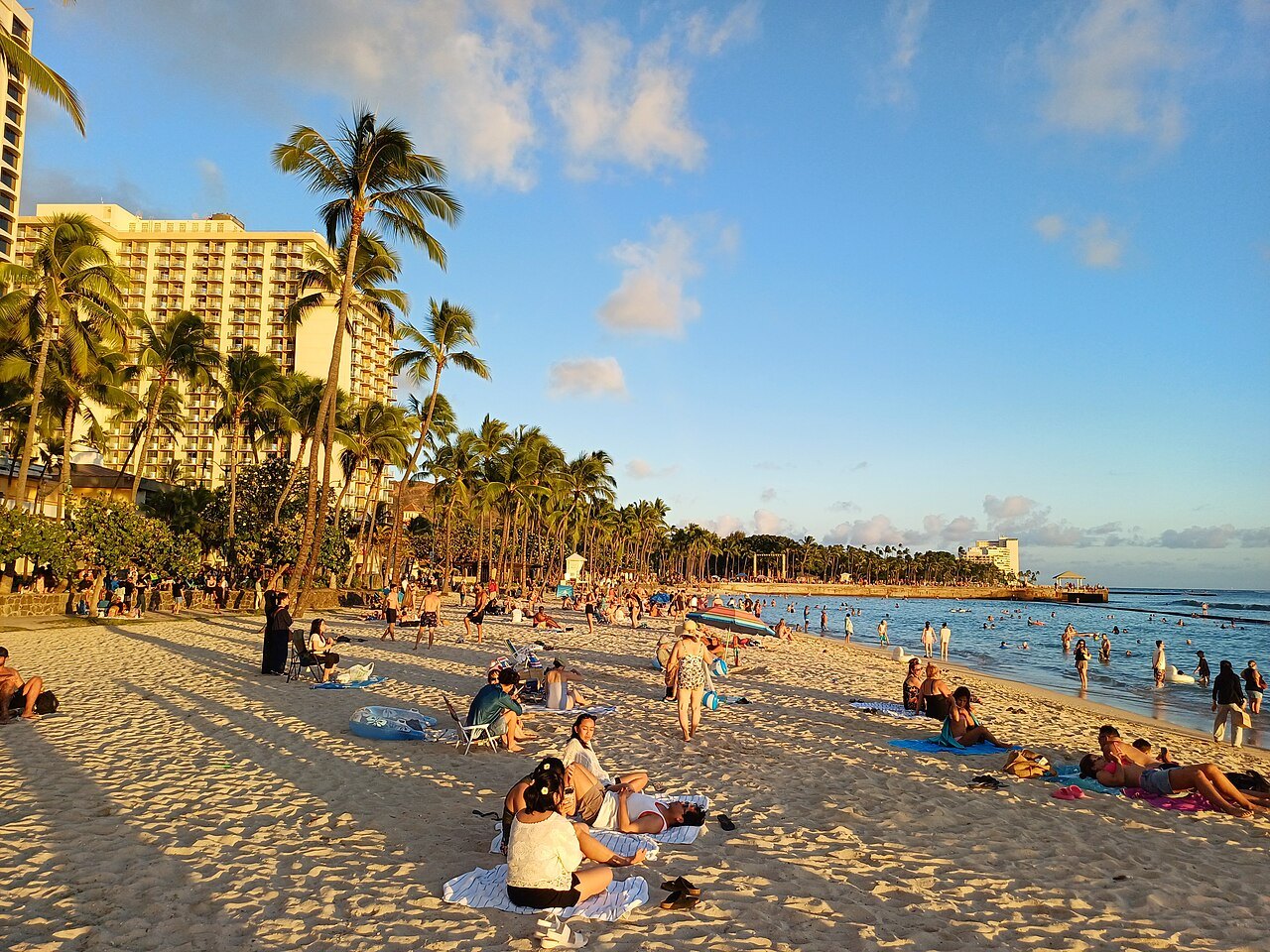
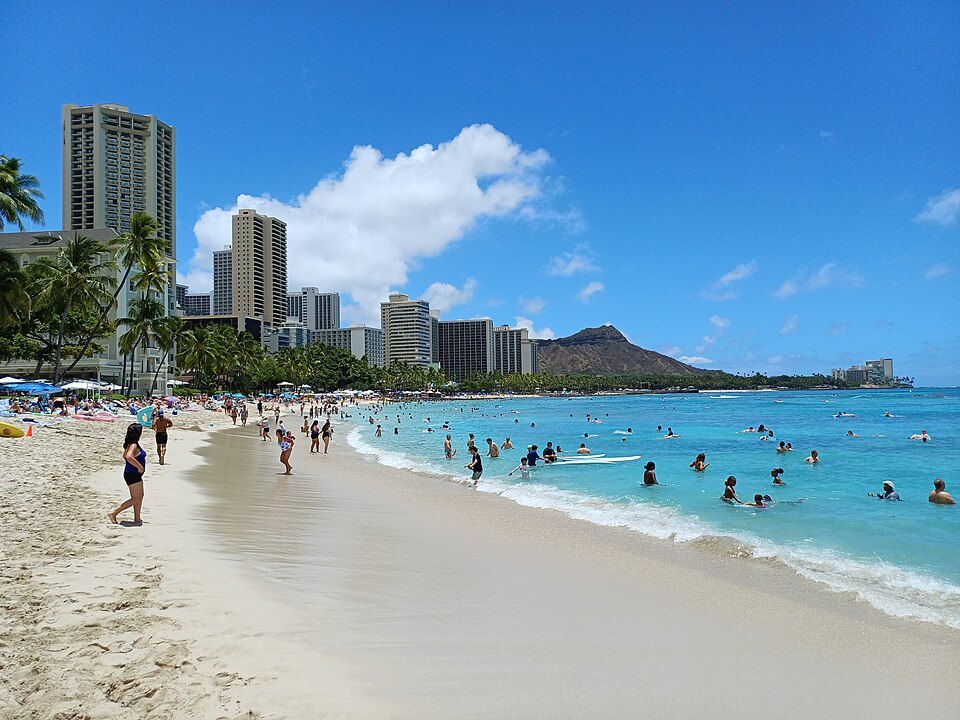
Waikīkī's surf breaks far out over a shallow, rock-strewn bottom, rolling gently toward shore rather than crashing, which is why for more than a century this has been the beach where people new to the sport paddle out for a first ride. Half of Waikīkī is marked off for surfers, and much of that stretch, within sight of catamarans waiting on the sand for passengers, is where first lessons happen.
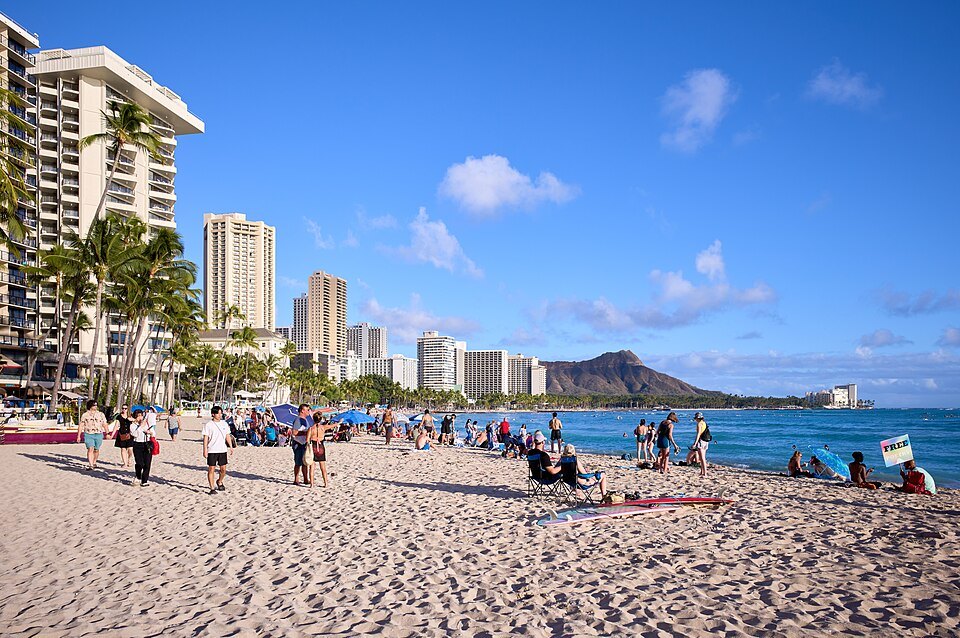
Before resorts lined the shore, Hawaiian chiefs surfed here on early longboards during Waikīkī's centuries as a royal retreat, and the place has never stopped being where people learn. The wide, easy break lets instructors push a beginner into a wave from behind and let the shape of the swell do the rest, with few of the sudden drops or close-together sets found on more exposed shores.
The same man-made beach also shapes the surf here: sand shipped in from California in the 1920s and 1930s, and added since by barge and dredging, built the long, gentle slope that lets a wave roll a long way over shallow water before it breaks. For the visitor on a first lesson, that engineered gentleness means more time standing on a board and less time near rocks close to shore.
Duke Kahanamoku's Shadow
Waikīkī's reputation as a surfing classroom owes much to one man: Duke Kahanamoku, born in 1890, three years before the overthrow of the Hawaiian Kingdom, who won five Olympic medals in swimming in 1912, 1920 and 1924 and carried surfing from this beach to the rest of the world, including an exhibition at Australia's Freshwater Beach in 1914, remembered there as the sport's founding moment.
A nine-foot bronze of Duke, cast by Gordon Fisher and installed in 1990, stands near Kūhiō Beach with its arms open to the street rather than to the sea, meant to welcome visitors as they arrive. Lei collect on its outstretched arms, left by people who come to this beach because of what one swimmer started here more than a century ago.
Nearby stand a bronze of Prince Jonah Kūhiō, installed in 2001, and Robert Pashby's sculpture Surfer on a Wave, from 2003, at Queens Beach. Together the three works mark the stretch of sand where the modern idea of a vacation surf lesson, learning to stand on a board within arm's reach of a lifeguard tower, effectively began.
Finding a Lesson
Hawaiʻi's beaches are public, and nothing stops a confident swimmer from renting a board and paddling out alone, but Waikīkī's surf hides rocks and reef beneath its gentle surface, and the lineup mixes fast longboards with total beginners. Book a lesson with an established beach school rather than heading out solo for a first try, especially if a board has never been stood on before.
Surf schools and board rental stands operate along the beach and from shops on Kalākaua Avenue, the boulevard of hotels and surf brands running behind the sand from Fort DeRussy to Kapiʻolani Park. Ask at a hotel activities desk or a beachfront stand for current group and private lesson options, and check what a booking includes before paying.
As with other Honolulu activities, demand for the better-known beach schools can run high, so arranging a lesson a day or more ahead, rather than walking up and hoping for an open slot, is worth doing; see booking ahead for how far in advance Honolulu's popular activities generally need to be planned.
Kalākaua Avenue, the boulevard running along the beach, was known as Waikīkī Road until it was renamed in 1905 for King Kalākaua; the wall of hotel towers lining it today dates mostly from the high-rise boom of the late 1960s and early 1970s. Surf shops and schools sit among the luxury stores that now fill its storefronts.
What a First Lesson Covers
A typical beginner lesson starts on the sand, where an instructor explains how to lie on the board, paddle, and pop up to standing, then walks a small group through the motion on dry land before anyone gets wet. Expect practice falls into warm, shallow water near the shore rather than straight into the open surf beyond it.
Instructors then lead students out past the shorebreak to the gentle part of the wave, the same long roll that once carried Hawaiian royalty on early longboards, holding or steadying the board and giving a push as a swell approaches. Catching even one wave and riding it toward the sand, on a knee or standing, is the usual goal of a first outing.
Lessons depend on Waikīkī's wide stretch of beginner-friendly water, so ask the school what is included: whether a board and rash guard come with the price, how large the group will be, and what happens if conditions on a given day are too rough for a first attempt. Conditions and the length of a lesson vary by operator.
Safety in the Water
Waikīkī is one of the gentlest beaches on the island, but it is not a pool. The bottom stays shallow for a long way out, rocks and reef sit beneath the surface, and wind can put real force into the waves even on an otherwise calm day. A surf lesson does not remove the need for ordinary ocean caution.
Stay near a lifeguard tower, follow the instructor's directions about where to paddle, and read the posted warning signs before going in; the ocean page explains what those flags and signs mean. Keep clear of the surfer lanes if swimming on your own afterward, rather than taking a lesson inside them with an instructor present.
Hawaiʻi law bans the sale of sunscreens containing oxybenzone and octinoxate, so bring a reef-safe sunscreen or buy one locally before a lesson; most beach schools can point newcomers to where to find it nearby. Reapply before and after time in the water, since sun and salt water wear sunscreen off faster than it wears off on dry land.
Beyond the Lesson
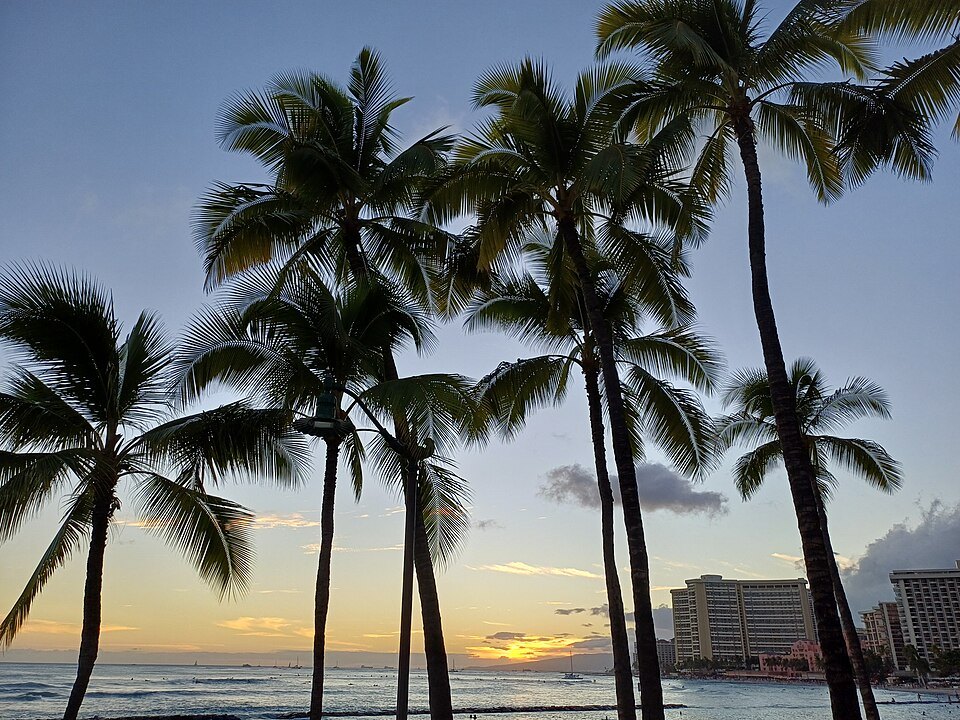
After a first lesson, walk the beach end to end, from Kaimana at the Diamond Head end to the Hilton lagoon, to see all eight named beaches that together make up Waikīkī Beach: Fort DeRussy, Duke Kahanamoku, Halekulani, Royal Hawaiian, Kūhiō, Kapiʻolani, Queens and Kaimana, each a different stretch of the same restored shore.
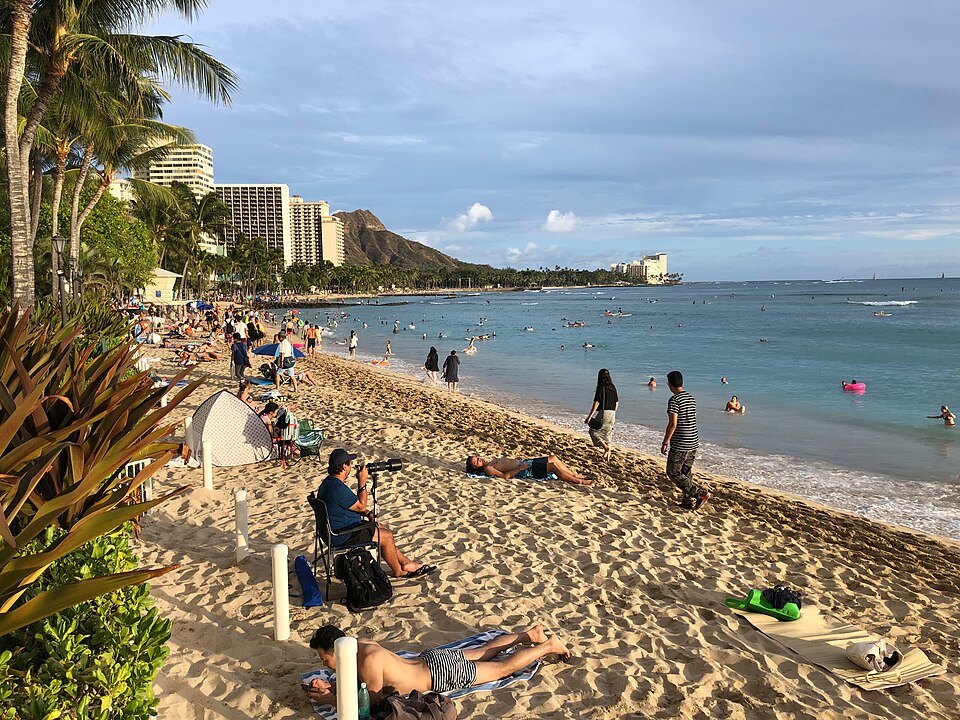
From the sand near Kūhiō Beach, the view east takes in the curve of the shore toward Diamond Head, with swimmers in the calm pool behind the seawall and surfers riding the long break beyond it. Near the Duke statue, treat the fenced cluster of ancient stones, Nā Pōhaku Ola O Kapaemahu A Me Kapuni, as sacred ground: no climbing on them, and no photographs using them as a backdrop.
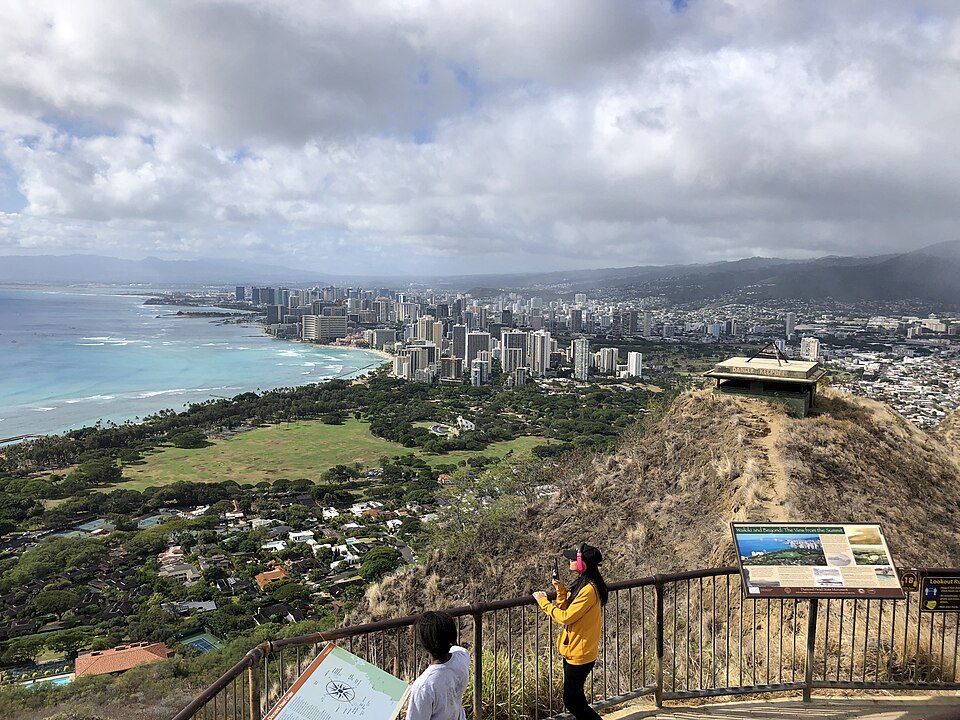
Kapiʻolani Park begins where the hotels end, a short walk past the Duke statue toward Diamond Head, worth the walk once salt and sand have dried off in the Honolulu sun. The avenue behind the beach passes the Moana and the Royal Hawaiian on its way there; see Kapiʻolani Park for what's at the end of the walk.
More from the journal
- The OceanWhere can beginners swim safely in Honolulu?The calmest water in the city for children and weak swimmers, what makes each beach easy or tricky, how to read the lifeguards' signs, and the reef, jellyfish and sunscreen rules to know before you get in.Read the piece
- The OceanHow do you spot and escape a rip current at a Honolulu beach?How to read Honolulu's beach warning signs, spot a rip current, and swim free of it safely.Read the piece
- The OceanWhich sunscreens are legal to sell in Hawaiʻi, and why?What Hawaiʻi's sunscreen law actually bans, what it does not, and how to pack or buy around it.Read the piece