Read on
A place of mourning first
The National Memorial Cemetery of the Pacific lies inside Punchbowl, an extinct volcanic crater above downtown Honolulu. Dedicated on 2 September 1949, it holds some fifty-three thousand veterans of the Second World War, the Korean War and the Vietnam War, together with their dependents, and it stands on the National Register of Historic Places.
It is among the most visited places in Hawaiʻi, and tour buses stop here daily. But it is a cemetery before it is a sight. This page sets out what the memorial is, what a visitor will actually see on the ground, and how to carry yourself while you are there.
The crater and its name
Punchbowl is one of the younger cones of the Honolulu Volcanic Series, the same family of eruptions that produced Diamond Head farther along the coast. Its Hawaiian name, Pūowaina, is most often translated as hill of sacrifice, a name that reaches back long before any cemetery existed here.
The earliest known use of the crater was as a place of execution, where people who had broken kapu, sacred restrictions, were put to death as offerings to the gods. Around 1800, in the era of Kamehameha I, two cannon were mounted on the rim and fired on ceremonial occasions, to salute important arrivals.
In the 1890s a committee proposed turning the crater into a city cemetery. The idea was rejected, partly from fear of polluting the water supply, partly from reluctance to build a city of the dead directly above the living city. The crater kept its silence for another half century.
How the cemetery came to be
Congress authorized a national cemetery here after the Second World War. Before it opened, the remains of servicemen who had died across the Pacific, on Guam, on Wake Island, and in prisoner-of-war camps, were brought to Hawaiʻi for burial. The first interment took place on 4 January 1949.
The cemetery opened to the public on 19 July 1949, with services held for five war dead: an unknown serviceman, two Marines, an Army lieutenant, and the war correspondent Ernie Pyle. Eventually more than thirteen thousand soldiers and sailors who died in the Second World War were buried here.
The graves were first marked with white wooden crosses and Stars of David, echoing the American cemeteries overseas. When flat granite markers replaced them in 1951, the change brought a public outcry. Those flat stones remain today, set level with the lawn rather than standing upright.
Identification of the unknown dead continues even now. In 2001, markers for about seventy unknown men who died at Pearl Harbor were changed to name the battleship USS Arizona, and identifications of Korean War unknowns buried here have gone on since.
The Honolulu Memorial
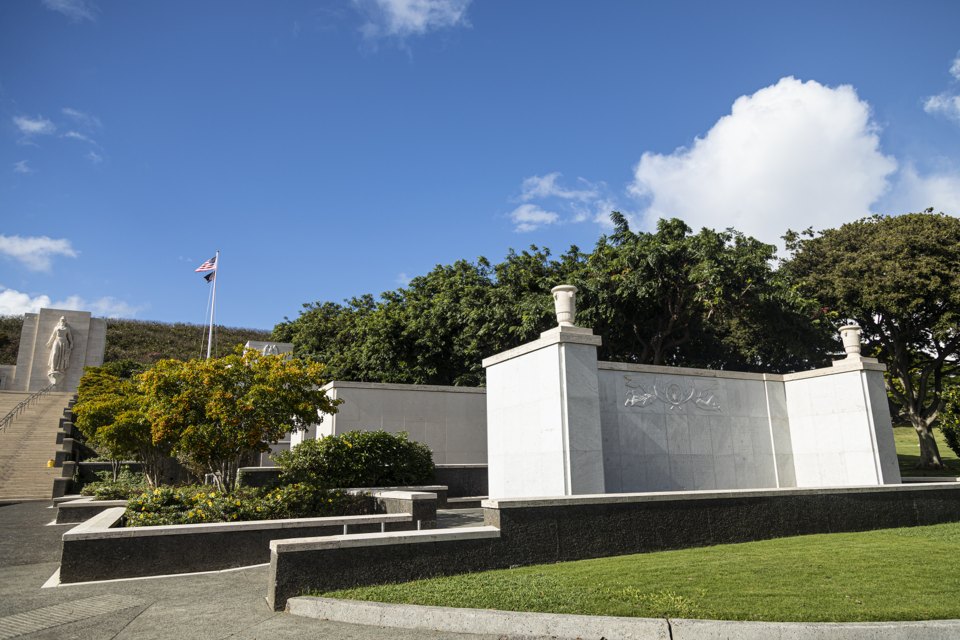
In 1964 the American Battle Monuments Commission built the Honolulu Memorial at the head of the crater, honoring the American forces who served across the Pacific in the Second World War and the Korean War. It was extended in 1980 to include those lost in Vietnam.
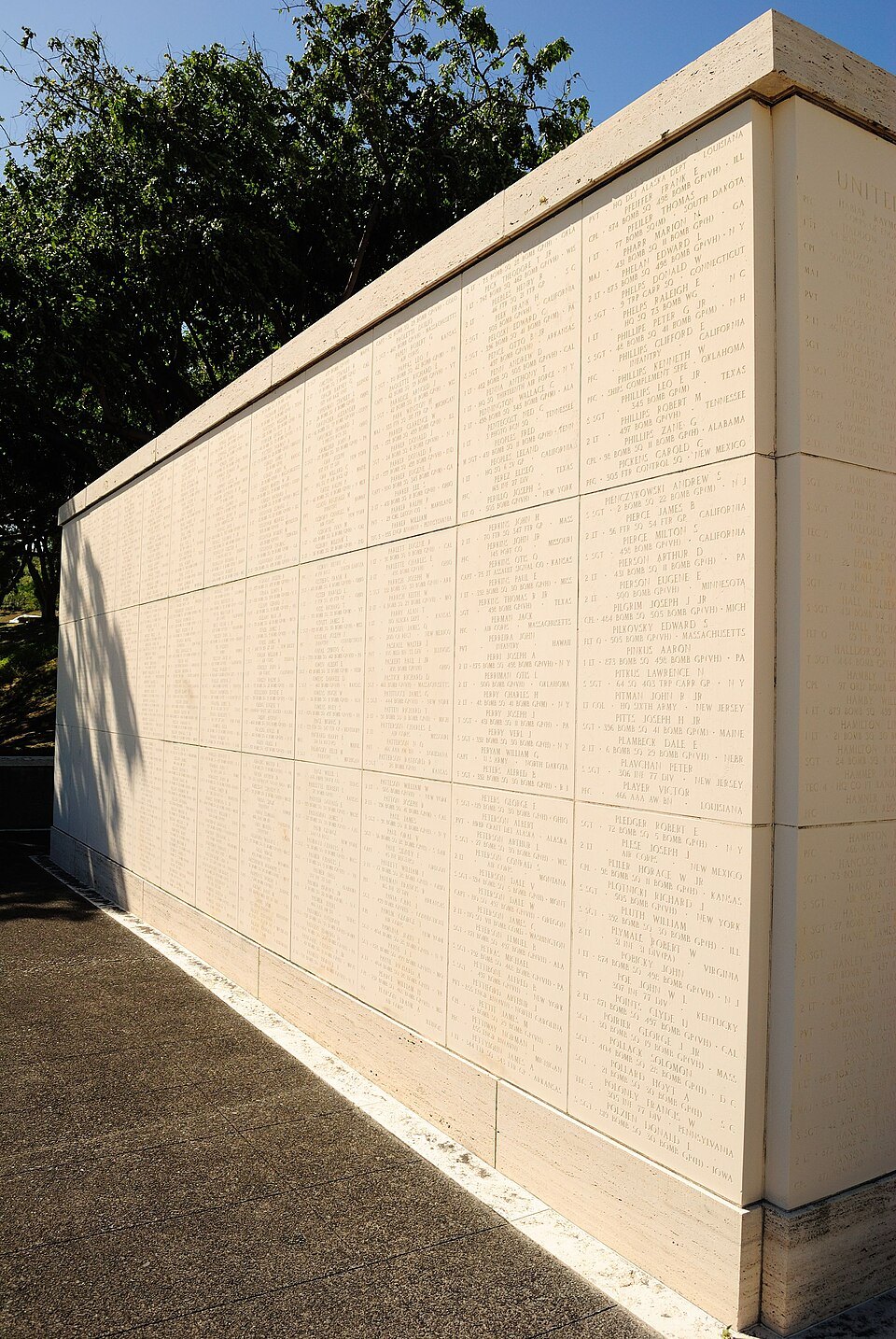
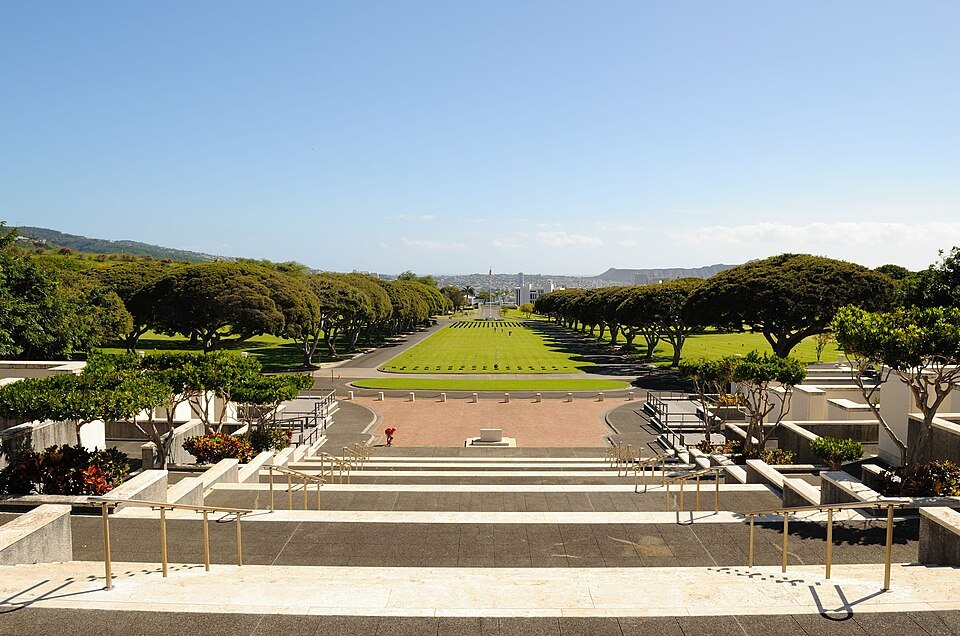
A wide stone staircase climbs toward the memorial, flanked by ten Courts of the Missing. On marble slabs there are carved the names of 28,788 service members missing in action or lost or buried at sea in these three wars, a number that gives the staircase its weight.
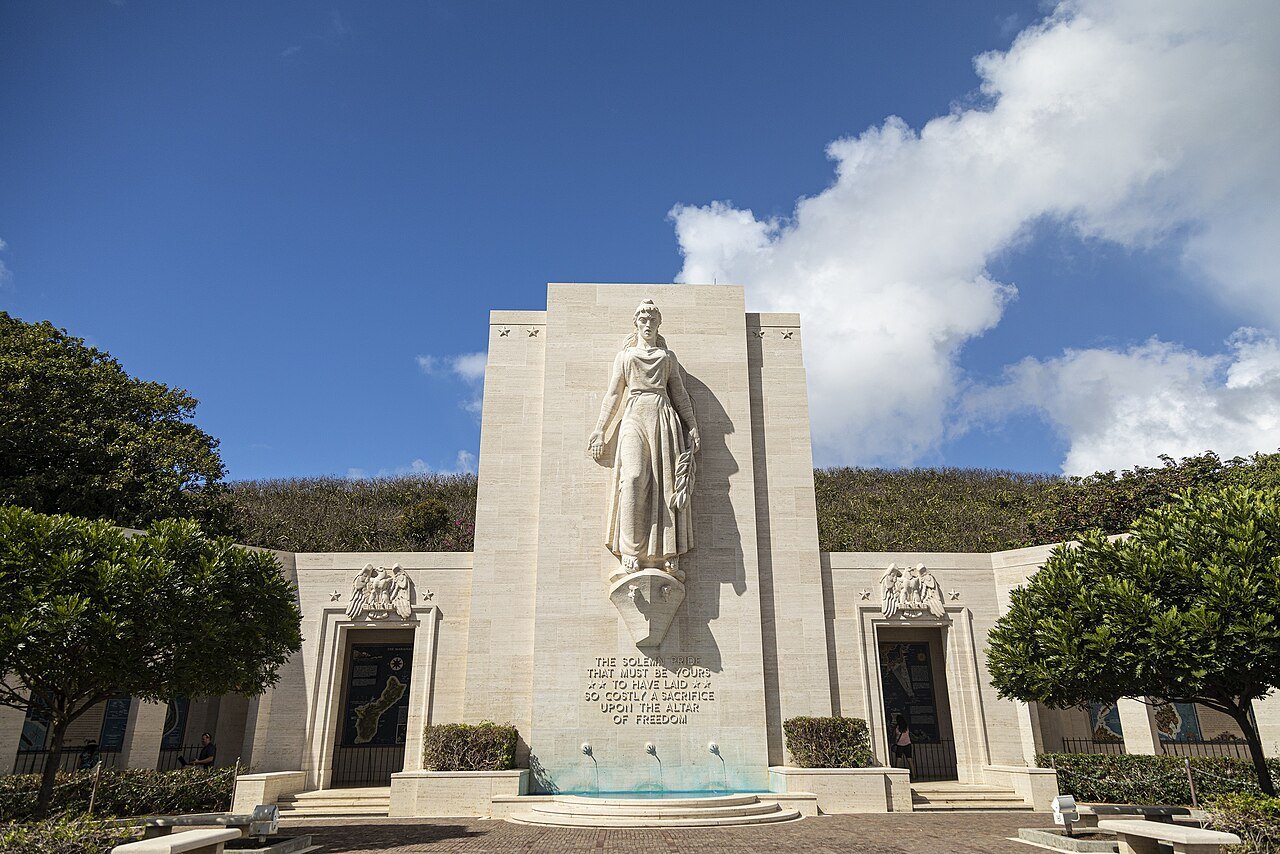
At the foot of the stairs, a dedication stone records that the gardens hold the names of Americans whose resting place is known only to God. At the top, in the Court of Honor, stands the statue of Lady Columbia, sometimes called Lady Liberty, on the bow of a ship with a laurel branch, said to represent all grieving mothers. The inscription beneath her comes from Lincoln's letter to Mrs. Bixby, a mother who lost sons in the Civil War.
What you will see
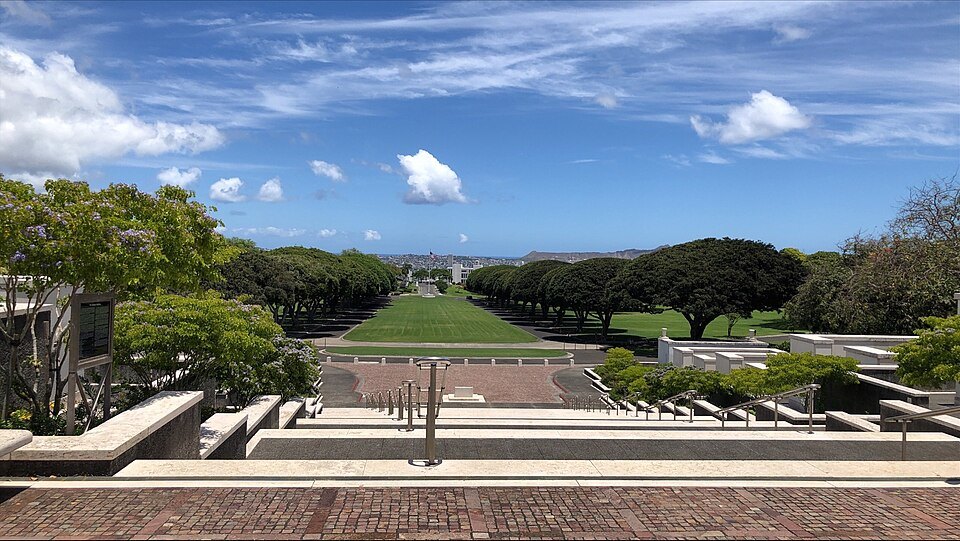
The cemetery itself is a wide, green bowl, quieter than almost anywhere else in the city. The grave markers lie flat in long rows across the lawn under shade trees, so that from any distance the ground reads as parkland rather than a field of graves. The memorial and its staircase rise at the far end.
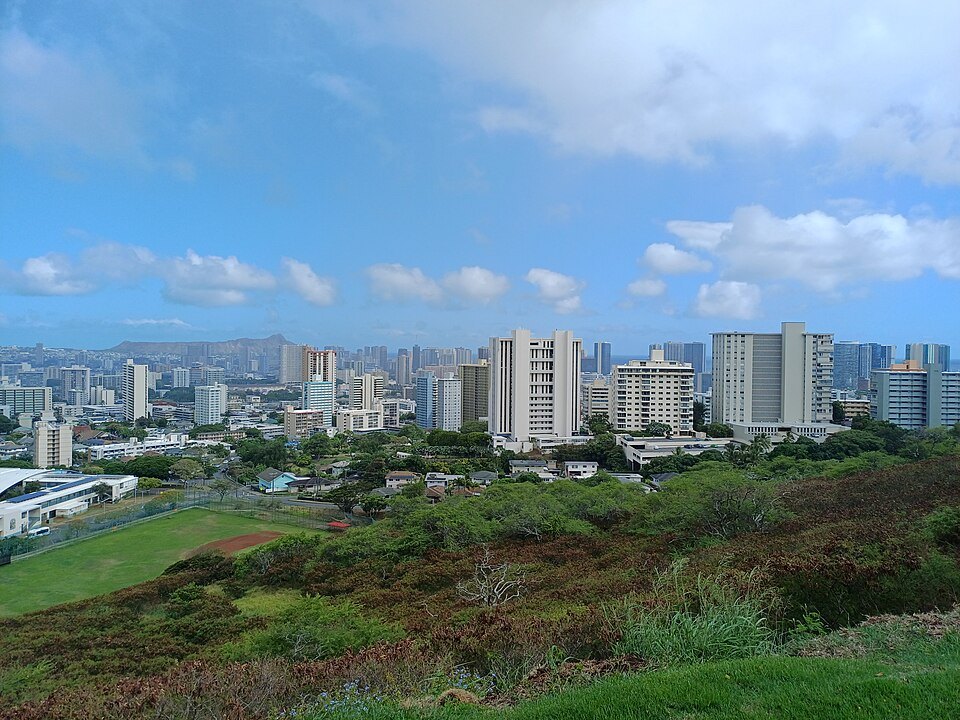
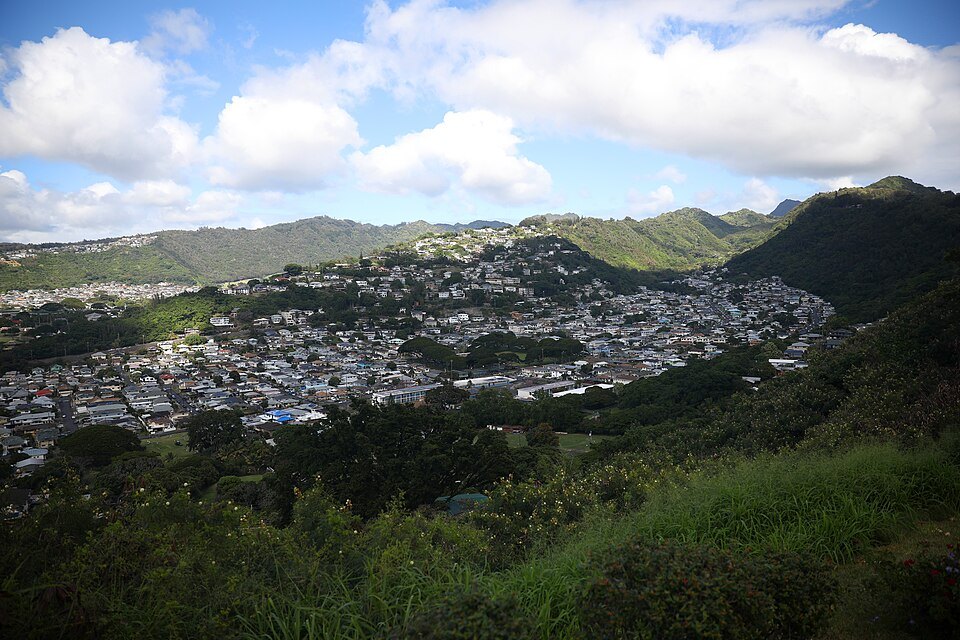
A path leads up from the lawn to a lookout on the crater's rim. From there the whole of the city spreads out below: downtown's towers, the harbor, Waikīkī, and Lēʻahi at the end of the coast. A carillon of twenty-five bells was dedicated here at the Veterans Day services of 1956.
It is this view, rather than the graves, that most photographs of Punchbowl show, and that is a reasonable way to keep a camera pointed while you are inside the cemetery proper.
How to visit
The cemetery is run by the Department of Veterans Affairs and keeps its own visiting hours; admission is free. Funerals and interments still take place here, so check current hours with the cemetery office before planning a visit around a particular time of day.
If you come upon a service in progress, keep your distance, keep quiet, and do not photograph the mourners. This is still an active burial ground, not a backdrop.
Walk on the paths rather than across the graves, and do not sit on or touch the markers. Dress as you would for any cemetery, and leave picnics, sports and loud music for elsewhere.
Getting there and honest notes
Many visitors come to Punchbowl as part of a day that also takes in Pearl Harbor, covered on this site's day trips page. From downtown or Waikīkī, the cemetery is most easily reached by car, taxi or organized tour; see getting around for the general options on Oʻahu.
Tantalus and its own lookout sit above Punchbowl on the same side of the city, and the two are sometimes combined by visitors with a car; read more at Tantalus.
Punchbowl has become a regular stop on sightseeing itineraries, and it can feel like a pause between other stops. It is worth remembering that families still bury their dead here and still come to visit them. The best way to see it is slowly, on foot, with the camera down for most of the walk.
More from the journal
- Day TripsHow do you plan a visit to Pearl Harbor from Honolulu?What the Pearl Harbor National Memorial includes, how the USS Arizona Memorial reservation works, the no-bags rule, how to get there without a car, and how to visit a war grave.Read the piece
- Getting AroundDo you need a car in Honolulu?Why most visitors can see Honolulu without a car, what TheBus, Skyline, bikes and taxis cover, where a car makes sense, and how to rent one for just the days you need it.Read the piece
- The KingdomWhat happened to the Hawaiian Kingdom, and where can you see it in Honolulu?How the kingdom was founded, how it ended in 1893, and a walk through the downtown blocks where its palace, government house, royal church and the queen's house still stand.Read the piece