Home · Sights · The Moana and the Royal Hawaiian
The Moana and the Royal Hawaiian
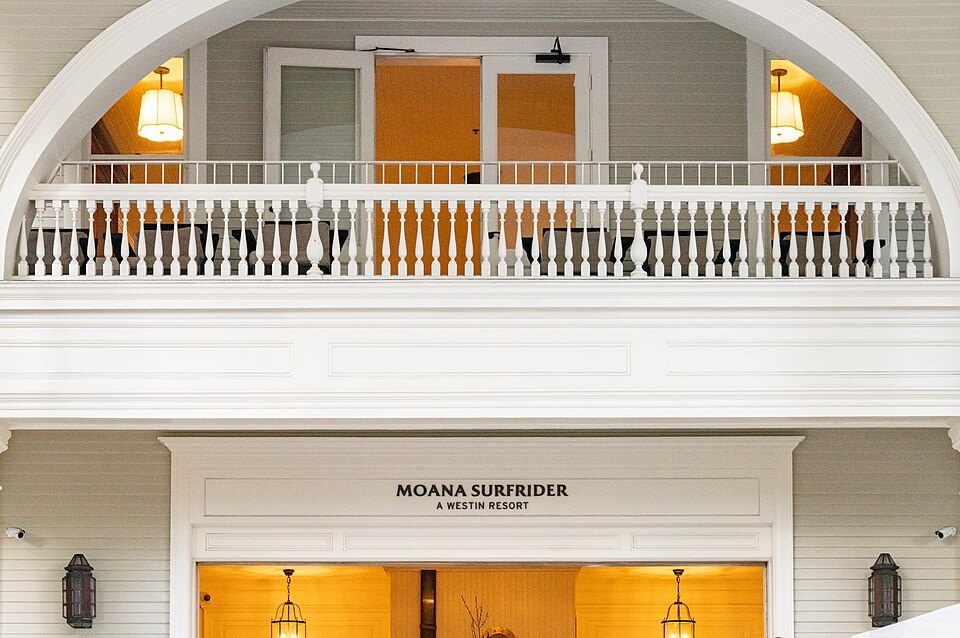
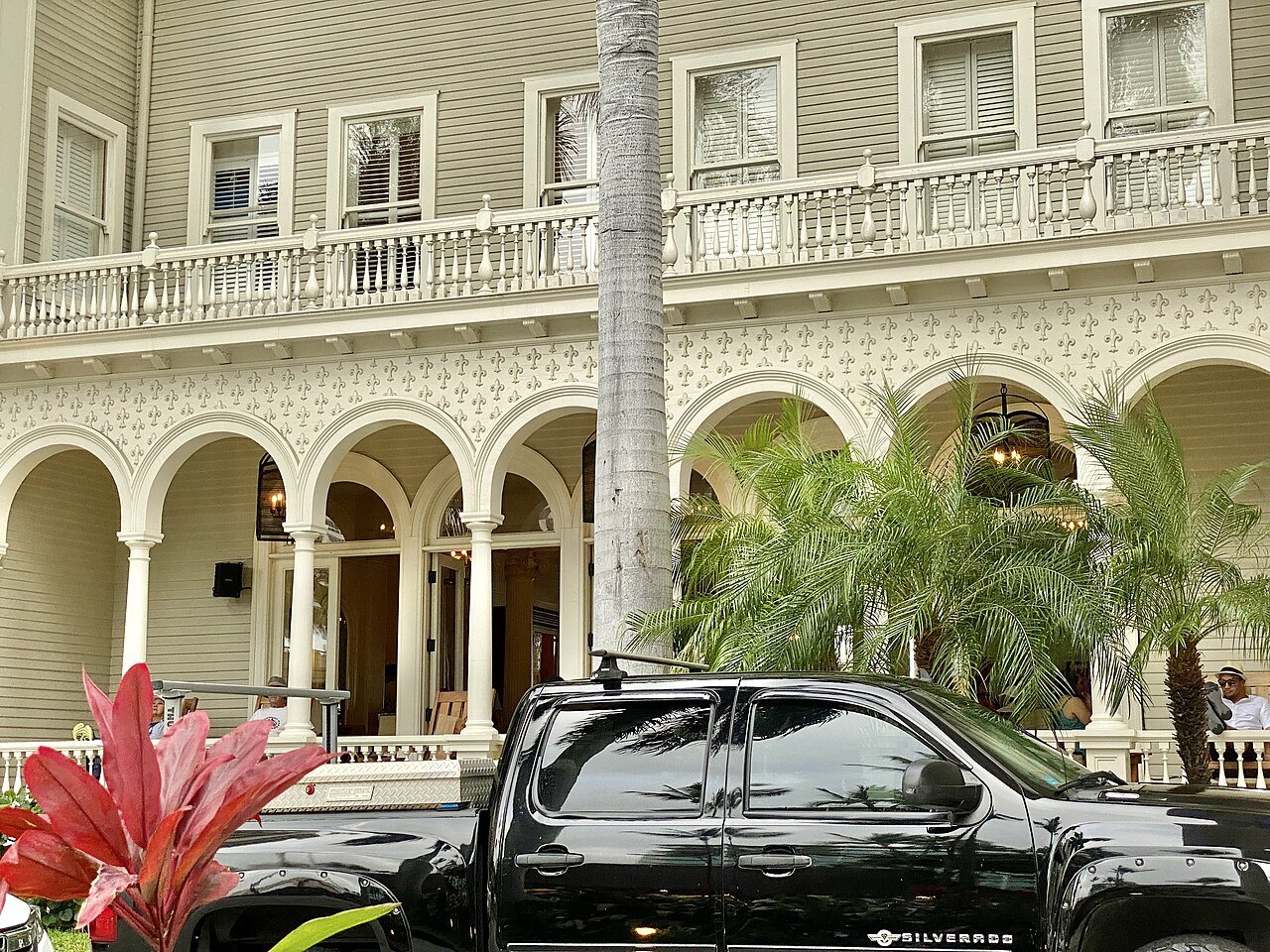
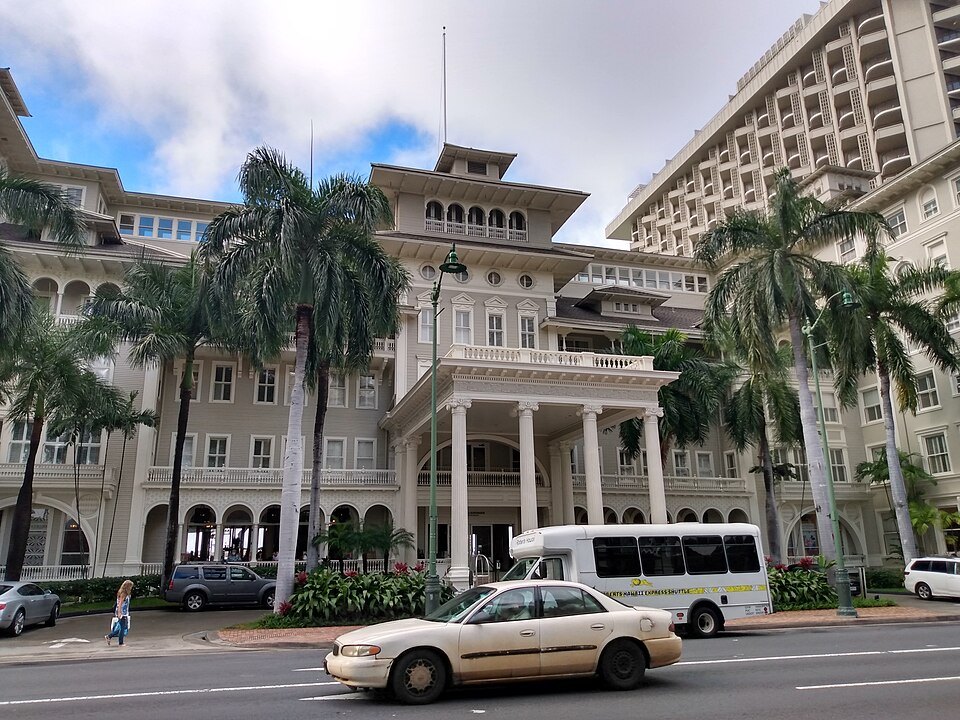
- iThe Moana's verandaA long columned veranda and porte cochère facing Kalākaua Avenue, in the style of 1901.
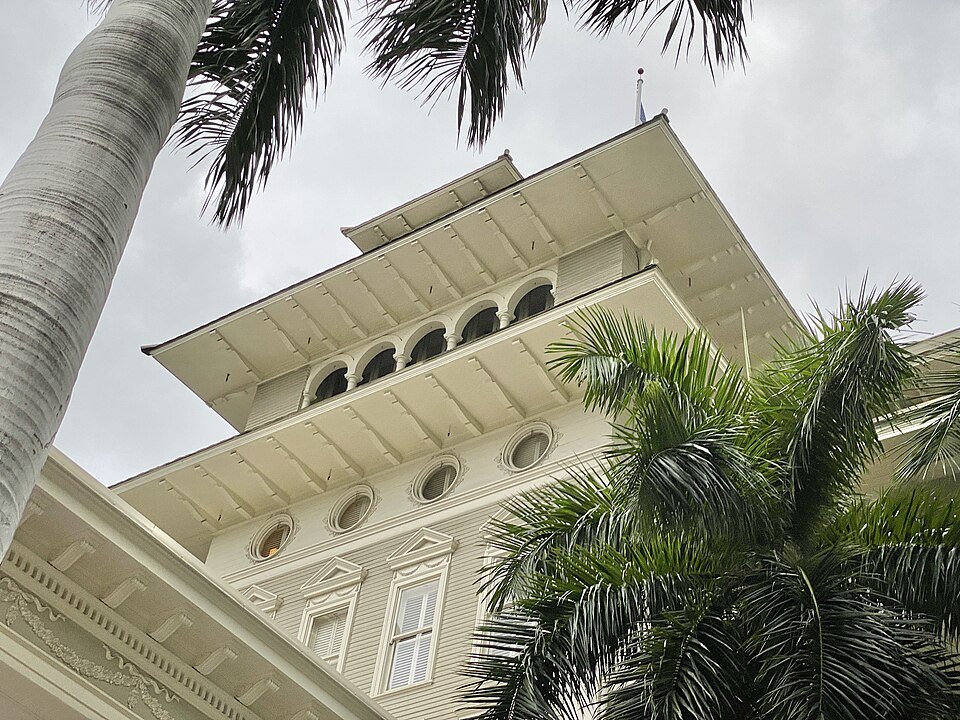
- iiThe Banyan WingThe 1901 core of the Moana, restored to its first appearance in 1989 and listed on the National Register.
- iiiThe Moana's courtyardThe oceanfront courtyard under a great banyan, where Hawaii Calls was broadcast from 1935 to 1975.
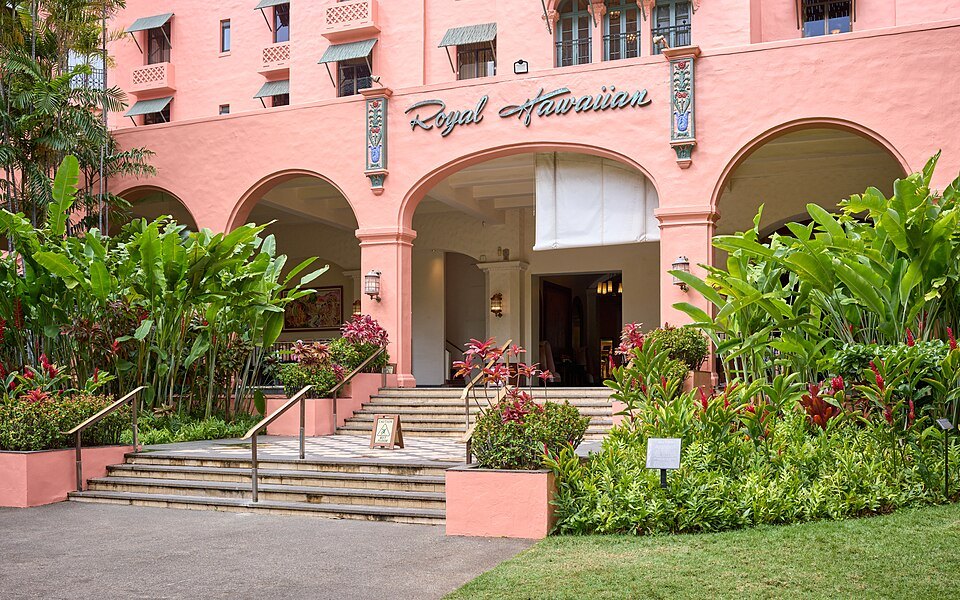
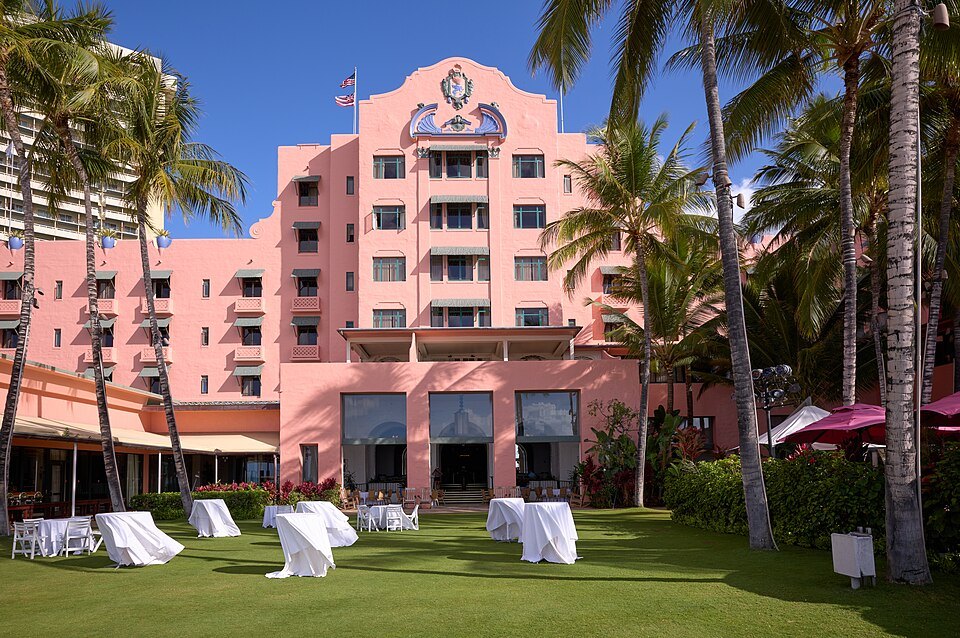
- ivThe Royal Hawaiian's facadePink stucco, arches and cupolas in a Spanish and Moorish style inspired by Valentino's films.
- vThe Royal Hawaiian gardensCoconut palms and lawns around the hotel, the remains of a fifteen-acre landscaped garden.
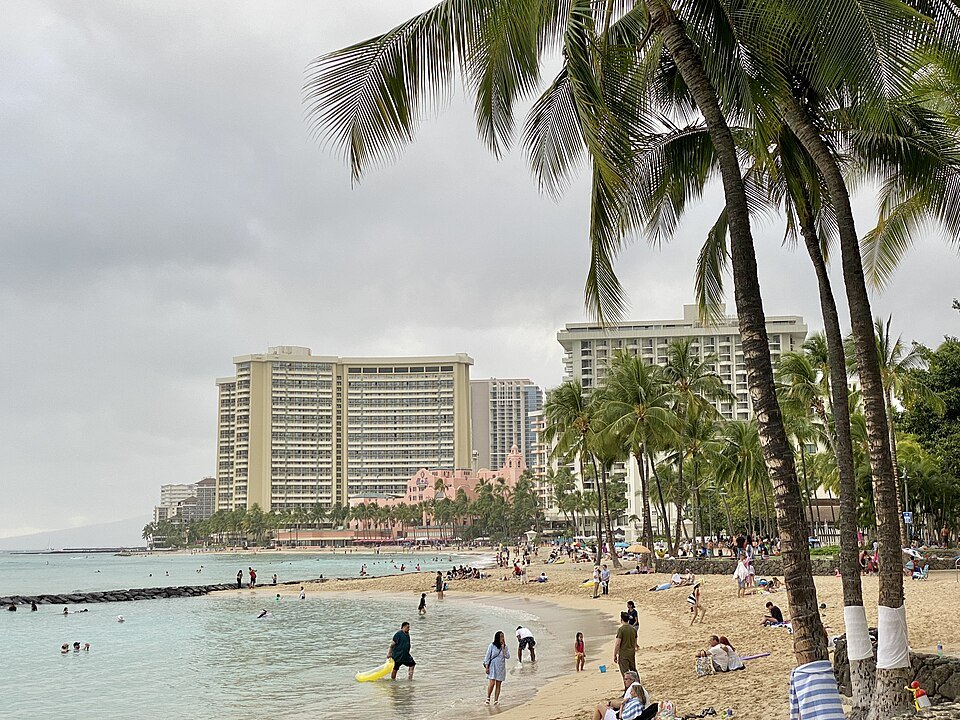
- viThe beach between themThe sand in front of both hotels, the Royal Hawaiian and Moana stretches of Waikīkī Beach.
Reading the place
Why they matter
Waikīkī's tourism began with these two buildings. The Moana, opened in 1901, was the first hotel on the beach, among bungalows and beach houses, and it marked the start of Waikīkī as a resort. The Royal Hawaiian, opened in 1927, was built to make the islands a luxury destination for the wealthiest travelers of the steamship age, and its pink walls became a symbol of Hawaiʻi's glamour years. Both still operate as hotels, among the towers that came later, and both belong to Historic Hotels of America.
You do not have to stay in either to see them. Their lobbies, verandas, courtyards and gardens face the street and the beach, and walking from one to the other along Waikīkī Beach is one of the pleasures of the district.
The Moana
The Honolulu landowner Walter Chamberlain Peacock founded the Moana Hotel Company in 1896 to build a fine resort in what was then a neglected part of Honolulu. The architect Oliver G. Traphagen designed it, and it opened on 11 March 1901; its first guests were a group of Shriners. Moana means the open sea. The hotel's style came from Europe: Ionic columns, detailed woodwork and plaster, a grand porte cochère on the street side and wide lanai on the ocean side. It had seventy-five rooms, some with telephones and private bathrooms, rare at the time, and Peacock installed the first electric elevator in the islands.
Peacock did not make it pay and sold it in 1905. Two floors and Italian Renaissance concrete wings were added in 1918, giving it the H shape it has today. In 1925 it added wooden bungalows across Kalākaua Avenue on the land of ʻĀinahau, the former estate of Princess Kaʻiulani; the bungalows were torn down in 1953, and the Princess Kaʻiulani Hotel opened on the site two years later. From 1935 to 1975 the radio program Hawaii Calls was broadcast live from its courtyard; listeners are said to have taken the hiss of the transmission for the sound of the surf, so the host sent the sound man down to the water to record real waves, which became part of the show.
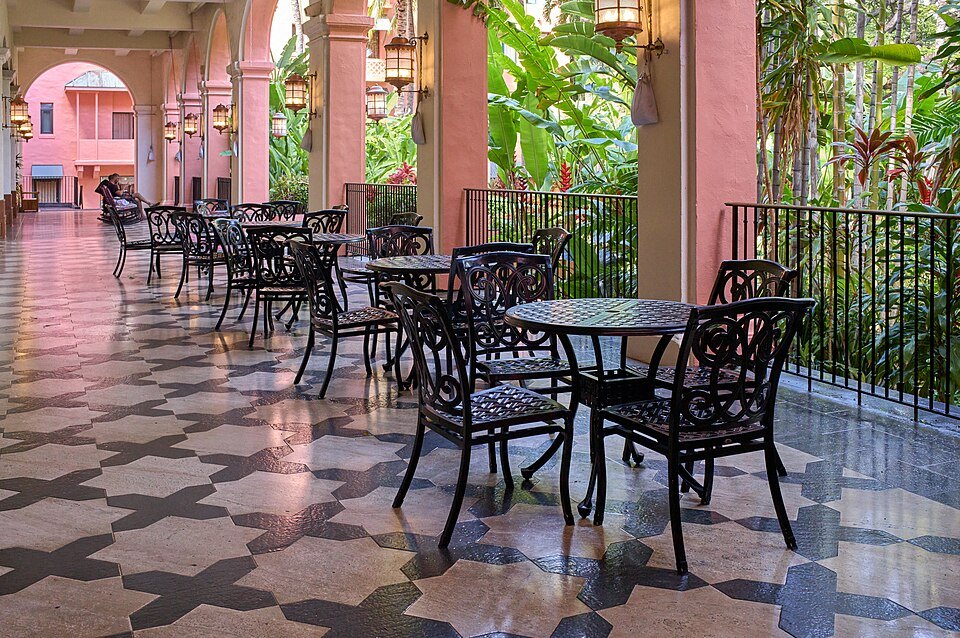
In 1989 a restoration returned the original building, now called the Banyan Wing, to its 1901 appearance and joined it with two later towers into one resort, the Moana Surfrider. The Banyan Wing is on the National Register of Historic Places.
The Royal Hawaiian
In 1925 the Matson Navigation Company, which carried passengers from California to Hawaiʻi, joined with Castle & Cooke, one of the territory's Big Five companies, in a plan to make the islands a luxury destination. They would build the fastest ocean liner yet made for the Hawaiian run, the Malolo, a beach hotel for its passengers, and a private golf club. They demolished an older hotel on the site and hired the New York firm of Warren and Wetmore to design the new one.
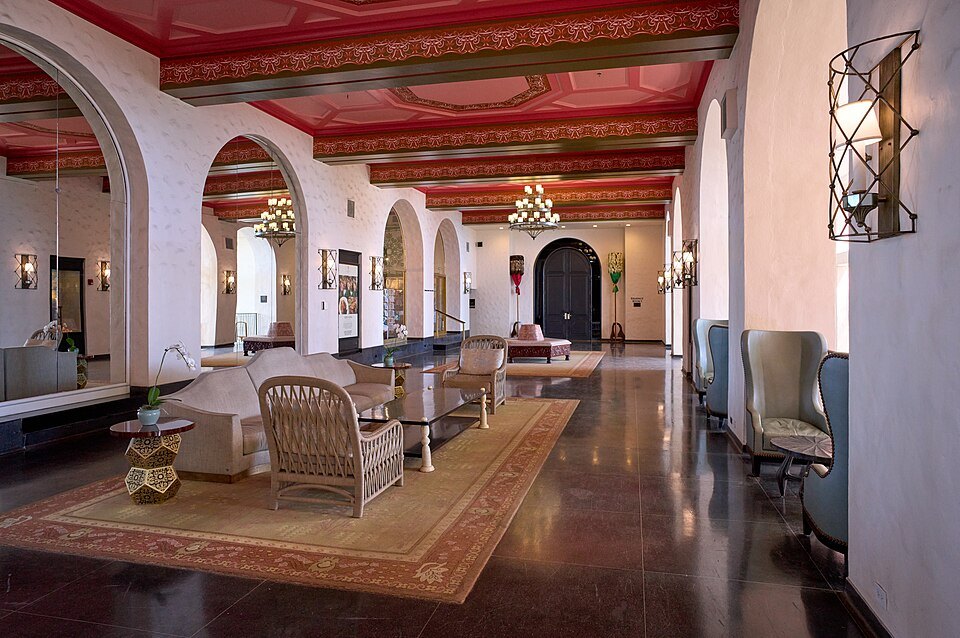
The Royal Hawaiian opened on 1 February 1927 with a formal gala for more than twelve hundred guests. It had four hundred rooms, each with a bath and a balcony, in six stories around an H-shaped plan, set in fifteen acres of landscaped gardens. Its Spanish and Moorish style, with pink stucco walls and cupolas modeled on the bell towers of Spanish missions, is said to have been influenced by Rudolph Valentino's desert films. It was quickly called “the Pink Palace of the Pacific.” In 1928 the islands counted more than twenty thousand visitors in a year for the first time.
The Depression emptied it, and in the Second World War the military took it over as a rest center for servicemen, with barbed wire across the beach. After the war the tourists came back. Matson sold its hotels to Sheraton in 1959, and in 1974 the Royal Hawaiian passed to Japanese owners, who also own the Moana. The land it stands on belongs to Kamehameha Schools, the trust founded by Princess Bernice Pauahi Bishop, and is leased to the hotel.
What you see
On Kalākaua Avenue, the Moana is the white building with the columned porch, smaller than everything around it. Walk through to the courtyard on the ocean side, shaded by a great banyan tree, and out to the beach.
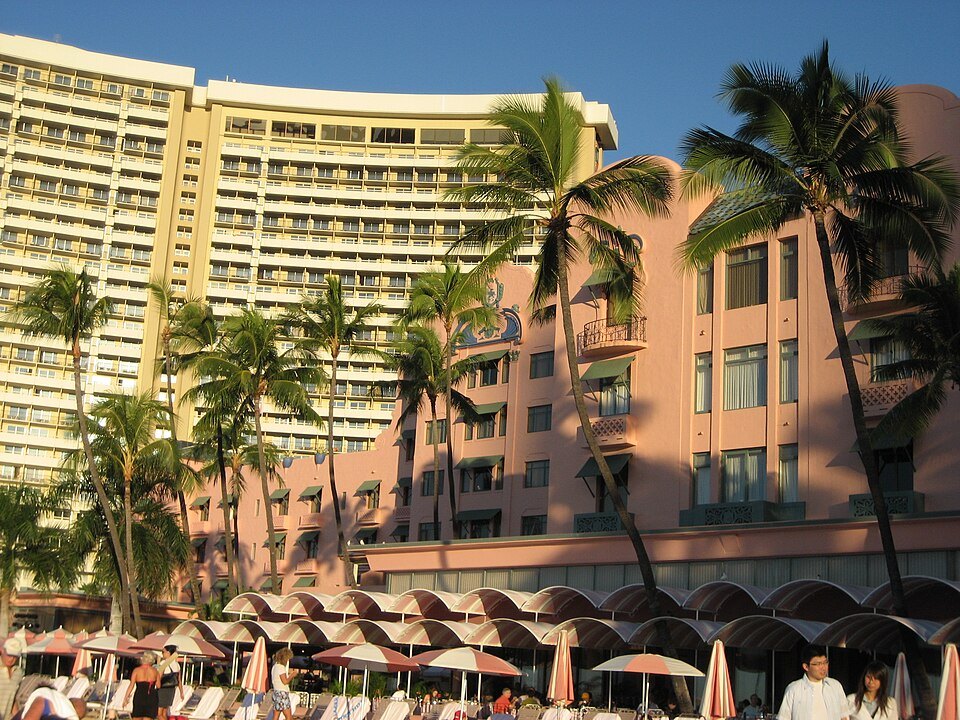
A few minutes west along the sand, the Royal Hawaiian rises pink behind its palms, with its arches and towers. Its gardens of coconut palms and lawns, all that remains of the original fifteen acres, open onto the beach, and inside, the arcades and public rooms, redecorated in 1946 by the designer Frances Elkins, keep much of their period look.
How to visit
Both are working hotels. Their lobbies, verandas, gardens, restaurants and bars serve people who are not staying, and walking through quietly is normal; the guest floors are for guests. Dress for a hotel rather than the beach if you go inside, and do not set up for photographs in the way of guests.
The two stand near the middle of Waikīkī, between Kapiʻolani Park and the Hilton lagoon. For staying in the district, see where to stay.
Honest notes
The Moana's claim to be the “first” hotel in Waikīkī means the first large resort hotel; smaller guest houses such as the Sans Souci, where Robert Louis Stevenson stayed in 1893, came earlier. And the Royal Hawaiian's “Hawaiian” style is Spanish and Moorish, a Hollywood fantasy of the 1920s rather than anything drawn from the islands.
Nearby
- NearbyWaikīkī Beach and Kalākaua AvenueEight beaches strung between the Ala Wai Canal and Diamond Head, a long rolling surf break that taught the world to ride a longboard, and behind the sand the avenue named for a king.Read the page
- NearbyKapiʻolani Park and the NatatoriumThree hundred acres of lawn and shade at the foot of Diamond Head, dedicated in 1877 and named for Queen Kapiʻolani, with a crumbling war memorial of 1927 on the shore and the quietest beaches of Waikīkī.Read the page
- NearbyDiamond Head (Lēʻahi)A volcanic tuff cone some 400,000 to 500,000 years old, named for a tuna's fin in Hawaiian and for diamonds that were never there in English, with a steep army trail of 1908 to its summit.Read the page