Read on
A kingdom built fast
The Hawaiian Kingdom was founded in 1795, when Kamehameha I united Oʻahu, Maui, Molokaʻi and Lānaʻi under one rule; Kauaʻi and Niʻihau joined by agreement in 1810. Recognized as an independent state by the United States and the powers of Europe, it modernized quickly. Kamehameha III proclaimed a first constitution in 1840 and a second in 1852, and in 1848 carried out the Great Māhele, the land division that introduced private ownership.
The same decades brought catastrophe. Traders, whalers and settlers introduced diseases, among them smallpox, measles and tuberculosis, and the Native Hawaiian population fell sharply. American missionary families and their descendants built up businesses in Honolulu, and sugar plantations drew workers from Asia, reshaping the islands' people and economy. By the 1880s, Honolulu held a growing population of American settlers whose economic weight outran their numbers at the ballot box.
Kamehameha III moved the court and capital to Honolulu in 1845, and his successors built the city around it, among them ʻIolani Palace, Aliʻiōlani Hale and Kawaiahaʻo Church. By the reign of Kalākaua, crowned in 1874, that settler business class had grown confident enough to organize against the throne itself.
That mix of disease, migration and settler wealth meant the kingdom's government increasingly answered to residents who had not been born its subjects, many of them with ties to sugar plantations and Honolulu's trading houses. By the 1880s, those interests organized themselves into militias and political clubs separate from the kingdom's own institutions.
The Honolulu Rifles take up arms
In 1887 a volunteer militia recruited from American settlers, the Honolulu Rifles, forced King Kalākaua to accept a new constitution under threat of force. It became known afterward as the Bayonet Constitution, for the manner of its imposition rather than for anything written in its text. Kalākaua signed it rather than risk violence against himself or his kingdom.
The militia had no formal standing in the kingdom's government; its leverage came from its weapons and its readiness to use them. Kalākaua, with no comparable force of his own to call on, accepted terms drafted by men who answered to no electorate he controlled. The new constitution took effect as soon as he signed it.
The 1887 constitution replaced one the king had governed under for decades, and it did so without a vote of the legislature or the people. For the business community behind it, the change was a bloodless correction, a check on a throne it had come to see as an obstacle to its own interests.
What the constitution changed
The Bayonet Constitution took from the king the power to dismiss his ministers without the legislature's approval, a change that moved real authority from the throne to the cabinet and the men who controlled it. Kalākaua remained king in name and ceremony, but decisions of state now rested largely with ministers he could no longer remove on his own judgment.
It also raised the property qualification for voting, a bar that fell heavily on Native Hawaiians and on the kingdom's Asian residents, many of whom worked the islands' plantations for wages that left them short of the new threshold. The qualification reshaped who could take part in choosing the legislature that now held much of the crown's old authority.
Asians, who by then made up a large share of the population, were denied the vote outright under the new constitution regardless of property. Power shifted decisively toward the business community of Euro-American settlers, who now held both a check on the crown and a controlling voice in the legislature that elected it.
Together these changes meant a monarchy that still reigned in ceremony no longer controlled the terms by which its own government was run, and a population whose labor built the kingdom's wealth had no voice in choosing who governed it. That imbalance shaped the six years that followed, through Kalākaua's death and into his sister's reign.
Kalākaua's last years, Liliʻuokalani's succession
Kalākaua lived under the 1887 constitution for four more years, his authority diminished but his reign intact, until his death in 1891. His sister, Liliʻuokalani, succeeded him as monarch, inheriting a throne whose formal powers had been cut back by men still active in Honolulu's government and in its business life.
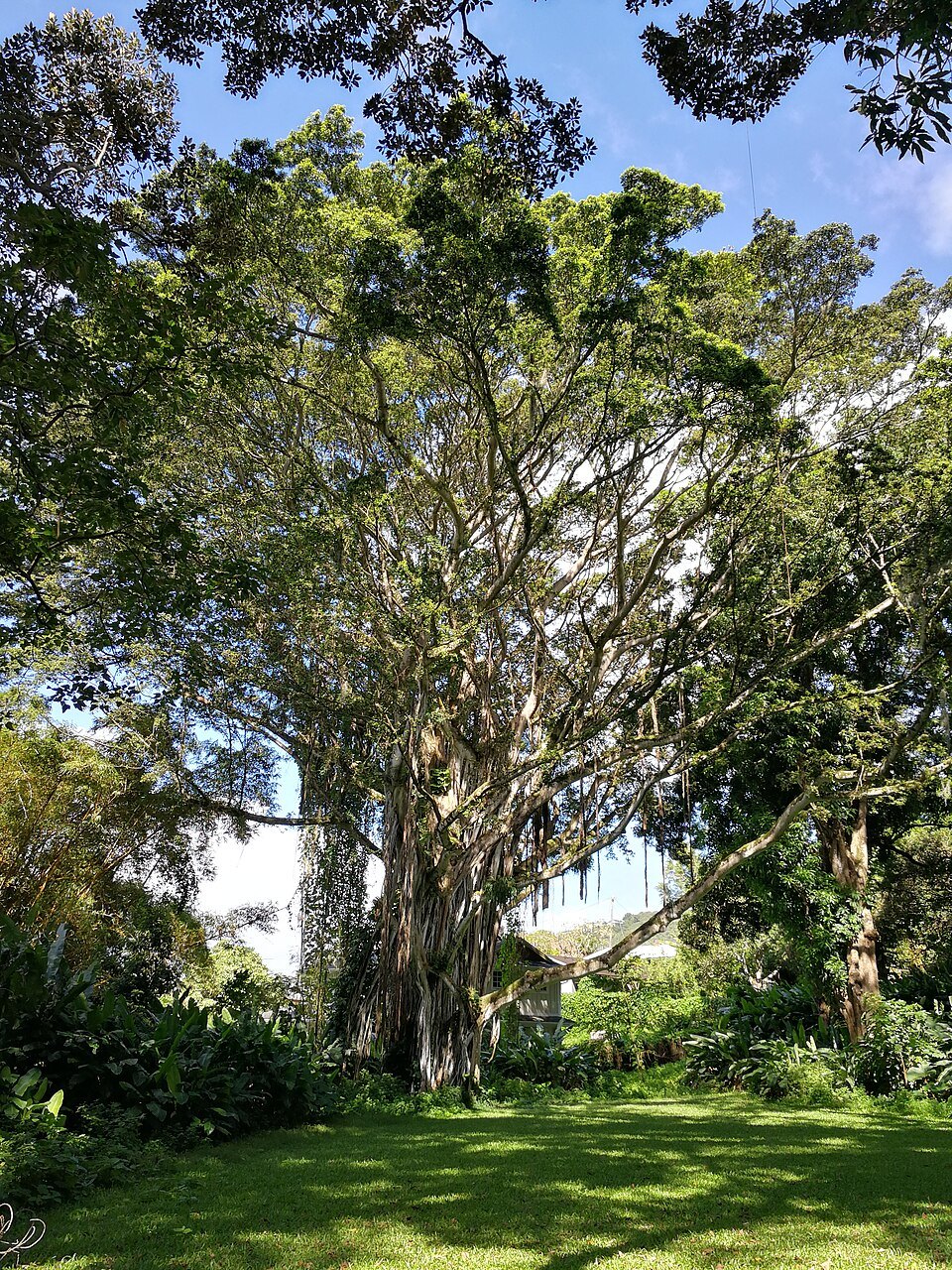
Liliʻuokalani wanted to restore the monarch's powers by replacing the 1887 constitution with one of her own drafting, and she pursued that goal through the early years of her reign. She toured the islands to build support for the change and received a long petition from Native Hawaiians asking for a constitution that would return authority to the crown.
That effort alarmed the same business interests who had forced Kalākaua's hand four years earlier. Their response, organized in January 1893 as the Committee of Safety, led within days to the overthrow of the monarchy itself, an episode set out in full on this site's page about the kingdom and its final years.
Why it still matters
The Bayonet Constitution is often named as the first forced turning point in the kingdom's final years, the moment the business community gained an effective veto over the throne, six years before the overthrow of 1893. Historians and many people in Hawaiʻi draw a direct line between the two events.
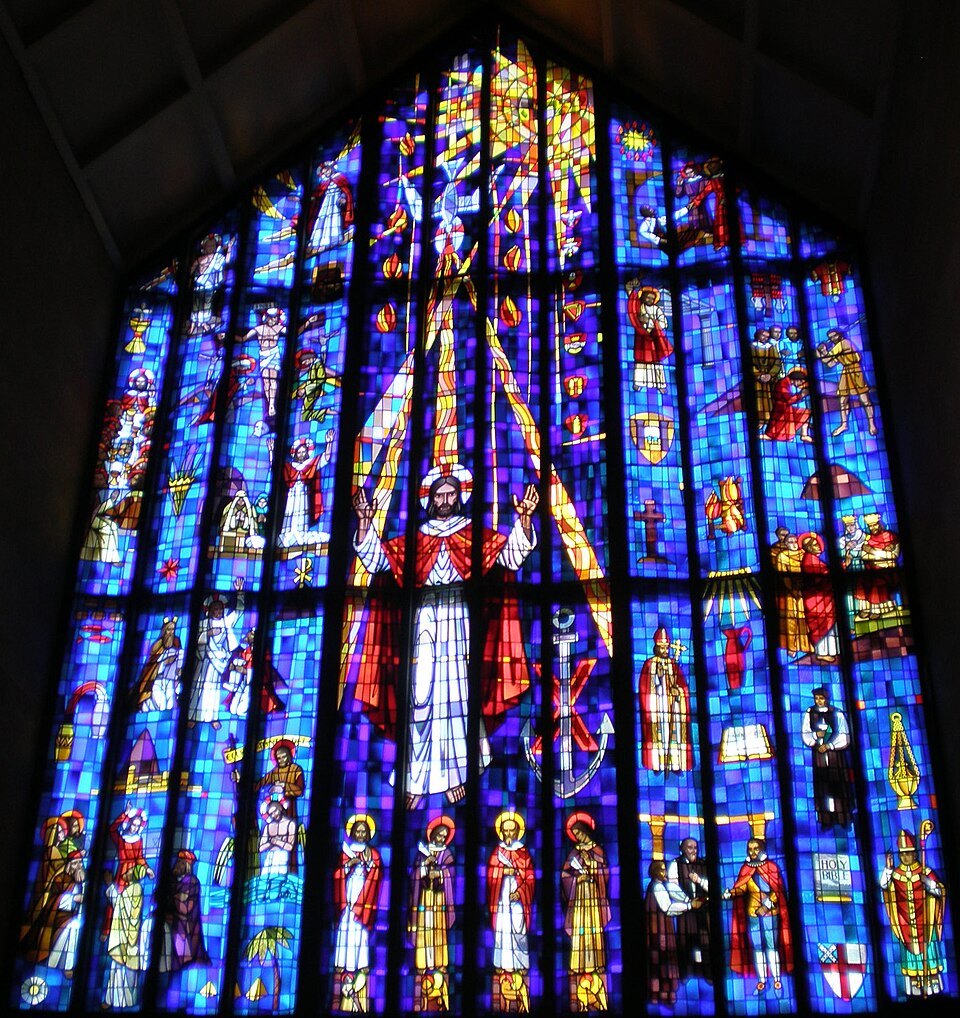
The Apology Resolution passed by Congress in 1993 placed the 1887 episode in that context, treating it as part of a process that ended in the loss of the kingdom's independence. The resolution's focus was the 1893 overthrow itself, but the Bayonet Constitution is the background against which that later event is usually read.
Opposition to the 1887 constitution and to the overthrow that followed it lies at the root of the Hawaiian sovereignty movement active in the islands today. For visitors, this history is not settled; it remains a live subject in Hawaiʻi, and it is best approached by listening rather than arriving with conclusions already formed.
Where to see it today
The settings of 1887 still stand on Honolulu's streets. ʻIolani Palace, where Kalākaua signed the new constitution, now offers tours of the throne room and the king's private apartments, and the state capitol stands nearby on ground once part of the palace grounds; see the palace page for visiting details.
Aliʻiōlani Hale, built as the kingdom's government building and now home to the state judiciary, stands across the street with its statue of Kamehameha I; see the Aliʻiōlani Hale page for what the building holds. Kawaiahaʻo Church, where the kings took their oaths, is a short walk from both, and worth pairing with the palace on the same visit.
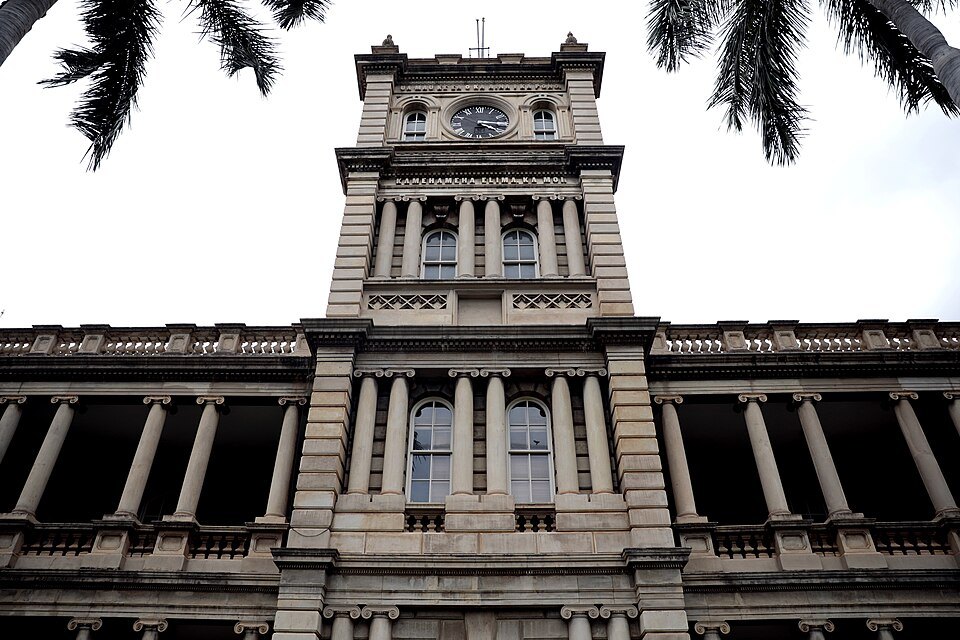
The Bishop Museum holds objects and records from the kingdom's final decades, including material from the reigns of Kalākaua and Liliʻuokalani, and is a useful stop for visitors who want fuller context than a single afternoon downtown can give. Check hours and tour schedules with each site before planning a visit.
More from the journal
- The KingdomWhat happened to the Hawaiian Kingdom, and where can you see it in Honolulu?How the kingdom was founded, how it ended in 1893, and a walk through the downtown blocks where its palace, government house, royal church and the queen's house still stand.Read the piece
- The KingdomWho was Queen Liliʻuokalani?The sister of King Kalākaua who became Hawaiʻi's last reigning monarch, then was deposed, tried, and held in her own palace.Read the piece
- ʻIolani PalaceWhat will you see on a tour of ʻIolani Palace?What to expect from a tour of ʻIolani Palace, room by room, from the throne room to the queen's imprisonment cell.Read the piece