Read on
Six Courtyards, One Building
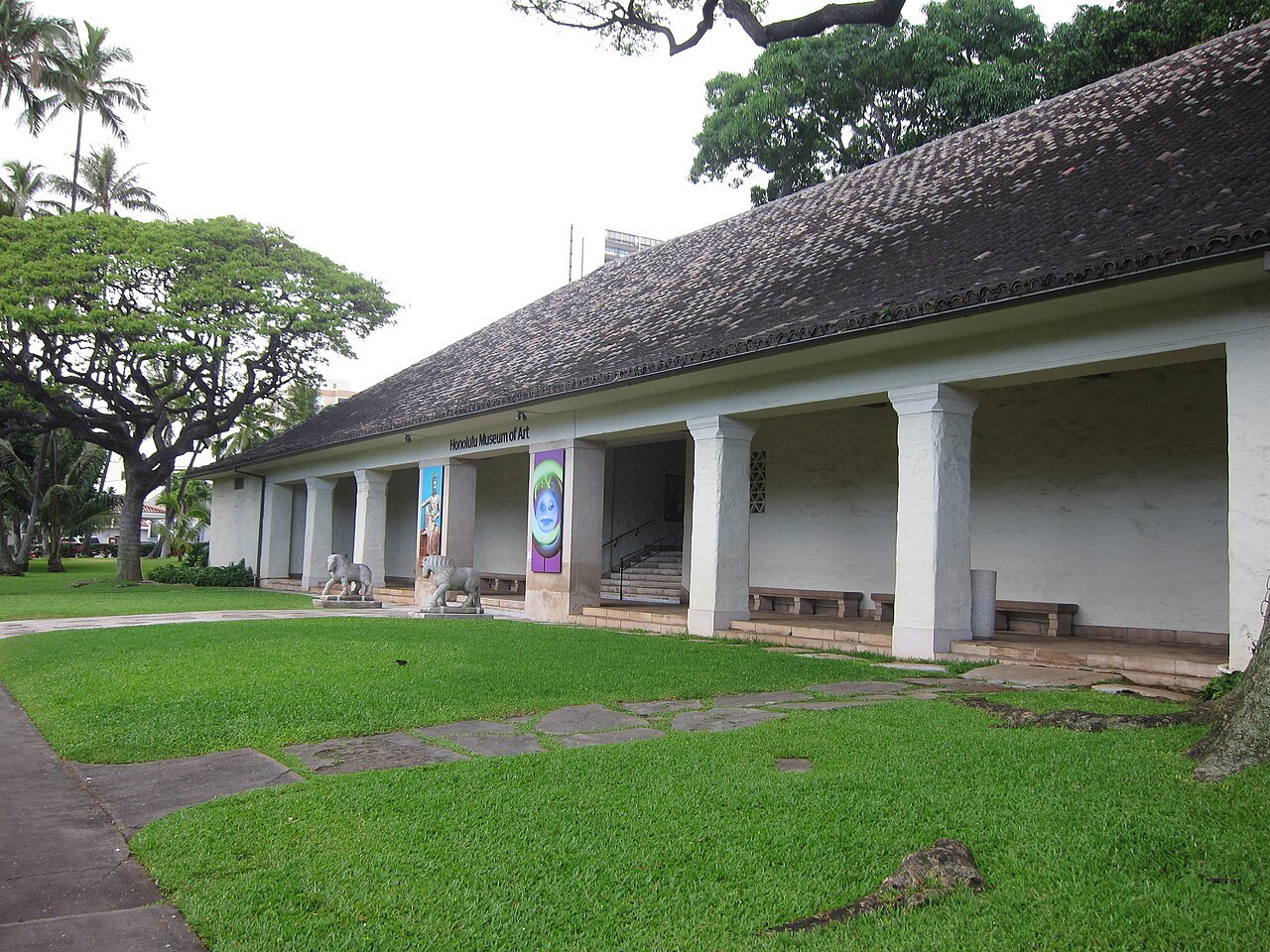
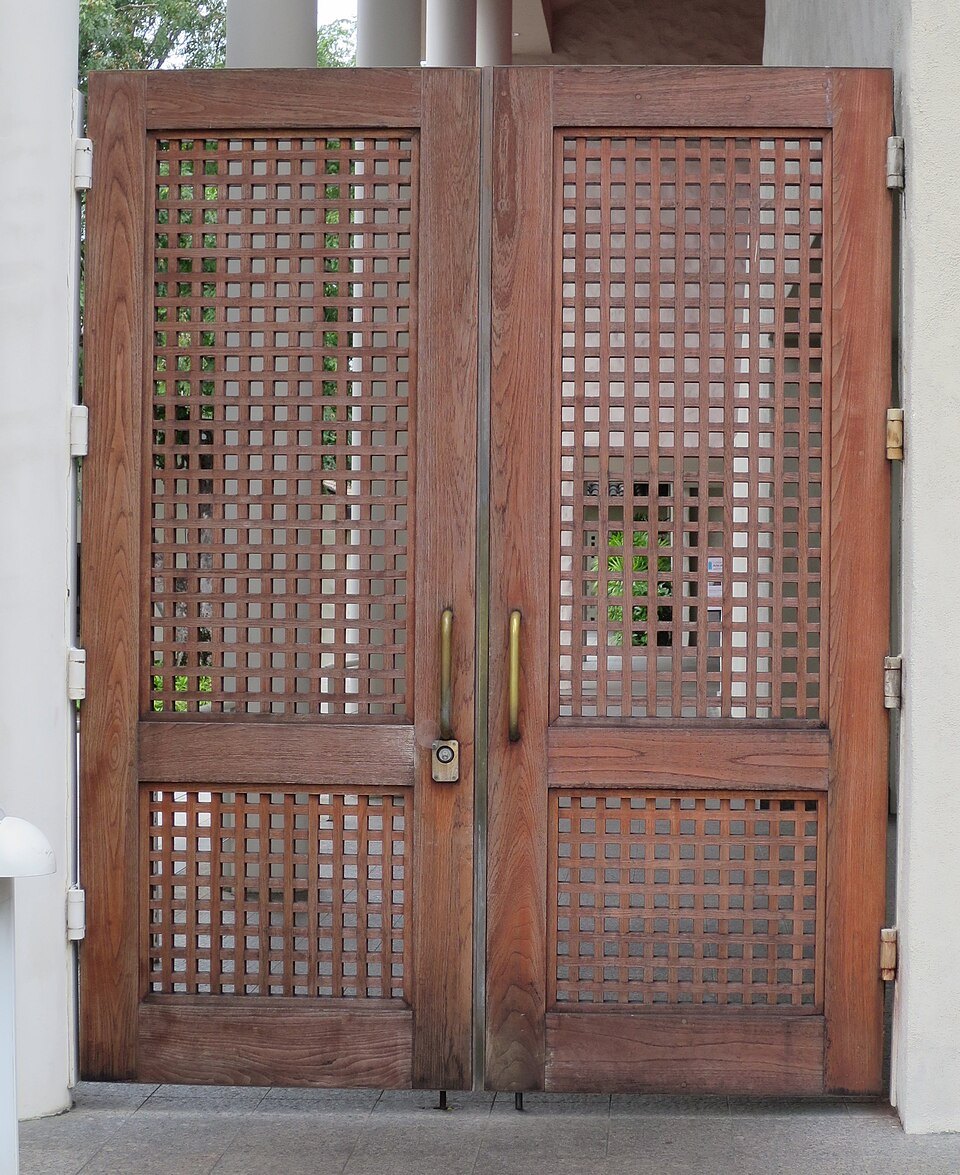
The museum’s permanent collection fills thirty-two galleries that circle six open courtyards, a plan the New York architect Bertram Goodhue set out before he died; Hardie Phillip finished the building to his design. Walking through the museum means moving back and forth between enclosed rooms hung with paintings and prints and open squares roofed only by sky, so that every few rooms the visitor steps outside again before returning to art.
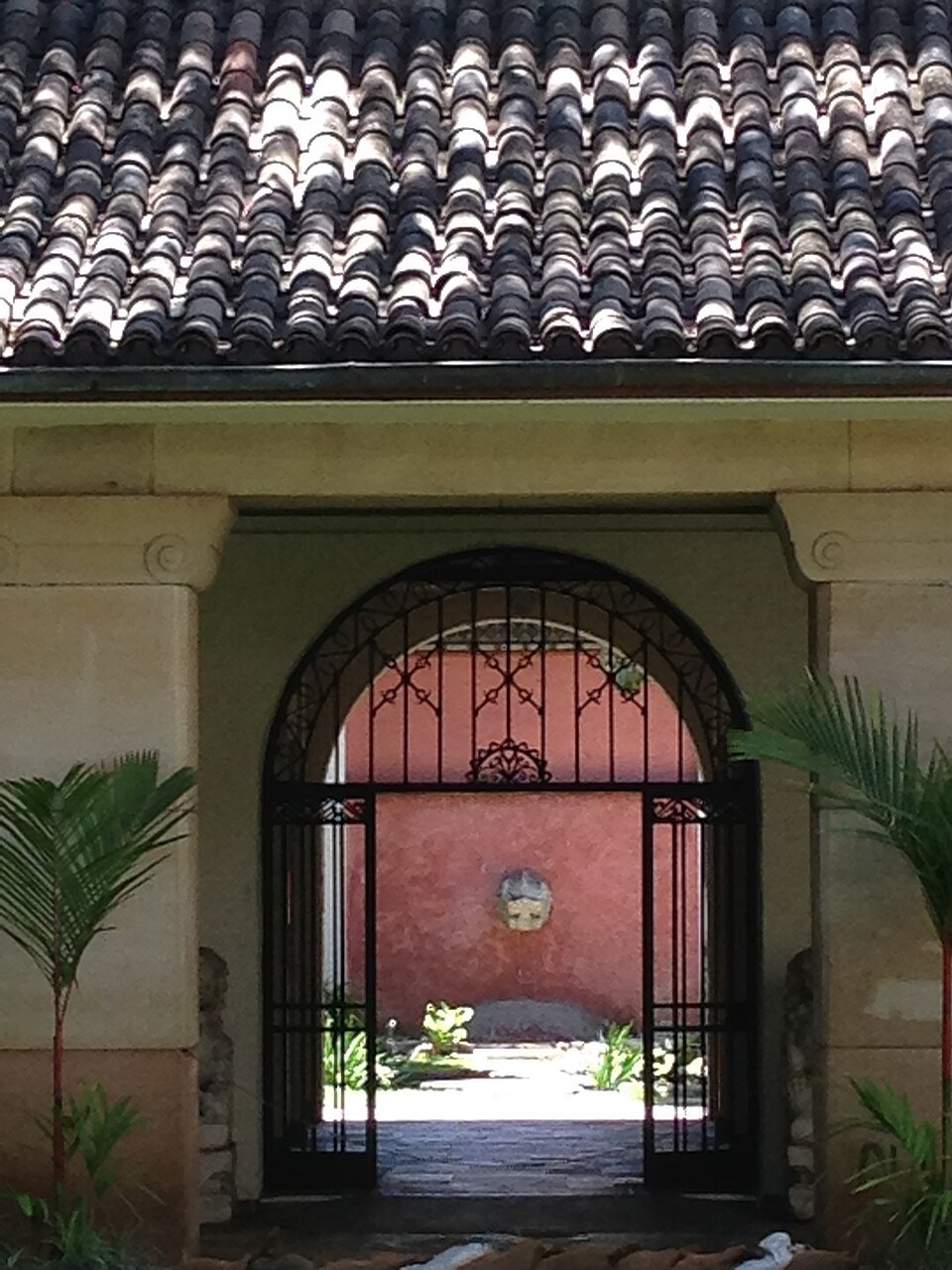
Goodhue called his design a classic Hawaiian style: simple off-white walls, tiled roofs and covered walks that tie the courtyards together and shade the way from one gallery to the next. The approach proved influential — many later buildings in Honolulu borrowed the same vocabulary of white walls and tile, and the original building has been named Hawaiʻi's best building by the local chapter of the American Institute of Architects.
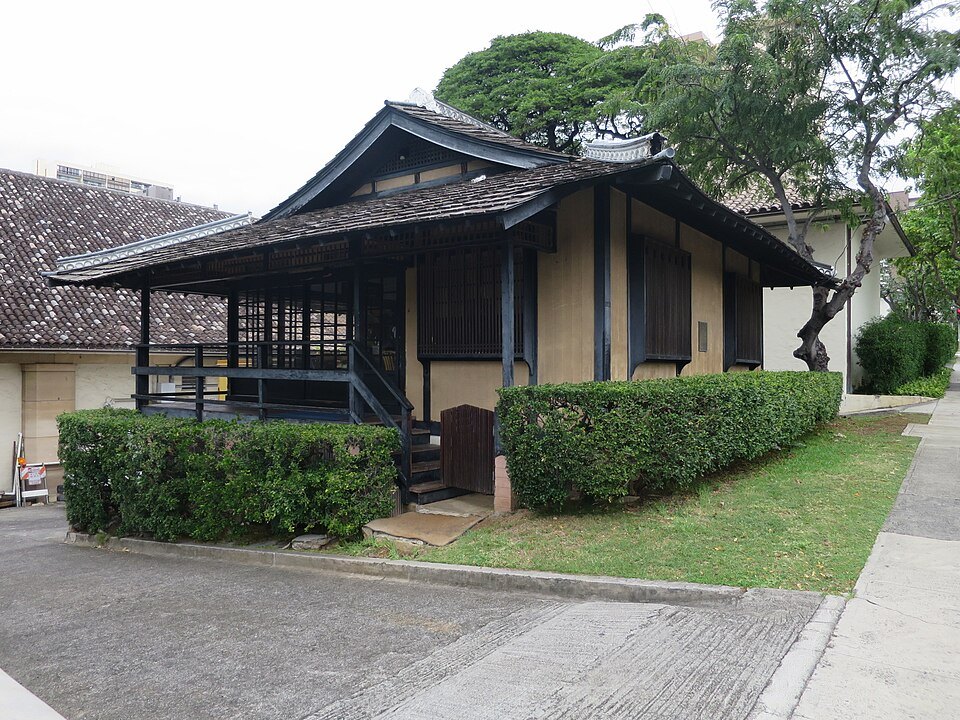
Later additions have kept the same vocabulary: the Henry R. Luce Pavilion, added in 2001, brought a wing of galleries, and the museum's art school opened nearby in 1990. The Robert Allerton Art Library, founded with the museum and holding about forty-five thousand books and periodicals, keeps a reading room open to the public, one more quiet room among the courtyards.
What You'll Find There
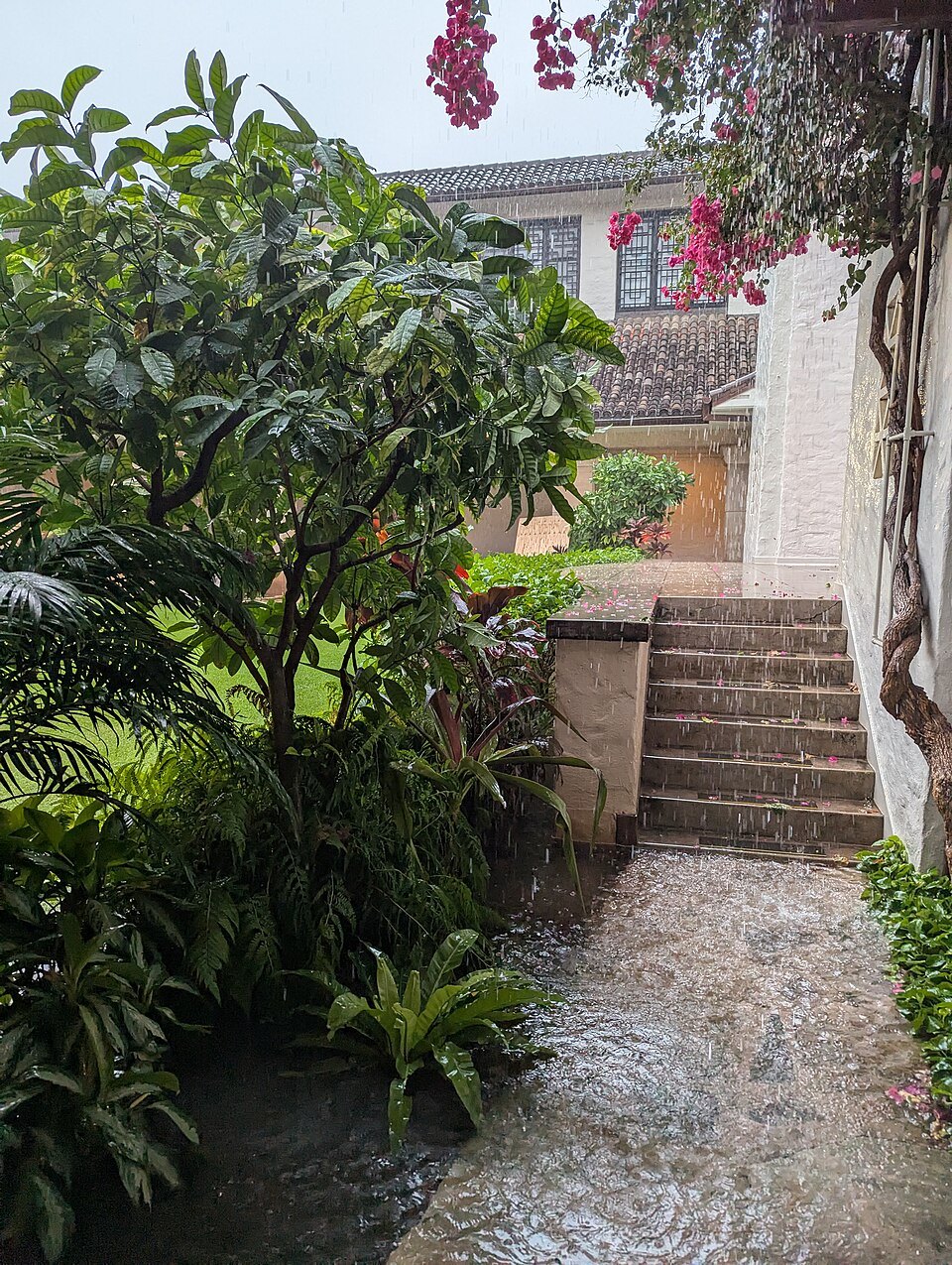
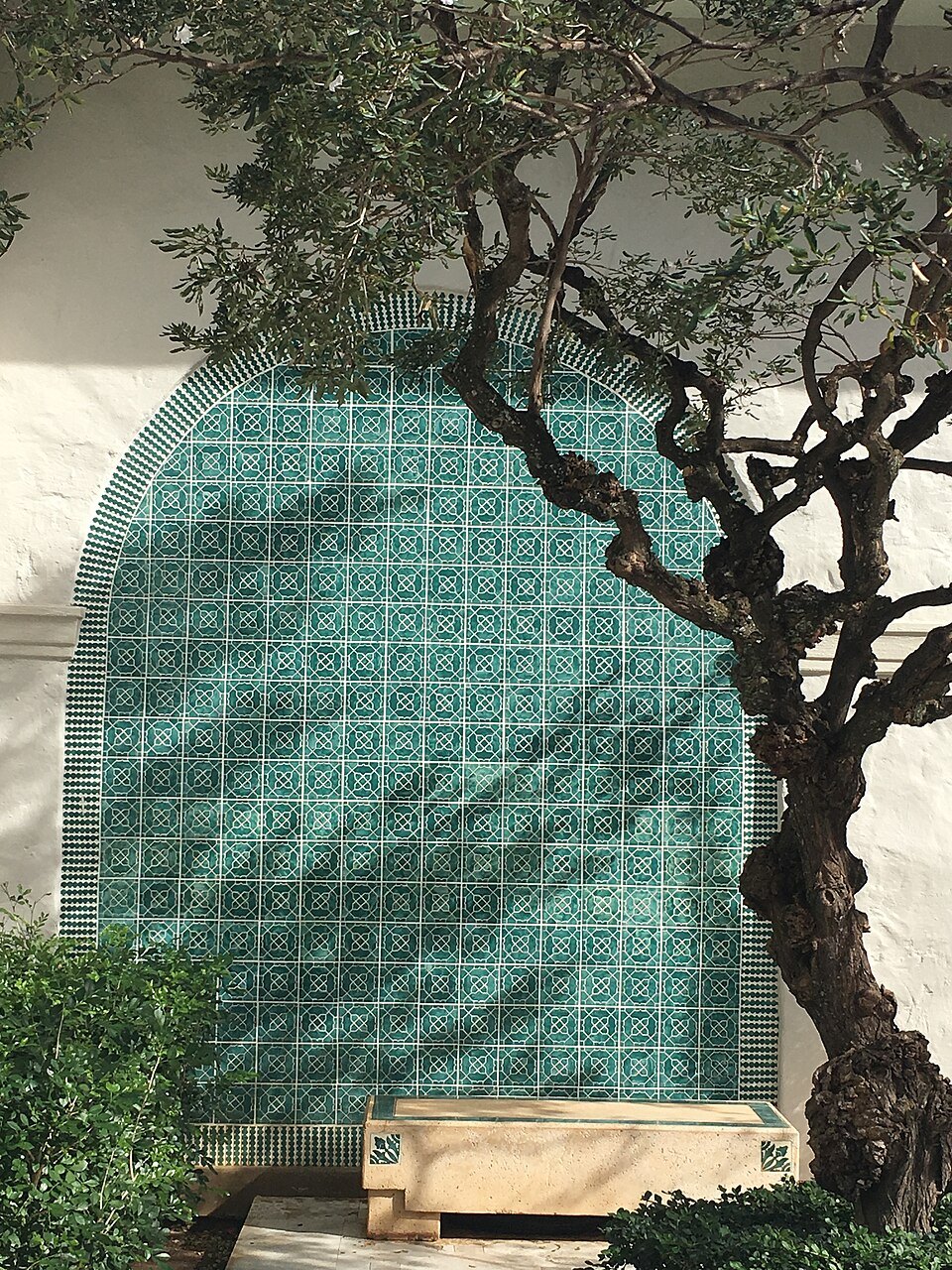
The courtyards themselves hold little in the way of labeled objects; their purpose is to be open-air rooms within a building otherwise given over to galleries, sky above instead of a roof, and plantings and paving instead of walls hung with pictures. They are, in effect, the museum's gardens, set between the rooms of Asian, European and American art rather than apart from them.
Because every gallery opens onto at least one courtyard, the air and light of Oʻahu enter the building constantly; a visitor never goes more than a few rooms without reaching an opening to the outside. The museum's own description calls the courtyards among the best places in the city to sit quietly for a while, and many visitors treat them exactly that way, pausing on a bench between one wing and the next.
The café and the courtyards together make the natural halfway point of a visit, a chance to rest before the Asian galleries or the European and American rooms that follow. Given how much ground the museum covers, and how the print galleries and Hawaiian art rooms rotate through the year, that pause is worth taking seriously rather than skipping past.
Not every room that opens off the courtyards holds paintings. The Doris Duke Theater, a 280-seat hall inside the museum refurbished and named for her in 2002, shows films and hosts concerts and lectures; the museum's calendar lists what is on, a reminder that the courtyards are the quiet core of a far larger institution.
A Style That Shaped the City
The combination of white walls, tiled roofs and courtyards open to the sky did more than suit Honolulu's climate; it set a template that other buildings in the city followed for decades afterward, from private houses to public institutions, so that the museum's look spread well beyond its own walls on Beretania Street.
J. Carter Brown, the longtime director of the National Gallery of Art in Washington, called the Honolulu Museum of Art “the finest small museum in the United States,” a judgment that rests as much on this architecture as on what hangs inside it. The courtyards, more than any single gallery, are what visitors tend to remember afterward.
The museum has grown to more than fifty-five thousand works since it opened on 8 April 1927, making it the largest art museum in Hawaiʻi, and its holdings of Asian and Pacific art are among the largest in the United States. The courtyards give that sprawl shape, breaking a very large institution into wings a visitor can take in a few at a time.
Anna Rice Cooke's Vision
The museum began in 1922 with Anna Rice Cooke, a daughter of New England missionaries whose family art collection had outgrown their house and the houses of their grown children. With her daughter, her daughter-in-law and an art teacher, she catalogued the collection with the aim of putting it on public view, and the family gave the Beretania Street land on which the house once stood.
At the opening in 1927 she said she wanted the children of the islands, “of many nationalities and races, born far from the centers of art,” to see the art of their own heritage and of their neighbors. That aim is why the Asian galleries sit beside the European and American ones on equal footing, wings linked by the same courtyards rather than ranked one above another.
In 2011 The Contemporary Museum gave its collection to the Academy, and the following year the combined institution took the name it carries now. The courtyards and covered walks built for Cooke's original plan still organize the newer collection as they do the old, so a visitor moving through contemporary work passes through the same open squares as one heading for Japanese prints.
Thomas Square, Across the Street
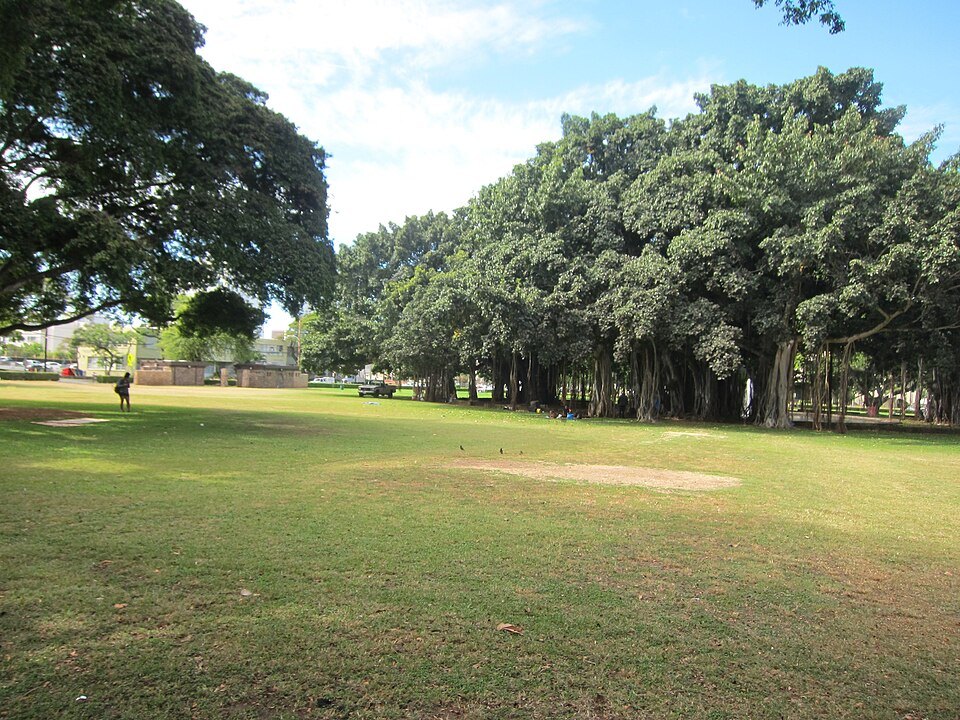
Beretania Street separates the museum from Thomas Square, the oldest city park in Hawaiʻi, a second outdoor space worth a few minutes if the museum's own courtyards leave an appetite for more open air. In 1843 the British captain Lord George Paulet had seized the kingdom; that July Admiral Richard Darton Thomas arrived, overruled him and returned the islands to Kamehameha III on this ground.
The king's words that day, Ua mau ke ea o ka ʻāina i ka pono — roughly “the sovereignty of the land is perpetuated in righteousness” — later became the motto of the state, and the square named for Thomas in 1850 is one of the few places where the Hawaiian flag flies alone. See the Kingdom for more on this history.
The park makes a natural extension of a museum visit: an open lawn and mature trees across the street, rather than a courtyard roofed only by sky but enclosed by galleries. Together, the museum's six courtyards and this civic square give an unusual amount of open-air history to a single corner of the city.
How to Visit
The museum sets its own days and hours and charges for admission; check its site before planning a visit, since special exhibitions and events are listed there and the rooms on view change through the year. Guided tours run through the day for visitors who want context rather than wandering on their own.
Give the galleries real time, especially the Asian collection, and treat the café and courtyards as a planned stop rather than an afterthought. Tours of Shangri La, Doris Duke's estate and her collection of Islamic art, are arranged through the museum and must be booked ahead; see booking ahead for how far in advance to plan.
The museum sits on Beretania Street between downtown and Waikīkī, within walking distance of the Capitol District, and buses run along Beretania Street; see getting around for routes and fares. Thomas Square and the museum together make an easy stop for anyone already exploring that stretch of the city on foot.
More from the journal
- The KingdomWhat happened to the Hawaiian Kingdom, and where can you see it in Honolulu?How the kingdom was founded, how it ended in 1893, and a walk through the downtown blocks where its palace, government house, royal church and the queen's house still stand.Read the piece
- Getting AroundHow does the HOLO card work on TheBus and Skyline?How the HOLO smart card pays for TheBus and Skyline, with free transfers and automatic fare capping for visitors.Read the piece
- Getting AroundDo you need a car in Honolulu?Why most visitors can see Honolulu without a car, what TheBus, Skyline, bikes and taxis cover, where a car makes sense, and how to rent one for just the days you need it.Read the piece